



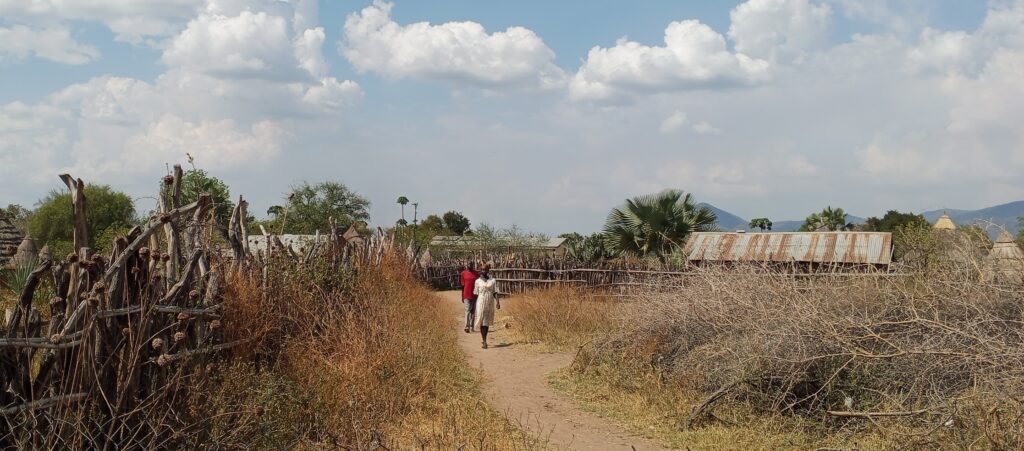
Intercommunal violence between the communities of Tirrangore and Mura-Hatira in Torit County’s Hiyala Payam in Eastern Equatoria State continues to deepen fear and division among residents, with local leaders accusing some intellectuals in Juba of fueling tensions among the youth.
The concerns were raised last Thursday during a conflict analysis meeting under the Torit County Peace Project, organized by Support Peace Initiative Development Organization (SPIDO), a program funded by the Korea International Cooperation Agency (KOICA) through UNDP.
For the residents of Hiyala Payam, movement between villages has become increasingly dangerous as cyclic revenge killings continue to claim lives and disrupt livelihoods.
Speaking to Radio Tamazuj after the meeting, Hiyala Payam Administrator Matthew Ojokilo said the violence began in 2023 and has since evolved into repeated retaliatory attacks between the two communities.
“Hiyala Payam has five bomas, but only two bomas have serious conflicts among themselves; these are Tirrangore and Mura Hatira bomas,” he said.
The administrator said the conflict has become one of the biggest security concerns in the area, making it difficult for ordinary residents to travel freely or carry out daily activities.
“There is too much killing and movement has become very hard for the people,” he said.
Community leaders say what started as isolated confrontations has gradually transformed into an entrenched cycle of mistrust and revenge, with young people from both sides continuing to attack one another despite repeated calls for calm.
“The root causes of the conflict are not clear, even though young people from the two communities have continuously confronted each other, with people being killed several times,” Ojokilo explained.
He also pointed to alleged external influence from individuals based in Juba, accusing them of encouraging division instead of reconciliation among the communities.
Chiefs mobilized for peace dialogue.
Despite several interventions by county authorities, including peace engagements and security meetings, lasting solutions have remained elusive. However, local authorities are now turning to traditional leaders in hopes of restoring dialogue and rebuilding trust.
According to Ojokilo, the local administration has begun mobilizing chiefs from both communities to initiate grassroots peace talks aimed at stopping further bloodshed.
“I called on the Boma chief of Mura and told him to stop the Monyomiji youth from going out to the areas of Tirrangore because the deaths are too much,” he said.
Local leaders and peace actors say community dialogue remains critical to preventing further violence and restoring coexistence between the neighboring bomas, whose residents have lived side by side for generations.
The latest peace initiative comes amid growing concern that continued retaliatory attacks could destabilize other parts of Torit County if urgent interventions are not made.
At least 10 killed since violence escalated
Ojokilo disclosed that about 10 people have been killed from the two communities since the revenge killing started.
“As acting paramount chief here in April this year, the commissioner summoned me and directed me to make efforts to stop these conflicts,” he recalled.
He revealed that all the chiefs from both sides are being summoned to discuss the way forward for lasting peace in the area.
Community leaders blame the lack of understanding
For his part, Jacob Athari, Sub-Chief of Tirrangore Boma, attributed the continued confrontation between the two communities to a lack of understanding.
“The causes of all these problems in our communities are a lack of understanding,” he stated. “There is no peaceful co-existence, and I am sure the government is now tired of this issue.”
Athari called on both the state and national governments to address the ongoing conflicts, noting that serious issues require urgent solutions.
Competition over land and gold mining areas
For Judith Idiomgo, a member of the Eastern Equatoria State Legislative Assembly, the persistent intercommunal violence in Hiyala Payam is a result of competition over land, rivers, gold mining areas, and cattle, as well as alleged interference by elites in Juba.
She confirmed that the conflict between communities in Hiyala Payam has continued despite repeated government interventions and peace meetings.
“The issue of Hiyala makes us feel sad because those people are neighbors,” she said.
She recalled that previous clashes between communities in areas she referred to as Hiyala and Tirrangore were resolved through dialogue and government engagement.
“In the past, in Hiyala and Tirrangore, there was a very big problem in Tirrangore and Mura, but one day we went and talked about it, and resolved it,” she stated, saying that violence later erupted again between the two communities and has persisted since.
“The government has intervened several times and been there to talk to them, but nobody understands,” Idiomgo said.
The lawmaker accused some educated individuals based in Juba of fueling tensions and undermining peace efforts on the ground. She expressed concern over the continued killing of young people from both communities and described how armed youth now monitor roads and attack travelers from rival areas.
However, Savior Lazarus, Executive Director of Support Peace Initiative Development Organization (SPIDO), blamed the continued violence in Hiyala Payam on the widespread availability of firearms, political interference, weak law enforcement, and a growing culture of violence among youth.
“The presence of armed groups and the ease of access to firearms exhibit the severity of conflicts in the communities,” he said. “One of the challenges we realized is that the intellectuals and politicians are the ones giving orders to the youth in the villages.”
“You can even conduct a peace dialogue today, but by the time you are leaving, the village may be empty in the afternoon,” he explained.
Lazarus recommended the deployment of neutral police personnel, the establishment of special courts to handle revenge killings, the formation of community peace committees, and stronger involvement of chiefs and local leaders in promoting reconciliation.
“We need peace and development,” he stated. “Remember, peace is a responsibility for all, and there are no more things that unite us than divide us.”

 and then