



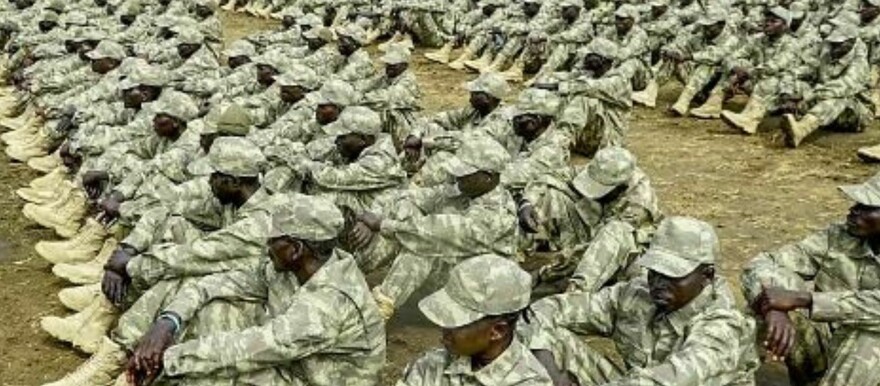
As South Sudan marks the 43rd anniversary of the SPLA/M liberation struggle, a senior army commander has called for urgent reforms to address what he described as persistent structural and social challenges undermining national stability.
Maj. Gen. Moses Makwol Ajang, commander of the SSPDF Division Seven Infantry stationed in Torit, said the continued tribalisation of the armed forces remains a major obstacle to lasting peace.
“The continued tribalisation of the armed forces is a fundamental barrier to achieving lasting peace and stability in South Sudan. The country must confront this challenge and prioritise unity over division,” Makwol said.
He was speaking during commemorations at Torit Freedom Square held under the theme “Preserving the Legacy of Liberation Through Peace, Unity, Security and Prosperity,” which drew a large turnout of officials and residents.
Makwol said South Sudan should reflect on the cost of internal conflict since independence, citing what he described as thousands of lives lost in violence linked to ethnic divisions. He urged immediate action to prevent further suffering and deepen reconciliation.
He said the country now faces a critical moment, adding that unity could transform years of conflict into stability and development.
“If South Sudanese embrace peace and unity, we can turn decades of suffering into a future of hope, resilience and prosperity,” he said.
Eastern Equatoria State Governor Louis Lobong Lojore also called for unity, warning that divisive politics continued to undermine development and security. He urged residents to work together to address poverty, hunger and insecurity through dialogue and cooperation.
Eastern Equatoria deputy governor Karlo Andrew said the liberation struggle transcended political affiliations and urged citizens, particularly young people, to support the implementation of peace agreements as the country prepares for future elections.
Eastern Equatoria State Assembly acting speaker Moi Isaac said the armed struggle was rooted in historical grievances, including the collapse of the 1972 Addis Ababa Agreement, which he said had marginalised southern Sudanese.
He said South Sudan had made progress since independence but warned that tribalism, corruption and nepotism continued to threaten national cohesion.
“We must reject tribalism, corruption and nepotism and work together in solidarity to build a better future,” Isaac said.
He said there was a growing need for a unified national identity anchored in peace, security and access to basic services, adding that such unity was essential for long term prosperity.

 and then