



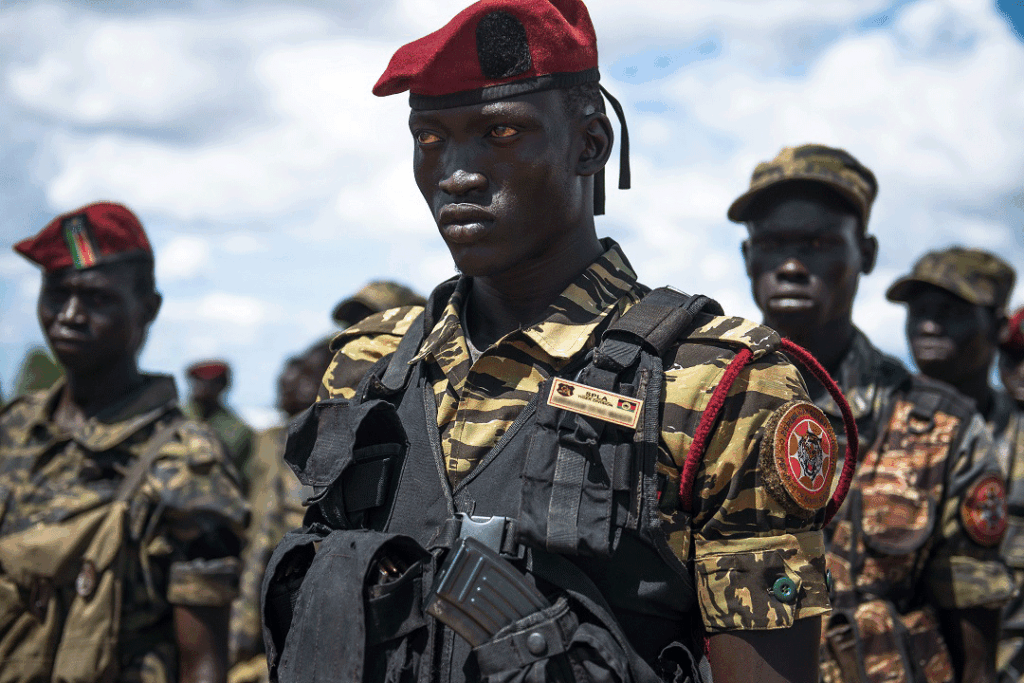
Every 16 May, South Sudan pauses to commemorate the beginning of the liberation struggle launched in 1983 under the Sudan People’s Liberation Movement and Army (SPLM-SPLA). For many South Sudanese, the date is not merely historical. It is sacred. It represents sacrifice, memory, suffering, and hope. It recalls the generation that left classrooms, cattle camps, villages, and exile communities to fight for dignity, equality, and self-determination. It reminds us of those who never returned home and of the dream that their deaths would produce not merely independence, but justice and citizenship.
But solemn anniversaries should also force nations into honest reflection, because the greatest betrayal of a liberation struggle is not military defeat. It is the slow corruption of the ideals for which people sacrificed in the first place. I am Dinka. I say that openly because honesty matters more than comfort. I grew up in Khartoum with Nuer, Equatorian, Shilluk, Bari, and Fur friends who never treated me as an ethnic category but as human beings.
We shared classrooms, football fields, tea stalls, and the common experience of displacement and war. We believed the struggle for South Sudan was not simply a military campaign against Khartoum, but a moral project built around dignity, equality, and freedom. We believed independence would end humiliation. We believed liberation would produce citizenship. We believed a new flag would create a new political culture.
Today, many of those same childhood friends no longer speak to me the same way. Some speak with anger. Others with disappointment. Some with suspicion. Not because of anything I personally did, but because of what they increasingly associate with the South Sudanese state itself: Dinka traffic police extorting civilians on the roads; Dinka NSS operatives intimidating critics; Dinka-dominated institutions exercising power without accountability; and a government viewed by many citizens less as national and more as ethnically concentrated.
Whether fully fair or not, that perception is becoming politically fatal. I now sometimes find myself ashamed and emotionally distant even from close Equatorian friends and associates whom I once considered brothers and sisters. Not because I no longer value them, but because I can feel the change in how they now see me and what I symbolically represent in the current political climate. Conversations that once felt natural now carry hesitation, caution, and unspoken resentment.
That is one of the cruelest consequences of ethnically concentrated governance: it slowly poisons ordinary human relationships that once transcended tribe. And perhaps the most painful reality is that many educated Dinka elites privately acknowledge the dysfunction yet publicly defend it because the people exercising power belong to their ethnic group. That is how states begin to decay from within: when ethnic loyalty becomes more important than truth, and silence becomes safer than conscience.
Dr. John Garang warned about this long ago when he said, “The people will prefer the government that provides salt than the government that does not provide salt.” That statement was not cynical. It was strategic. Garang understood something many liberation movements fail to understand after taking power: people do not survive on revolutionary symbolism. They survive on functioning institutions, security, justice, roads, schools, healthcare, jobs, and dignity.
The success of a revolution is not measured by whether it wins a war. It is measured by whether ordinary people live better afterward. South Sudan is now dangerously close to failing that test.
More than 9 million South Sudanese now require humanitarian assistance and protection according to United Nations estimates, making South Sudan one of the world’s most severe protracted humanitarian crises. Nearly one-third of the population has experienced displacement internally or across borders since the years of civil conflict following independence.
South Sudan achieved political independence in 2011, yet many young citizens today have spent most of their lives under conditions of conflict, displacement, or economic crisis.
Fear has become a governing instrument
For millions of South Sudanese, fear is no longer occasional. It has become routine. Citizens lower their voices in restaurants and public gatherings. Journalists self-censor. Young people avoid political conversations. Families warn each other not to criticize officials over the phone because they fear surveillance, retaliation, or disappearance.
When a citizen publicly criticizes officials or the regime, days later, unidentified gunmen appear at night. Sometimes there is a beating. Sometimes an abduction. Sometimes bullets are fired into the darkness. The message is always understood, even when no institution formally claims responsibility. Fear in South Sudan no longer arrives dramatically. It arrives quietly. This culture of intimidation is destroying the legitimacy of the state itself.
The government has gradually created a security environment in which coercive force is monopolized not by institutions accountable to law, but by networks perceived as loyal primarily to political power. Ordinary citizens increasingly feel disarmed not only physically, but psychologically and politically. Even carrying traditional rural tools for self-protection or agricultural work can attract suspicion if one is not connected to the state security apparatus or broader patronage system.
Another dangerous reality that many outsiders fail to fully grasp is the growing perception among ordinary citizens that vulnerability in South Sudan is increasingly tied not only to political status but also to ethnicity, appearance, and perceived belonging. If you are visibly perceived as non-Dinka, from another marginalized community, or even treated as an outsider in certain environments, many people increasingly feel they become easier targets for harassment, intimidation, extortion, or arbitrary treatment by some enforcement structures and security actors.
This perception is deeply corrosive to national cohesion. A state begins losing moral legitimacy the moment citizens start believing protection under law depends on tribe, appearance, connections, or proximity to power rather than equal citizenship. Equally troubling is the contradiction many South Sudanese quietly observe: ordinary citizens often experience aggressive treatment from enforcement structures, while politically connected actors, foreign organizations, and protected elites sometimes operate through parallel systems insulated from the realities confronting everyday people.
That contrast deepens public resentment and reinforces perceptions that the state increasingly operates through selective power rather than universal justice. No sustainable republic can survive when entire communities begin feeling exposed and unprotected inside their own country. Once fear becomes socially or ethnically patterned, national identity weakens rapidly, and citizens retreat psychologically toward communal survival rather than shared statehood.
The result is a dangerous imbalance: citizens increasingly experience the state not as a guarantor of security, but as the exclusive owner of coercion. No republic can sustain legitimacy under those conditions. A country cannot build national unity when criticism is interpreted as disloyalty, when silence becomes the safest form of citizenship, and when fear replaces constitutional trust.
This is how republics slowly evolve into kakistocracies: systems where incompetence, impunity, and coercive power become mutually reinforcing. History is clear on one point: fear can suppress a population temporarily, but it cannot build a durable nation permanently. Eventually, citizens either resist openly, disengage emotionally, or begin searching for political futures outside the existing state structure. The most dangerous collapse is not always military defeat. Sometimes it is a psychological withdrawal from the idea of the nation itself.
The roads have become symbols of state failure
On South Sudan’s roads, interactions with authority often resemble extraction rather than governance. Traffic police are feared not because they enforce public safety, but because many citizens experience them as mechanisms of arbitrary extortion. Owning a vehicle frequently feels less like mobility and more like exposure to permanent harassment. Checkpoints multiply humiliation as much as insecurity. This matters more than outsiders realize. Roads are where ordinary citizens experience the state most directly. When those encounters are consistently abusive, corruption stops appearing exceptional and starts appearing systemic.
International donors have spent years funding police reform, training programs, and institutional development. Yet ordinary South Sudanese still encounter policing less as a public service and more as legalized intimidation.
The judiciary reflects the same structural crisis. Millions of dollars have been invested in judicial reform, legal infrastructure, and rule of law programs. Yet across the country, many citizens believe justice remains inaccessible without facilitation payments, ethnic connections, or political influence. Courts that should defend citizens are widely perceived as transactional institutions.
This institutional decay is not simply administrative dysfunction. It is politically destabilizing. This is because once citizens lose confidence in courts, police, and national institutions, they retreat toward tribe, region, and communal self-protection. That is how states begin fragmenting psychologically long before they fragment territorially.
The return of Kokora and the federalism question
The growing revival of Kokora sentiment should alarm every serious observer of South Sudan. Outside the country, Kokora is often simplistically dismissed as tribal separatism. But for many Equatorians and increasingly for frustrated citizens elsewhere, Kokora represents something deeper: exhaustion with centralized domination and a demand for dignity, autonomy, and local control over governance.
In many respects, these demands overlap with the core logic of federalism itself: equitable distribution of power, local governance, decentralization, and institutional safeguards against ethnic monopolization of the state.
The tragedy is that South Sudan adopted the language of decentralization without building a genuinely federal political culture. Instead, political power became increasingly centralized, militarized, and ethnically concentrated. As that process accelerated, old fears resurfaced. Today, what some dismiss as separatist rhetoric is increasingly becoming emotional disengagement from the national project itself.
That is the most dangerous trend in the country. States do not collapse only when armies fight. They collapse when citizens stop believing the country belongs equally to all of them. The tragedy of South Sudan is not that its people are incapable of coexistence. The tragedy is that institutions meant to protect coexistence have increasingly lost public trust. Political independence without institutional justice eventually produces emotional independence movements within the state itself.
Balkanization is no longer unthinkable
South Sudan was created through resistance against exclusion and domination. If citizens now increasingly seek safety primarily through ethnic identity, regional autonomy, or political withdrawal from the state itself, then the liberation project risks historical failure. Balkanization, once discussed cautiously and privately, no longer feels impossible to many frustrated South Sudanese. Increasingly, it feels plausible. That should concern Washington, the United Nations, and regional governments far more than it currently appears to be because fragmentation rarely occurs peacefully.
The historical record from the Balkans, Sudan, Ethiopia, and elsewhere demonstrates that state fragmentation often creates new borders for unresolved grievances, new minority insecurities, and prolonged instability over territory, identity, and resources. Yet ignoring the problem is equally dangerous.
The growing appeal of Kokora, federalism, and regional autonomy is not itself the disease. It is a symptom of collapsing confidence in the fairness of the national political order. The central question facing South Sudan is therefore straightforward: Can the state still evolve into a political system based on equal citizenship rather than ethnic hierarchy? If the answer remains no, fragmentation pressures will continue intensifying.
The strategic miscalculation after Garang
The international community must also confront an uncomfortable historical reality. After the death of Dr. John Garang in 2005, key international stakeholders made a strategic calculation that continuity and short-term stability mattered more than deeper political transformation inside the SPLM leadership structure.
Salva Kiir emerged as the acceptable guarantor of continuity during the CPA transition period. Washington, regional actors, and international partners largely consolidated around that approach in the belief that preserving cohesion inside the liberation movement was necessary to secure the peace process and eventual independence.
In retrospect, that calculation has proven extraordinarily costly. What was initially viewed as political pragmatism gradually evolved into a governance system heavily dependent on militarized patronage, ethnic concentration of power, and securitized political survival. This was not merely a South Sudanese failure. It became an international strategic failure as well.
The consequences now extend beyond South Sudan itself: regional instability, institutional collapse, mass displacement, humanitarian dependency, armed fragmentation, and declining faith in post conflict democratic state building. The tragedy is not simply that South Sudan failed to become what many hoped. The tragedy is that the world invested immense diplomatic capital, financial resources, and political credibility into a state-building project that increasingly drifted away from the very principles upon which it was internationally supported.
South Sudan is not merely weak; it is becoming captured
South Sudan’s crisis should no longer be understood simply as state weakness. It increasingly resembles partial state capture. Public institutions that should function as neutral constitutional structures are increasingly perceived as subordinated to survival networks, patronage systems, and securitized political interests.
In many fragile states, corruption eventually stops being a side effect of weak governance and becomes the governing system itself. Oil revenues account for roughly 90 percent of South Sudan’s public income, yet ordinary citizens continue experiencing collapsing public services, inflation, and deepening economic insecurity. For many citizens, survival increasingly depends not on functioning national institutions but on informal economies, remittances, humanitarian assistance, and personal survival networks.
One painful contradiction visible across many fragile states is that elites often educate their own children abroad while ordinary citizens are asked to indefinitely endure collapsing national systems at home. Another increasingly destabilizing feature of governance in South Sudan is the normalization of constant presidential decrees, abrupt dismissals, rapid appointments, and recurring institutional reshuffles across both civilian and security structures.
In theory, leadership changes can be instruments of accountability and reform. In practice, however, the frequency and unpredictability of firings and appointments have increasingly created an atmosphere of institutional uncertainty, political insecurity, and administrative paralysis throughout the state. Ministers, governors, security officials, and civil servants often operate in environments where political survival can appear more dependent on proximity to power than on institutional performance, long-term planning, or professional competence.
Under such conditions, institutions struggle to develop continuity, independence, or strategic coherence. Frequent reshuffling also weakens public confidence because citizens increasingly perceive governance not as a stable constitutional process, but as an evolving system of political management centered around loyalty, balancing pressures, and short-term survival calculations.
One of the deepest tragedies of prolonged conflict is that military logic gradually begins replacing civic logic even in civilian governance, public administration, and everyday social relations. The distinction between public authority and political protection networks is becoming dangerously blurred. This is one of the clearest indicators of long-term institutional erosion. Once citizens stop believing that state institutions operate independently from ethnic patronage and coercive power, constitutional legitimacy weakens rapidly.
One of the greatest dangers facing insulated political systems is that fear gradually eliminates honest feedback, leaving leadership surrounded more by loyalty performances than reality.
Climate pressure and the demographic time bomb
South Sudan’s instability is no longer only political; it is also environmental and demographic. Climate-driven flooding, displacement, cattle migration, and competition over shrinking habitable land are increasingly interacting with weak institutions and armed patronage networks, creating conditions for chronic instability beyond traditional political conflict.
At the same time, a generation raised primarily under conflict conditions now faces unemployment, institutional distrust, and shrinking belief in peaceful political mobility. More than 70 percent of South Sudan’s population is under the age of 30, creating immense pressure on employment, governance, and long-term stability. This demographic pressure matters enormously.
A heavily armed society with a young population, limited economic opportunity, and declining institutional legitimacy creates conditions for future radicalization, militia recruitment, and prolonged instability.
The Horn of Africa and Nile Basin are already entering a period of overlapping instability. South Sudan’s collapse would not occur in isolation. It would interact dangerously with regional conflicts already stretching from Sudan to eastern Congo and the Red Sea corridor.
Most ordinary South Sudanese, regardless of tribe, are victims rather than beneficiaries of the current system. The cattle keeper in Warrap, the trader in Equatoria, and the displaced mother in Upper Nile all increasingly experience the same institutional abandonment, economic hardship, and political exhaustion.
A warning to the Dinka political elite
As a Dinka, I say this carefully but directly: The Dinka community itself will not remain secure inside a collapsing state built on resentment, exclusion, and fear. Power without legitimacy eventually isolates those who hold it. Ordinary Dinka citizens are themselves victims of poverty, insecurity, and economic collapse. Most are not beneficiaries of elite political networks. Yet because state institutions increasingly appear ethnically captured, ordinary Dinka people become associated with abuses they neither created nor control. That dynamic is profoundly dangerous.
No ethnic group can indefinitely dominate a deeply diverse society through coercive structures alone. History eventually punishes systems that confuse military control with national legitimacy.
The international community’s strategic failure
The international community also bears significant responsibility for the current trajectory. For years, South Sudan has been treated primarily as a humanitarian crisis to manage rather than a governance crisis requiring structural political reform. Billions of dollars have flowed into the country through aid operations, peacekeeping missions, security sector reform initiatives, and institutional development programs. Yet the dominant international approach has focused on short-term stabilization rather than long-term legitimacy. The result is a state externally sustained but internally distrusted.
The United States, in particular, cannot pretend strategic distance from this outcome. American involvement in South Sudan did not begin in 2011. It stretches back into the civil war years before the Comprehensive Peace Agreement (CPA), through the CPA transition period, and into the post-independence era. Successive U.S. administrations provided diplomatic backing, political support, humanitarian assistance, and various forms of security cooperation intended to stabilize and professionalize the Sudan People’s Liberation Movement and later the South Sudanese state.
During the CPA years and beyond, Washington supported security sector transformation efforts, military professionalization initiatives, and what was diplomatically described as non-lethal military assistance. That assistance included communications systems, logistics support, transportation assets, training programs, and institutional advisory support designed to transform an insurgent movement into a disciplined national security structure.
Since South Sudan’s independence, the United States has invested more than 7 billion dollars in humanitarian assistance, governance support, peace implementation, and state-building efforts in South Sudan. This is not a marginal investment.
South Sudan is in many ways an American geopolitical project as much as it is an African state. Allowing this project to deteriorate into fear-based governance, ethnicized coercion, and eventual fragmentation would represent one of the most consequential failures of post-conflict state formation in modern American foreign policy engagement in Africa.
A direct warning to President Museveni and Uganda
Uganda has historically played a central role in South Sudan’s political and security trajectory. President Yoweri Museveni and the Ugandan state were among the most important regional backers of the SPLM during the liberation struggle and later became critical guarantors of the South Sudanese government after independence. However, history repeatedly demonstrates that prolonged support for heavily securitized systems without parallel political reform eventually produces regional consequences that no neighboring state can fully contain.
A South Sudan governed primarily through fear, ethnic concentration of power, economic exclusion, and coercive security structures will not produce long-term stability for Uganda. It will produce prolonged instability that inevitably spills across borders through refugees, arms trafficking, militarized networks, economic disruption, and political radicalization.
History shows that populations under prolonged political pressure eventually stop distinguishing between domestic enablers and regional enablers. Uganda’s long-term national interests are not tied to the indefinite survival of one political configuration inside South Sudan. They are tied to the emergence of a stable, legitimate, and inclusive South Sudan capable of governing itself peacefully and sustainably.
The international presence must also confront its own failures
An uncomfortable but necessary question must also be asked about the international architecture surrounding South Sudan itself. After years of peacekeeping missions, donor conferences, special envoys, mediation frameworks, and stabilization programs, many ordinary South Sudanese increasingly question whether parts of the international system have become more invested in managing the crisis than resolving it.
Some citizens quietly believe that portions of the international presence gradually evolved into professionalized crisis management structures where institutional continuity, diplomatic positioning, and organizational survival sometimes overshadow urgency, accountability, and factual reporting.
Peacekeepers, consultants, implementing agencies, envoys, and international officials often operate under immense institutional pressures: maintaining mission access, preserving diplomatic relationships, protecting organizational continuity,
avoiding escalation, and safeguarding funding streams and professional careers.
There is growing frustration that some recruitment structures across international missions and organizations may have unintentionally prioritized career continuity over the difficult political courage required for meaningful accountability and reform. In such environments, preserving stability inside the mission itself can gradually become psychologically easier than confronting the deeper structural drivers of instability outside it. The danger is that uncomfortable realities become softened, delayed, bureaucratically diluted, or strategically sugar-coated. If international reporting mechanisms are perceived by citizens as excessively cautious or politically filtered, trust in international mediation efforts will continue eroding.
UNMISS remains one of the United Nations’ largest peacekeeping missions, with billions spent over the years on stabilization and civilian protection efforts. The new Special Representative of the Secretary General, therefore, faces an especially important historical responsibility. The mission must avoid becoming viewed merely as a long-term managerial structure supervising decline.
The United Nations Security Council should demand more rigorous accountability metrics focused not simply on procedural activity, but on whether the mission is meaningfully improving civilian confidence, institutional legitimacy, and political conditions on the ground.
South Sudan does not need symbolic stabilization. It needs honest stabilization. And honesty begins with the willingness of both domestic and international actors to confront realities as they are rather than as they are diplomatically described.
South Sudanese citizens must also reclaim the national project.
Ultimately, the responsibility for saving South Sudan cannot rest only with foreign governments, regional actors, peacekeeping missions, or political elites. South Sudanese themselves must also become organized around the defense of the republic before state capture becomes irreversible. The country’s future cannot remain permanently hostage to narrow political networks, militarized patronage systems, and ethnicized power structures operating without sufficient civic resistance, institutional accountability, or national pressure for reform.
Citizens, intellectuals, lawyers, churches, youth organizations, women’s groups, professionals, traditional leaders, diaspora networks, and reform-minded political actors must increasingly find ways to work together as South Sudanese rather than primarily as competing ethnic constituencies. The South Sudanese diaspora also carries a historic responsibility. Diaspora communities possess intellectual capital, international access, and economic influence that could either deepen polarization or help rebuild a broader national vision beyond factional politics.
Saving South Sudan will require both internal courage and external pressure operating simultaneously. History shows that captured states rarely reform themselves voluntarily without organized civic demand, sustained institutional pressure, and broad national mobilization around legitimacy, accountability, and constitutional renewal.
A call to President Salva Kiir
President Salva Kiir Mayardit still possesses an opportunity that history grants very few leaders: the opportunity to manage an orderly national transition before irreversible fragmentation occurs. History is filled with leaders who remained surrounded by loyalists, praise structures, and security assurances until the political ground beneath them shifted suddenly and irreversibly. Strongmen often appear strongest immediately before systems begin unraveling.
South Sudan now urgently requires a broad-based government of national unity capable of restoring confidence across ethnic, regional, and political lines. Such a transition would not represent weakness. It would represent statesmanship.
A credible national transitional arrangement should prioritize: constitutional reform, genuine federal restructuring, security sector transformation, judicial independence, economic accountability, anti-corruption measures, and guarantees of political inclusion for all communities. The objective must no longer be merely preserving the state administratively; it must be rebuilding belief in the legitimacy of the state itself.
Garang’s warning was about state legitimacy.
Dr. John Garang understood this danger decades ago when he warned: “The people will prefer the government that provides salt than the government that does not provide salt.” Salt was never merely about economics. It was about legitimacy. Citizens tolerate hardship when they believe the state protects their dignity equally. But when the state becomes associated primarily with fear, exclusion, corruption, and coercion, emotional separation from the national project accelerates. That is precisely where South Sudan is heading now. The long-term strategic danger is not merely state failure. It is the emergence of a permanently fragile geopolitical vacuum in one of Africa’s most strategically sensitive corridors.
South Sudan was born from one of Africa’s longest liberation struggles. It would be a historic tragedy if a nation created through sacrifice against exclusion ultimately became consumed by internal exclusion itself. South Sudan can still be saved. But it cannot be saved through fear. It cannot be saved through ethnic domination. It cannot be saved through coercion, silence, or permanent militarization of political life. It can only be saved by rebuilding trust in the idea that the country belongs equally to all its people.
The greatest danger facing South Sudan today is not merely economic collapse, political instability, or armed fragmentation. It is the gradual erosion of belief in the nation itself. States rarely collapse because citizens stop fearing power. They collapse because citizens stop believing power represents them.
If the solemn meaning of 16 May is to survive beyond ceremony and symbolism, then the liberation struggle must evolve from the memory of sacrifice into the practice of justice, equality, and accountable governance. Otherwise, history may remember South Sudan not only as a nation that fought courageously for freedom, but also as one that tragically struggled to build a state worthy of that sacrifice.
The writer is a lawyer based in Juba, South Sudan, with interests in constitutional governance, federalism, post-conflict state building, and the rule of law in East Africa. He can be reached via mcmarialdit@gmail.com.
The views expressed in ‘opinion’ articles published by Radio Tamazuj are solely those of the writer. The veracity of any claims made is the responsibility of the author, not Radio Tamazuj.

 and then