



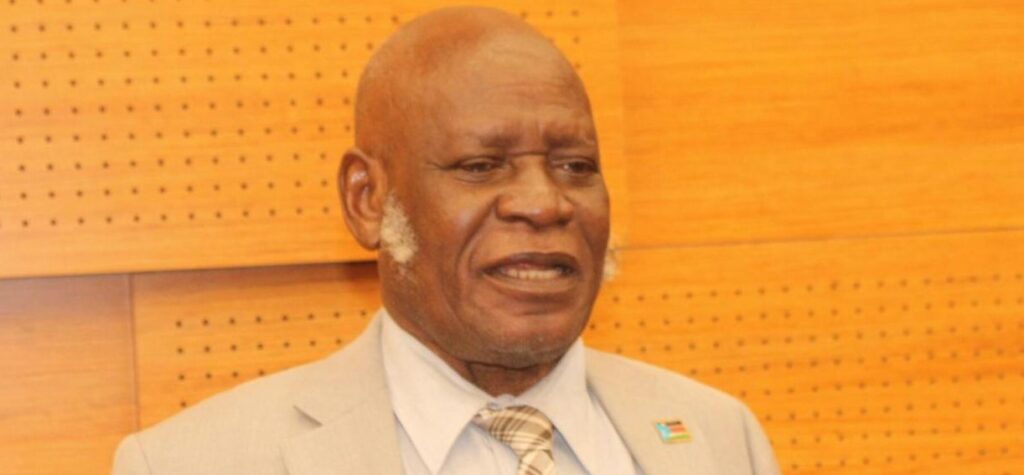
Lawmakers in South Sudan’s Transitional National Legislative Assembly have rejected a proposed general cooperation agreement between the government and Saudi Arabia, citing concerns that it could undermine economic sovereignty and weaken control over strategic sectors.
The agreement, signed in Riyadh on Jan. 24, 2022, was submitted to parliament by the Ministry of Justice during an ordinary sitting earlier this year. It seeks to expand bilateral cooperation with Saudi Arabia across sectors including agriculture, mining, health, education, tourism, culture, and investment.
Presenting the parliamentary Foreign Affairs Committee report, George Bureng, acting chairperson of the committee, said the deal had potential development benefits but raised risks due to its broad scope.
Bureng said foreign investment was necessary for development, noting that “the country needs development partners and capital inputs to assist in the development agenda.”
However, he warned that the cooperation agreement granted wide concessions across strategic sectors without sufficient safeguards.
“The agreement is too broad. It grants broad concessions to one investor in important strategic areas of our economy,” Bureng told lawmakers last week, adding that countries with weak institutions risk “resource predation” if oversight is insufficient.
According to the committee, the agreement covers nearly all major sectors of the economy, including oil, agriculture, livestock, fisheries, forestry, mining, tourism, education, health, sports and culture. Bureng described the scope as “a catalogue of wishes” opening up key sectors to one foreign partner.
Lawmakers said the provisions could expose South Sudan to exploitation in the absence of strong regulatory frameworks and due diligence mechanisms. The committee also raised concern over provisions allowing foreign involvement in sensitive areas such as education and cultural programming.
Speaker Oliver Mori Benjamin said parliament had returned the agreement to the Ministry of Foreign Affairs and International Cooperation for further review.
“It is clear that this agreement does not serve the interests of the people of South Sudan on several points raised,” Benjamin said, adding that it would be re-submitted after clarification.
The nine-article agreement also provides for expanded trade and investment cooperation in line with international trade rules, as well as exchanges of trade delegations and participation in trade fairs. It further outlines collaboration in scientific research, youth and sports, and media cooperation including radio and television content exchange.
SSOA lawmaker Peter Lomude Francis, representing Yei River County, said parliament should ensure all agreements are mutually beneficial.
“Agreements are supposed to be reciprocal in nature,” he said, backing the decision to return the deal for review.
Separately, Nyayang Johnson Lok Riek, a lawmaker from the ruling SPLM party, said ministries should avoid signing agreements before parliamentary approval.
“At least next time any MoU should be ratified by parliament before its signing,” she said.
Lawmakers did not immediately set a date for when the agreement would be resubmitted for further consideration.

 and then