



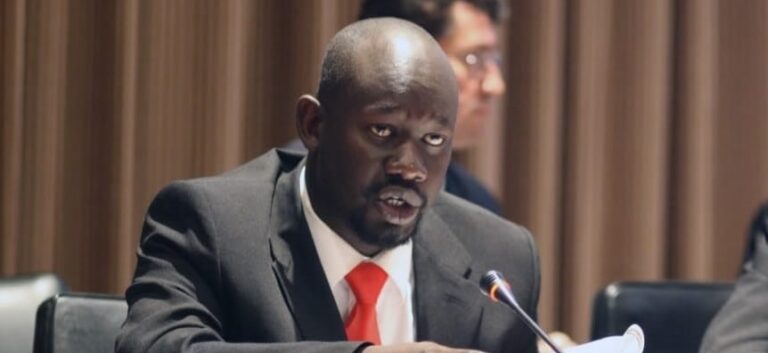
South Sudan’s holdout opposition alliance SSOMA said it was ready to enter peace talks with the government without preconditions, but insisted any negotiations should not be held in Kenya or Uganda, citing concerns over neutrality.
The remarks by Ambassador Emmanuel Ajawin, secretary-general of the South Sudan Opposition Movements Alliance (SSOMA), followed consultations in Dar es Salaam led by former Tanzanian president and African Union envoy Jakaya Kikwete as part of efforts to revive South Sudan’s stalled peace process.
SSOMA is a coalition of non-signatory opposition groups led by Gen. Thomas Cirillo, whose National Salvation Front (NAS) has been fighting government forces since 2017.
Ajawin told Radio Tamazuj on Tuesday that the meetings in Tanzania were preliminary consultations rather than formal negotiations.
“This was not the final consultation,” he said, adding that Kikwete was expected to continue engaging other stakeholders before any talks begin.
The consultations stemmed from recommendations made at an African Union High-Level Ad Hoc Committee summit on South Sudan held in Addis Ababa in February, Ajawin said.
He said SSOMA had declined to participate in the Kenya-led Tumaini Initiative launched in Nairobi in 2024 because it did not consider Kenya a neutral mediator.
“We did not participate in the Tumaini Initiative because we didn’t have trust in the Kenyan government,” Ajawin said, accusing Kenyan authorities of previously arresting and deporting South Sudanese political activists to Juba.
“Kenya was not a neutral and conducive venue,” he added.
The Tumaini Initiative was launched by President Salva Kiir and Kenyan President William Ruto in May 2024 to revive peace efforts and include holdout groups excluded from the 2018 peace agreement.
Ajawin, who also leads the National Democratic Movement-Patriotic Front (NDM-PF), said SSOMA accepted the Tanzanian invitation because it viewed both Tanzania and Kikwete as credible and neutral actors.
“When we got the invitation, we accepted because we have full trust that Tanzania is a neutral country,” he said.
Ajawin said SSOMA informed Kikwete it was prepared to engage in dialogue with the government without preconditions and discuss what it described as the root causes of the conflict.
At the same time, Ajawin said meaningful talks would require political will from the government and a more inclusive process involving opposition groups and civil society organisations.
“You have Dr. Riek Machar and his associates in jail, and if the regime wants to correct the current tension and situation, it must listen to the voice of reason and sit with the opposition,” he said.
Machar, South Sudan’s first vice president and leader of the SPLM-IO, has been under house arrest since March 2025 following escalating tensions between his movement and forces loyal to Kiir.
Ajawin said previous agreements, including the 2018 Revitalised Agreement on the Resolution of the Conflict in South Sudan (R-ARCSS), had failed to resolve the country’s political and economic crises.
“It seems the parties to the R-ARCSS have come to the conclusion that people need to sit again to discuss solutions and the way forward,” he said.
The opposition official added that mounting economic hardship, political tensions and growing regional and international pressure could push South Sudan’s rival parties toward a broader settlement.
High-level consultations involving South Sudanese opposition groups were held separately in Dar es Salaam on May 21-22 under Kikwete’s auspices.
Participants included the United People’s Alliance (UPA) led by Pagan Amum, SSOMA, the SPLM-IO aligned with Machar, the People’s Coalition for Civil Action (PCCA), and the newly formed People’s Resistance Front (PRF) led by Gabriel Changson Chang.

 and then