



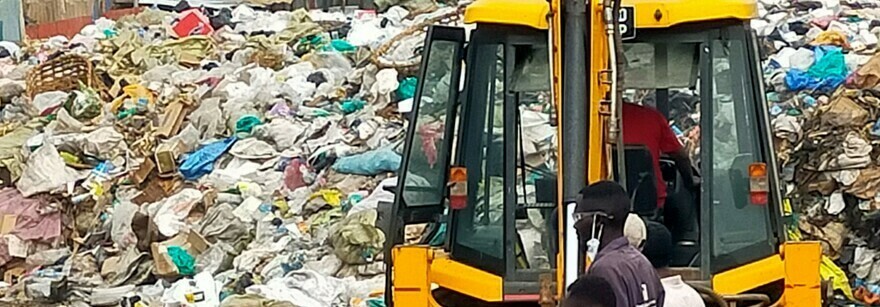
Juba, the capital of South Sudan, is growing rapidly. New houses are being built, neighbourhoods are expanding, and more people are arriving in search of work, opportunity, and a better life. Yet as the city grows, so does the volume of waste it generates. In many places, garbage piles have overwhelmed the systems designed to manage it.
A drive through Juba quickly reveals the scale of the challenge. Piles of plastic bottles, food waste, and other refuse have become common sights in vacant spaces, along roadsides, and inside drainage channels. What may initially appear to be a simple issue of cleanliness is, in reality, a warning sign of deeper problems in the way the city is urbanising.
Urbanisation without a functioning waste management system is a recipe for disaster
Urbanisation is not simply about having more people living in one place. It transforms almost every aspect of city life. More people require more housing, more businesses, more markets, and more services, safety, and social cohesion. At the same time, increased consumption generates larger amounts of food waste, plastics, and other materials that enter the urban environment every day.
If waste-management systems do not expand at the same pace, the waste does not simply disappear. Instead, it is displaced. It ends up beside homes, along roadsides, in drainage channels, on vacant land, and eventually in rivers and wetlands. When this happens repeatedly, a dangerous pattern begins to emerge: dumping becomes normalised.
What starts as a governance failure gradually evolves into a societal problem. People become accustomed to living with waste. A person sees rubbish already lying on the ground and feels little hesitation about adding another bag. A trader throws waste behind a market because others are doing the same. A household disposes of rubbish in a drainage channel even if there is a convenient alternative. Over time, practices that should be unacceptable become an ordinary part of everyday urban life.
Juba already has a Solid Waste Management Master Plan (2021-2030), which recognises the need to strengthen municipal governance, public participation, waste collection, disposal systems, equipment maintenance, recycling, and waste reduction. The issue is not that nobody knows what needs to be done. Rather, it is the gap between planning and implementation. Effective urbanisation requires not only policies but also action, enforcement, and collective responsibility (responsible citizenship).
The hidden costs of living with waste
When waste management fails, the consequences extend far beyond aesthetics. Poor waste management affects public health, environmental sustainability, water quality, transportation systems, economic activity, and the overall liveability of a city.
The public-health implications are particularly serious. Cities with poor sanitation often experience higher rates of waterborne and sanitation-related diseases such as cholera and typhoid. Improved sanitation and waste management have consistently been associated with significant reductions in such diseases. A medical doctor, who happened to be my friend, once remarked to me, only half-jokingly, that when someone contracts typhoid, it is often an indication that they have come into contact with human feces. Behind the humour lies a sobering truth: waste that is not properly managed eventually finds its way back into people’s lives through contaminated environments, food, or water.
The connection between waste and flooding is equally important. Waste dumped into drainage channels obstructs the flow of stormwater, while accumulated sand and sediment further reduce the capacity of already limited drainage infrastructure.
As a result, the plastic bottle thrown into a drain today may contribute to a flood tomorrow. The rubbish dumped beside a road may be washed into drainage channels and waterways when the rains arrive. The waste accumulating in a neighbourhood today may become a public-health emergency tomorrow.
The impacts are interconnected. Blocked drainage channels increase flooding. Flooding damages homes, roads, and businesses while disrupting movement across the city. Stagnant water and unmanaged waste create conditions that increase exposure to disease. Pollution degrades waterways and urban ecosystems. Businesses lose income when roads become impassable, while households bear the costs of damaged property, illness, and reduced quality of life.
There is also a less visible economic cost. A city overwhelmed by unmanaged waste becomes more difficult and more expensive to live in. Property values decline, even when buildings are well designed and well maintained. Investors become less attracted to neighbourhoods that appear neglected. Residents pay the price through increased health costs, environmental degradation, and diminished urban wellbeing.
What does the way we manage waste reveal about the way we are managing the growth of our city?
Juba has an opportunity to become a modern, resilient African capital. However, modern cities are not defined solely by the buildings they construct, the roads they pave, or the businesses they attract. They are also defined by the strength of the systems that allow people to live safely, move freely, protect their health, and enjoy a clean and dignified environment.
A growing city needs reliable systems for waste collection and disposal. It needs drainage infrastructure capable of handling rainfall. It needs regulations that are enforced, institutions that are effective, and citizens who recognise that public space belongs to everyone. Businesses, communities, and government all have a role to play in maintaining the shared environment on which urban life depends.
Ultimately, the challenge of waste management is not just about garbage, but about governance, public responsibility, and the kind of city Juba wants to become.
The writer holds a Doctor of Philosophy (PhD) in Disaster Risk Science. The views and opinions expressed in this article are solely those of the author and do not necessarily reflect the views, policies, or positions of any institution with which he is affiliated, employed, or associated, nor of any group or organisation to which he belongs. He can be reached at kuenywar@gmail.com.
The views expressed in ‘opinion’ articles published by Radio Tamazuj are solely those of the writer. The veracity of any claims made is the responsibility of the author, not Radio Tamazuj.

 and then