



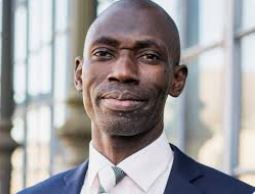
South Sudanese activist and executive director for the Community Empowerment for Progress Organization (CEPO), Edmund Yakani, has lamented the slow implementation of the Revitalized Peace Agreement and blamed mistrust among the peace signatories, continuous defections from various military groups, and lack of political will, urging the peace partners to recommit to speeding up the implementation.
President Salva Kiir, who doubles as Chairman of the Sudan People’s Liberation Movement (SPLM) Party suspended his First Vice President Dr. Riek Machar Teny who leads the Sudan People’s Liberation Movement in Opposition (SPLM-IO) in March last year after a court was established to try Machar and other seven co-accused in the deadly Nasir incident where South Sudan People’s Defense Forces (SSPDF)’s Maj. Gen. Majur Dak was killed alongside several soldiers.
Since then, Kiir removed all Machar supporters in the executive and legislature, abolishing some provisions in the peace agreement, and decided to go ahead with the elections in the absence of the main opposition.
Skirmishes have been ongoing in major parts of the country, especially in Jonglei, Upper Nile, Unity, Central Equatoria, Western Equatoria, and Eastern Equatoria states. Some attacks were also recorded in Western Bahr El Ghazal State.
During an interview with this publication on Monday, Yakani expressed his disappointment over setbacks in the peace process.
“The implementation of the peace agreement has not met our expectations, and there are a lot of challenges affecting the implementation of the Revitalized Peace Agreement,” he said. “There is mistrust among the peace signatories, political and military defections among the signatories; absence of political will to support activities of the peace implementation, and removal of the peace signatories and replacing them with dignitaries who were not part of the signatories.”
He demanded the reinstatement of forty-seven SPLM-IO parliamentarians, who Kiir removed in May after the peace agreement’s provisions in articles 8.2 and 8.3 were tabled before parliament for removal.
“The Members of Parliament belonging to the SPLM-IO under Dr. Riek Machar, and who have been revoked from the National Legislative Assembly must be reinstated because their removal came in after the agreement’s provisions of 8.2 and 8.3 that entitled the supremacy of the peace agreement above any law in South Sudan were abandoned,” he said.
According to Yakani, the Revitalized Joint Monitoring and Evaluation Commission (RJMEC) and the opposition were not consulted when the government planned the amendments to the agreement. He said civil society groups support amicable and transparent amendment of any key provision in the peace agreement.
“The SPLM-IO Party members said they do not agree with the changes made by the government without their being consulted and their consent,” he said. “As civil society organizations, we blame the government for abolishing the provisions that can be amended through the Revitalized Joint Monitoring and Evaluation Commission (RJMEC) if all the peace partners agree on that.”
The strained relations between the ruling Sudan People’s Liberation Movement and the rival Sudan People’s Liberation Movement in Opposition have resulted in unrest in Jonglei State and Nasir County in Upper Nile State, among other areas, the activist noted.
“We have already witnessed the results of sour relations between the SPLM and the SPLM-IO parties, and we are monitoring the military developments in Jonglei, Nasir, and the suspension of SPM-IO members, whether in the executive and legislature,” Yakani stated. “The ongoing war in the country is directly connected with mistrust between the SPLM Party led by President Kiir and the SPLM-IO chaired by Riek Machar. If the parties don’t manage to sort out their differences, the country slides into an era of instability, and we are recommending the warring parties to recommit themselves to implementing all the provisions of the peace agreement.”
According to the activist, the country is not ready for an election.
“Concerning the upcoming elections, the country is not ready for the elections, but the government strategizes to keep the citizens busy, claiming that the elections are coming,” he said. “If the elections are really going to be conducted, some steps come before that period, and that include the funding to the Elections Commission so that it can recruit the employee and launch the registration, not to mention the time for political parties to run their campaigns.”
Yakani proposed 22 September as the deadline for the current government, and that an interim and technocratic government be formed to prepare the country for the elections. He stressed that any dignitaries serving in the technocratic government must not run for the elections as candidates.
“The only solution is that the current government must be dissolved on September 22and the interim government be formed and tasked to proceed with implementation of the unimplemented provisions in the peace agreement and prepare the country for the elections,” he said. “Those who take part in the technocrat government must not participate as candidates in the upcoming elections.”
“Our role as civil society organizations, women, and youth is to push the parties to come back for open political roundtable discussions so that they can prioritize how to take the country to elections,” he stated. “All political detainees must be released to join the roundtable discussions, and my message to President Kiir is to free Riek Machar, resolve their disputes through the roundtable, stop the war, and lead the country towards peace.”

 and then