



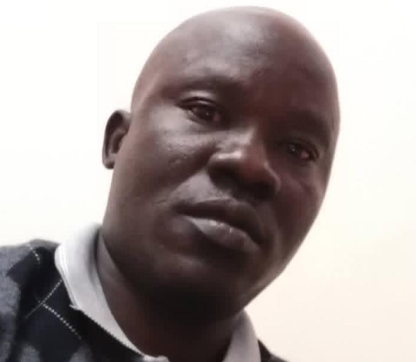
About three months ago, President Salva Kiir dismissed Stephen Dhieu Dau, a member of the Sudan People’s Liberation Movement’s (SPLM) Political Bureau, from his position as Chairman of the Board of Directors of the South Sudan Revenue Authority (SSRA), following the leak of financial documents that revealed the extent of corruption within the agency. Senior officials were reportedly involved in withdrawing more than two million dollars in a short period. According to the leaked report, millions of dollars disappeared from the state treasury between December 23, 2025, and February 3, 2026, without any clear explanation for the withdrawal of such large sums. This prompted the National Security Agency to direct the Economic Security Division to investigate the matter.
After three months, it is necessary to ask the question: Where has Major General Chol Roy Kombok reached with his investigations? And what role did the former Chairman of the National Revenue Authority, economist Stephen Dhieu Dau, play in protecting public funds from the tampering of corrupt individuals? We can raise many questions related to corruption in the country, except perhaps the following: Why has the long-awaited General Chol report not yet seen the light of day, along with the other reports that preceded it? When we raise these questions, the purpose is not to do justice to our people or those who may have been falsely accused in cases involving the embezzlement of public funds. Rather, it is to expose the inaction of state agencies in fighting corruption, the scale of which is staggering. This comes amid increasing efforts by the oppressive regime to cover up corruption and protect corrupt individuals.
Stephen Dhieu Dau, who is suspected of corruption due to his previous position as Chairman of the Board of the National Revenue Authority, has recently donned the mantle of a preacher on elections and democracy. This is taking place in a republic based on tribalism, where the SPLM regime has been fighting democracy since the first day it came to power.
The question that should be raised here, within the framework of refuting the claims of Mr. Stephen Dhieu Dau, a member of the SPLM Political Bureau, which he attempted to advance through his article entitled “Elections: A Pathway to Peace, Democracy, and National Legitimacy in South Sudan”, is this: Which should come first, dismantling the existing tribal republic, thereby creating conditions for free, fair, and transparent elections, or clinging to it through repression and the falsification of the people’s will, which will inevitably lead to the continuation of conflicts and potentially disastrous consequences?
The path to democracy is crystal clear if we truly want to democratise the first elections in independent South Sudan. Politically, constitutionally, and institutionally, this path has nothing to do with the propaganda article of Stephen Dhieu Dau, who writes from the perspective of a tribal dictatorship while embellishing his arguments with democratic slogans. These slogans serve as deceptive justifications designed to cover up the oppressive regime’s declared war against democracy, a dictatorship defended by people such as Stephen Dhieu Dau.
Articles of the type written by Stephen Dhieu Dau, a member of the Political Bureau of the Sudan People’s Liberation Movement, can be classified as attempts to bypass the objective realities relating to the implementation of the Revitalised Peace Agreement, both in letter and spirit. They are also designed to support efforts to hold unfair elections as a partisan strategic move through which the repressive regime seeks to obtain false popular legitimacy through the institutions of the tribal republic.
Raising the banner of democracy by those who support a totalitarian regime is merely a political fad that has long characterized the leaders of the SPLM, who exploit state institutions where tribalism, corruption, and nepotism are widespread at the expense of accountability and transparency, which are among the core values of democracy. When economist Stephen Dhieu Dau presents himself as a democrat, we are compelled to ask: What kind of democracy is he talking about?
As we live today under division, oppression, and exploitation, our national priorities seem very different from those that Stephen Dhieu Dau believes can be achieved through sham elections. Such elections represent nothing more than an attempt to undermine our national priorities of restoring freedom and dignity, rescuing our country from the quagmire of war, and reorganizing our people around freedom, justice, and equality, the pillars of sustainable peace in any country.
The facts on the ground refute the claims made in the article by Dhieu Dau, a Political Bureau member of the ruling SPLM. Elections held under a police state dominated by tribal factions can in no way be a pathway to peace and democracy. Therefore, the use of such rhetoric is nothing more than political hypocrisy in its ugliest form.
It is a misguided belief, and one that should not guide us, when Stephen Dhieu claims that democracy flourishes when leaders derive their legitimacy from the ballot box. The flourishing of democracy is one thing; access to the ballot box is another. Between these two realities lies a question that Political Bureau member Dhieu avoids answering: Why has the regime deliberately failed over the past two decades to guarantee safe access to the ballot box?
It is politically naïve to use the 2010 elections as justification for holding unfair elections today. We could have organised the first democratic elections in the Republic of South Sudan in a manner befitting a people yearning for democracy. Instead, the SPLM fired the first shot of treachery and betrayal during its internal political struggle in 2013, ushering in a democracy of blood and bullets.
The referendum, as a democratic exercise, demonstrated our people’s high level of political and organizational awareness in 2011, ultimately leading to the establishment of our independent state. This was a direct result of our people’s choice of freedom over oppression, peace over war, and democracy over totalitarianism. Yet the SPLM disregarded these aspirations in defence of its tribal project. How, then, can the SPLM not be apprehensive about holding fair elections in a genuinely democratic environment? In short, fair elections mean holding the SPLM regime accountable, and this is precisely what its leaders, including Stephen Dhieu Dau, fear.
Regrettably, this SPLM Political Bureau member, Stephen Dhieu Dau, is using failed international experiences in implementing peace agreements as a pretext to justify holding unfair elections in South Sudan under the threat of tribal weapons. In the context of this flawed justification, where are those countries today, especially Iraq, Libya, Afghanistan, and the Democratic Republic of the Congo?
In conclusion, the hypnotic approach used by economist Stephen Dhieu Dau in presenting the contradictions of his arguments through his article, “Elections: A Pathway to Peace, Democracy, and National Legitimacy in South Sudan”, is ultimately futile. Our people are determined to bring about change that will spare our country and its citizens from the divisions and senseless wars that the SPLM regime has pursued since the day it seized power.
The writer can be reached via Sokiril8@gmail.com.
The views expressed in ‘opinion’ articles published by Radio Tamazuj are solely those of the writer. The veracity of any claims made is the responsibility of the author, not Radio Tamazuj.

 and then