



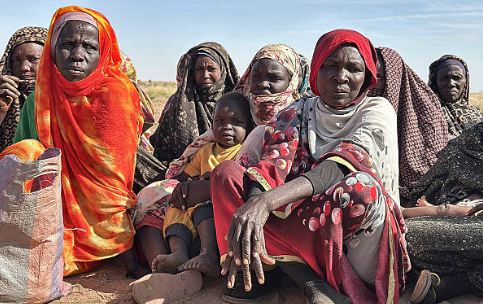
UN Women Regional Director for East and Southern Africa, Anna Mutavati, on Friday said that UN Women is gravely concerned by the emerging pattern of violence against women and girls in El Obeid, Sudan, where drone attacks during the day and sexual violence at night had left no safe window for women and girls to collect water, mirroring the atrocities documented in El Fasher the previous year.
She said access to food, healthcare, and other essential services was also severely limited, particularly in displacement sites.
“With the rainy season set to peak the following month, safe water was critical to reducing the risk of deadly waterborne diseases. Cholera was already spreading in Sudan, with 1,330 cases reported by WHO in early July,” she said. “The combination of malnutrition, which weakened the immune system and was a growing concern among women and girls, and the lack of access to healthcare, was further exposing women and girls to the risk of severe illness and death.”
According to Mutavati, in El Obeid, due to drone strikes targeting water sources and distribution points during daylight hours, women and girls were forced to wait until after nightfall to collect water.
“Under the perception that darkness offered protection from aerial attacks, these women and girls had been harassed, raped, and subjected to other forms of sexual violence,” she stated.
She regretted that sexual violence had been used as a weapon throughout Sudan’s three-year war, becoming one of its most defining features. UN Women data showed that the number of women and girls requiring gender-based violence services in Sudan had quadrupled since the beginning of the conflict, reaching an estimated 12.7 million in 2026.
UN Women reiterated its call for an immediate ceasefire, paving the way for inclusive peace talks and an end to the war. UN Women further called for safe and unimpeded humanitarian access, full respect for international humanitarian and human rights law, and the protection of women and girls. Women had to be fully, safely, and meaningfully included in peace processes, humanitarian decision-making, and recovery efforts.
Answering questions from the journalists, Mutavati reiterated that since the start of the war, the number of people who needed support for gender-based violence services had increased four times. Between 70 and 80 percent of those were women and children.
Rolando Gómez, Chief of the Press and External Relations at the United Nations Information Service in Geneva, chaired the hybrid press briefing, which was attended by the spokespersons and representatives of the United Nations Refugee Agency, the World Food Programme, the World Health Organization, the Office of the High Commissioner for Human Rights, UN Women, and the International Federation of Red Cross and Red Crescent Societies.

 and then