



During the transitional negotiations in Entebbe, President Salva Kiir, First Vice President Dr. Riek Machar, political party leaders, and President Yoweri Museveni agreed to retain the structure of five Vice Presidents during the transitional period. The SPLM/A-IO and civil society organizations had instead proposed a leaner executive consisting of only the first and second vice presidents, as originally provided for in the 2015 Peace Agreement. However, the ITGONU delegation rejected this proposal, insisting that Gen. Taban Deng Gai and Dr. James Wani Igga should continue serving as vice presidents during the transitional period.
The opposition’s proposal was ultimately discarded, reportedly under the influence of President Museveni and IGAD. The real problem facing South Sudan is not the size of the government, with its five vice presidents, 35 national ministers, and more than 600 parliamentarians. The fundamental challenge is the lack of political will to fully implement the Revitalized Agreement on the Resolution of the Conflict in the Republic of South Sudan (R-ARCSS), signed by President Salva Kiir and Dr. Riek Machar in September 2018 to end the country’s devastating civil war. The peace agreement provided ample time for institutional reforms, reconciliation, and the delivery of essential public services.
South Sudan is not a poor country. It has substantial oil resources and other sources of government revenue. The challenge has never been the absence of resources but rather the failure to manage them transparently and effectively. As things stand, South Sudan reportedly exports approximately three oil cargoes each month. If one cargo generates around US$68 million on the international market, then three cargoes would yield approximately US$204 million per month. If government salaries amount to roughly US$30 million each month, then the proceeds from just one cargo could cover salaries for civil servants, members of the organized forces, and diplomatic missions while leaving an estimated US$38 million in reserve. The remaining revenue from the other cargoes could be invested in development projects and economic stabilization. These are issues that deserve honest national discussion.
Across Tonj, Warrap, Lakes, Akobo, Nasir, Eastern Equatoria, Western Equatoria, Wau, and Unity State, innocent South Sudanese continue to lose their lives every day. Their suffering is not because elections have not yet been held. Rather, it is because peace and security remain elusive. The R-ARCSS clearly outlines several prerequisites before credible elections can take place. These include the completion of a permanent constitution, a national population census, implementation of the security arrangements, judicial reforms, protection of political freedoms, reparations for victims, and the voluntary return of refugees and internally displaced persons.
Elections conducted before these conditions are met risk undermining peace and could trigger renewed conflict. Any election should be based on broad national consensus among all signatories to the peace agreement. During the restructuring of state governments in 2020, the SPLM-IO proposed limiting each state legislature to 51 members and appointing only 10 state ministers. However, the ITGONU delegation, led by Hon. Paul Mayom Akech, rejected this proposal and instead proposed 17 state ministers and 100 state legislators for each state. Likewise, SPLM-IO proposed maintaining 51 members in the Council of States, but ITGONU insisted on expanding it to 100 members to accommodate officials affected by the reversal of the 32-state system.
These decisions demonstrate that the bloated structure of the Revitalized Transitional Government was largely the result of political compromises designed to accommodate existing political interests. South Sudanese deserve to know this reality. Holding elections under the current circumstances will not bring meaningful change. South Sudan needs genuine peace before elections. I am not an economist, but I believe that printing more money cannot stabilize an economy suffering from hyperinflation. Without peace, security, and productive economic activity, excessive monetary expansion will only worsen inflation and weaken the South Sudanese Pound.
As Hon. Dr. Lam Akol Ajawin, Chairman of the National Democratic Movement (NDM), warned several years ago, South Sudan risks becoming like a bankrupt shop forced to close its doors. Sustainable economic recovery requires peace, political stability, and responsible governance. The way forward is clear. The government should unconditionally release all political detainees, including First Vice President Dr. Riek Machar, and engage in an inclusive national dialogue. Such a process should be facilitated by the African Union through its appointed envoy, former President of Tanzania H.E. Jakaya Mrisho Kikwete, to mediate between President Salva Kiir, Dr. Riek Machar, and other political stakeholders. South Sudan must return to the full implementation of the Revitalized Peace Agreement in both letter and spirit before any election is held. It should not be the responsibility of one political party alone to determine the country’s readiness for elections.
Only an inclusive political process, grounded in the peace agreement, can establish when the necessary conditions have been met. The people of South Sudan deserve lasting peace, national unity, justice, and democratic elections conducted in a secure and credible environment. Peace must come before elections.
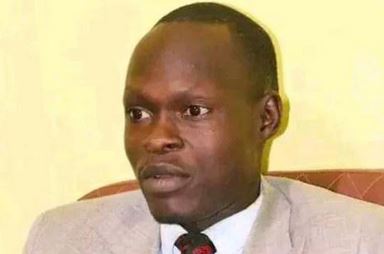
The writer is a member of the SPLM-IO Political Bureau, former chairperson of the Relief and Rehabilitation Commission (RRC) in Northern Bhar el Ghazel State. He can be reached via Majokdit2024@gmail.com.
The views expressed in ‘opinion’ articles published by Radio Tamazuj are solely those of the writer. The veracity of any claims made is the responsibility of the author, not Radio Tamazuj.

 and then