



The authorities in Western Equatoria State, together with child protection partners, have raised concerns over increasing cases of gender-based violence (GBV), child neglect, and forced early marriages, while also dismissing allegations of systematic recruitment of children into armed forces in parts of the state.
Speaking to journalists over the weekend in Yambio, Cecelia Anigunde, the Western Equatoria State Minister of Gender, Child, and Social Welfare, urged parents to take full responsibility for the care and protection of their children despite prevailing economic hardship.
She stressed that the family remains the primary institution for child protection, warning that neglect exposes children to street life and harmful behaviour.
“I encourage all parents to take proper care of their children and bring them closer to the family so that they feel loved and protected,” she said. “When children are neglected, they may end up roaming the streets and engaging in harmful activities.”
Anigunde acknowledged that government support to vulnerable families remains limited due to resource constraints, but emphasized that this does not reduce parental responsibility. She further warned that child neglect undermines not only families but also the reputation of communities and government institutions.
The minister also addressed circulating reports alleging child recruitment in military barracks in Rongwu, Maridi, and Aimatara, describing the claims as unfounded.
“No children are being recruited in the barracks. The only case identified involved a child who went there on his own due to difficult living conditions and poverty,” she clarified. “We are not against recruitment, but it should only involve mature young men between 20 and 35 years. Children must never be part of the armed forces.”
Anigunde also reiterated the government’s commitment to peace and stability in Western Equatoria State, urging communities to reject violence and focus on development.
She further raised concern over rising cases of forced and early marriages, which she said are often driven by poverty, and called on parents to prioritize education for girls.
“We are tired of seeing girls subjected to forced marriages because of poverty. Parents should protect their daughters and support their education and future,” she said.
The minister encouraged households to engage in farming and small businesses to improve livelihoods, noting that economic empowerment at the family level is key to sustainable development.
Relatedly, the State Ministry of Gender, Child, and Social Welfare confirmed that army barracks across the state have been instructed to strictly avoid any association with children, in line with the Comprehensive Action Plan on the six grave violations against children.
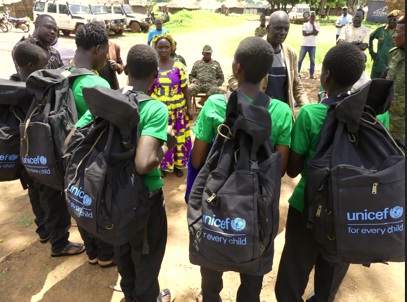
According to Tandu Philip, Inspector of Child Welfare and State Focal Person for the Ministry, the State Child Protection Technical Committee (STC) recently visited SSPDF barracks in Yambio, where four children previously associated with armed forces were identified and released.
The children are currently undergoing psychosocial counselling and will later be enrolled in vocational training at Tindoka. Tandu explained that such children are assessed over time to determine their background and the circumstances of their association with armed forces before reintegration into communities.
He added that Child Protection Units established within SSPDF barracks are mandated to report any suspected child association cases to relevant authorities, including the Ministry of Gender, DDR Commission, UNICEF, and UNMISS.
At the national level, Oluku Andrew Holt, National Coordinator for Child DDR/CAAFAG at the National DDR Commission, confirmed that four additional children previously associated with SPLA-IO forces—later integrated into SSPDF structures—were also formally released in Yambio on May 30, 2026.
He said the release followed a verification exercise conducted by the State Child Protection Technical Committee with support from delegates from Juba and the United Nations Country Task Force on Monitoring and Reporting, including UNMISS and UNICEF.
Oluku emphasized that one individual is undergoing age verification after indications that he may have reached adulthood.
“No child should be recruited or used in military activities under any circumstances,” he said.
For her part, Gloria Eve Kasande of UNMISS welcomed ongoing efforts by the South Sudan Council of Defence and Security (SSCDS) to professionalize the armed forces and remove children from military structures.
She called for stronger coordination between national authorities and partners, particularly UNICEF, to ensure effective reintegration programs. She emphasized that released children must be supported through education, psychosocial care, and livelihood opportunities to enable successful reintegration into civilian life.
The developments come amid ongoing national and state-level efforts to strengthen child protection systems, promote peacebuilding, and address social vulnerabilities affecting children and families in Western Equatoria State.

 and then