



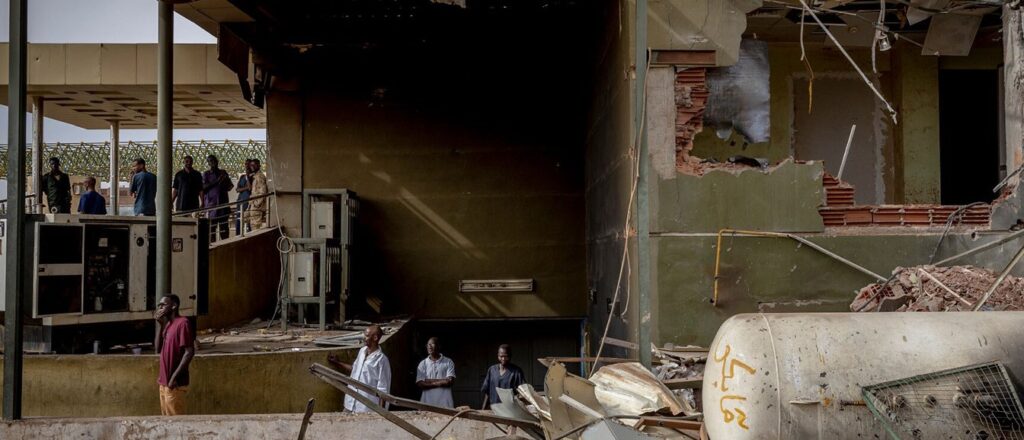
A hospital strike in Sudan’s East Darfur state has killed at least 70 people and injured more than 140, as the United Nations warned of escalating violence and a surge in drone attacks across the country.
Speaking at a U.N. press briefing in Geneva on Tuesday, a World Health Organization official said Al Daein Teaching Hospital, the main referral facility in the regional capital, was hit on March 20.
Initial reports put the death toll at 64, but it later rose to 70, including seven women and 13 children, according to Hala Khudari, the WHO’s acting deputy representative in Sudan. A total of 146 people were injured, including patients and relatives. One doctor and two nurses were killed, while eight other health workers were wounded.
The hospital, which serves more than 2 million people in Al Daein and surrounding areas, sustained heavy damage, particularly to its outpatient and emergency departments.
Khudari said the attack has severely disrupted access to health care in a region already strained by conflict since April 2023. Patients in need of specialized treatment may now have to travel more than 150 kilometers (93 miles) to reach another referral facility.
The WHO and its partners have redirected patients to alternative facilities and are using pre-positioned medical supplies intended for about 40,000 people over three months. Additional trauma kits are being mobilized from neighboring Chad.
However, Khudari said the response is hampered by limited access, a weakened health system and severe funding shortages, with only about 6% of the 2026 health response plan funded.
The WHO has verified 213 attacks on health care in Sudan since April 2023, resulting in more than 2,000 deaths and nearly 800 injuries. In 2025, Sudan accounted for 82% of reported deaths from such attacks globally, according to the agency’s monitoring system.
Separately, the U.N. human rights office warned of a sharp increase in drone strikes, which it said have killed more than 500 civilians between Jan. 1 and March 15, most of them in the Kordofan region.
Marta Hurtado, a spokesperson for the Office of the High Commissioner for Human Rights, said drone attacks have continued in recent days. On March 21, a strike on a convoy of commercial vehicles in Al Daein reportedly killed 23 people.
Another drone attack on March 20 in Ad Dabbah, in Northern State, hit civilian infrastructure including an electricity substation and an engineering college, killing six people and cutting power to the area.
The human rights office said it has documented repeated attacks on markets, water and energy infrastructure, and health facilities, warning that such actions could amount to war crimes.
Hurtado said the U.N. has not attributed responsibility for the attacks but noted that both sides in the conflict are using drones extensively. She called for an immediate halt to their use.
The office also warned that the spread of drone warfare risks spilling beyond Sudan’s borders and escalating into a wider regional crisis. It urged countries to stop arms transfers that could fuel the conflict.
U.N. officials called on all parties to respect international humanitarian law, which prohibits attacks on civilians and civilian infrastructure, including hospitals, and to allow safe and unhindered humanitarian access.
U.N. Secretary-General António Guterres, through his spokesperson, called for an immediate cessation of hostilities and the protection of civilians, health workers and aid personnel.

 and then