



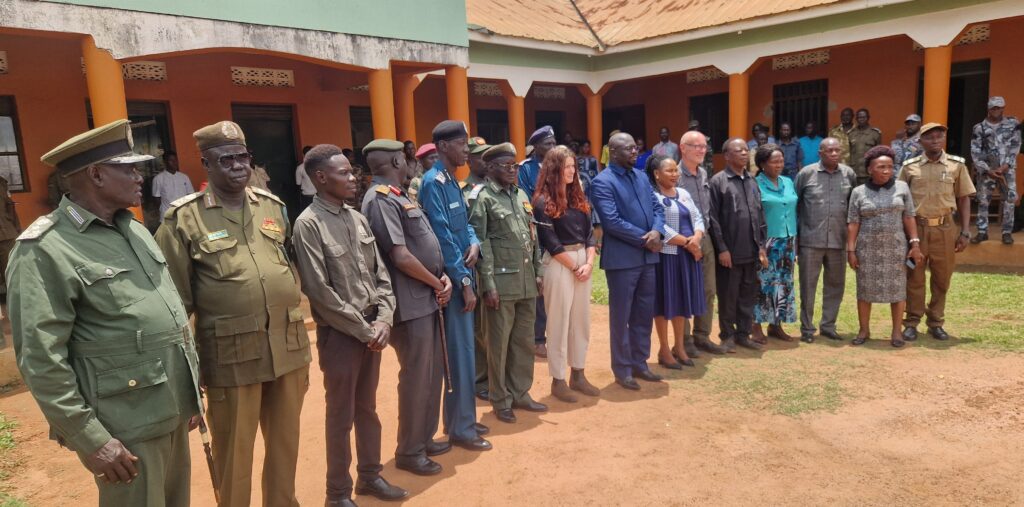
Western Equatoria State Governor Daniel Badagbu Rimbasa has intensified efforts to combat illegal wildlife trade, warning that the continued killing and trafficking of animals poses a serious threat to biodiversity, public health, and livelihoods across the state.
Speaking on Monday during a high-level meeting with wildlife authorities, security agencies, and conservation partners, including Fauna and Flora International (FFI), the governor said the government will take firm action to end illegal hunting, wildlife trafficking, and the uncontrolled sale of bush meat.
“We came to the wildlife headquarters in Western Equatoria for an interagency meeting and to give government commitment and political will to fight and stop illegal wildlife trade, especially the selling of bush meat,” he said. “We also have to create more awareness among our people so that we can protect our wildlife and conserve our biodiversity and ecosystem.”
He further warned that the consumption of bush meat exposes communities to dangerous zoonotic diseases, including Ebola and other emerging infections, stressing the strong link between wildlife protection and public health.
The meeting brought together key stakeholders to assess the growing pressure on wildlife and agree on practical measures to strengthen enforcement, improve coordination, and increase public awareness, especially in remote areas where illegal activities remain widespread.
Lauren MacNeil, Acting Country Manager of Fauna and Flora International, said the initiative focuses on addressing the root causes driving illegal wildlife activities. She explained that efforts are underway to change community perceptions, reduce reliance on bush meat, and promote sustainable alternatives that support livelihoods without harming wildlife.
“I want to thank the governor for his engagement in the interagency committee. We are grateful that he is here with the other honourable attendees and for his words that they are going to take Illegal Wildlife Trade (IWT) seriously in Western Equatoria,” she said. “It is something that has to be owned by the government. We, as a partner, through the wildlife service, are here to support in any way we can in addressing the wildlife trade.”
She added that protecting wildlife is essential for maintaining balanced ecosystems, building resilience against climate change, and ensuring long-term benefits for local communities.
Meanwhile, Joseph Duop Deng, the Director General for Wildlife in Western Equatoria State, said illegal hunting and bush meat trade continue to threaten animal populations due to weak enforcement and limited access to protection services in rural areas. He emphasized the need for joint action by all stakeholders to protect wildlife and preserve biodiversity.
“Today is great because our partner, Flora and Fauna, called a stakeholders meeting in our office, which was also attended by all the organized forces,” he said. “All of us have to protect the animals, and that is why we gathered here. The meeting was very fruitful.”
He noted that without urgent intervention, continued exploitation of wildlife could lead to the disappearance of key species, negatively affecting ecosystems and the communities that depend on them for survival.
Conservation experts at the meeting highlighted that illegal wildlife trade is among the largest illicit activities globally, often linked to organized crime networks. They warned that the practice not only leads to biodiversity loss but also undermines economic stability and environmental sustainability.
The stakeholders agreed that coordinated action between the government, conservation partners, and local communities will be critical in addressing the crisis, protecting wildlife, and preventing further environmental degradation in the state.

 and then