



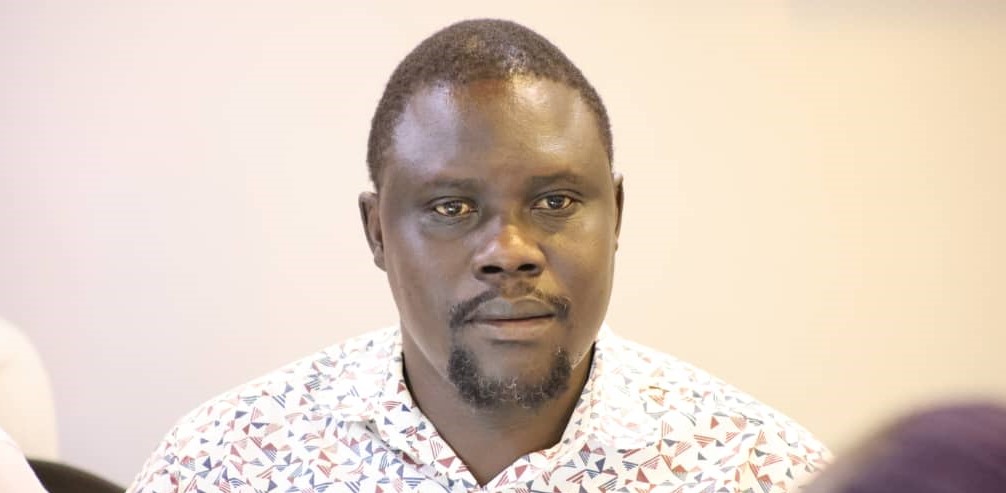
South Sudanese policy and political analyst Boboya James Edimond has welcomed the recent targeted visa restrictions announced by the United States Government against South Sudanese officials, describing it as a sign that the international community is increasingly aware of the suffering of ordinary citizens.
He told Radio Tamazuj that the measures announced by the U.S State Department, including references to Crawford Limited, were “very significant news” for the people of South Sudan.
“This is news that the people of South Sudan want to hear,” he said. “It tells the people of South Sudan that Americans are thinking about us and are concerned about us.”
Edimond argued that many South Sudanese believe the international community now better understands the political and economic challenges facing the country. He called for additional targeted sanctions against leaders accused of obstructing the implementation of the peace agreement and mismanaging national resources.
“We are asking for more targeted sanctions,” he stated. “We are asking for more punishment for some of these leaders in South Sudan who are obstructing peace implementation and squandering the resources of this nation.”
According to Edimond, the country’s leadership has failed to use South Sudan’s resources to improve the lives of citizens, despite the overwhelming support for independence during the 2011 referendum.
“The people of South Sudan voted for independence because they wanted the economic resources of the country to improve their lives,” he said. “But some leaders have taken this country hostage. They are looting the country and diverting its resources.”
He linked the country’s worsening economic situation to corruption and poor governance, noting that the government has struggled to pay civil servants and members of the armed forces.
“The country is not able to pay its own civil servants and army, who are supposed to protect the sovereignty and borders of the Republic of South Sudan,” Edimond said.
He urged the international community to engage constructively with President Salva Kiir’s government to ensure the timely implementation of the peace agreement. He also called for the release of political prisoners and the establishment of a clear timeline for inclusive national dialogue.
The analyst criticized claims made by some lawmakers that recent government actions were aimed at protecting national sovereignty.
“They are not protecting the sovereignty of this nation,” he said. “They are protecting their own interests because they want to become richer.”
Edimond pointed to poor infrastructure, deteriorating healthcare and education systems, youth unemployment, and lack of support for agriculture and the private sector as evidence of governance failures.
“There are potholes all over Juba, roads are not being developed, health services are ailing, and the education system is failing,” he said. “Employment for youths and women has become a serious problem.”
He concluded by calling on the government to address the country’s challenges “in the spirit of honesty” before the people of South Sudan, the international community, and “before God

 and then