



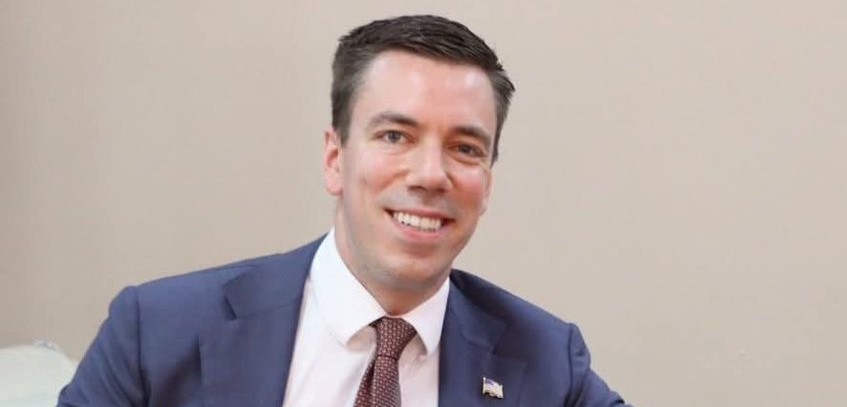
The United States will pursue a more pragmatic and interest-driven relationship with African countries focused on trade, security and investment rather than traditional aid and development frameworks, a senior U.S. diplomat said on Monday.
Speaking at an Africa Day Forum hosted by the African Union Mission in Washington, Nick Checker, the outgoing senior bureau official for African Affairs, said the administration of President Donald Trump was reshaping U.S. engagement with Africa around what he described as “reciprocity and mutual respect” and advancing U.S. national interests.
“We are in the midst of a fundamental change in the relationship between the United States and African countries, from one based on dependency towards one based on trade, investment, and mutually beneficial partnership,” Checker said.
The remarks offered one of the clearest outlines yet of the administration’s Africa strategy, emphasizing commercial diplomacy, critical minerals, infrastructure development and security cooperation while scaling back traditional foreign assistance.
Checker said U.S. foreign aid would be evaluated based on whether it advanced American interests, echoing earlier comments by Secretary of State Marco Rubio that assistance should serve U.S. strategic objectives.
“Foreign assistance is not charity. It is a tool of American diplomacy and statecraft,” he said.
On security, Checker said Washington would focus its efforts on preventing threats to the United States and supporting African partners that demonstrate the capacity and commitment to address their own security challenges.
He said the administration was also willing to engage governments that had previously been isolated by Washington, citing renewed engagement with countries in the Sahel region.
The diplomat said the United States would not seek to force African countries into choosing sides in competition among major powers, including China and Russia.
“Absent a clear link to key national interests, our aim is to accept Africa’s strategic choice to hedge rather than engage in zero-sum competition everywhere,” he said.
Checker pointed to U.S.-backed peace initiatives, including efforts to support implementation of a peace agreement between the Democratic Republic of Congo and Rwanda and diplomatic efforts aimed at ending the conflict in Sudan.
He also highlighted the administration’s commercial diplomacy strategy, which focuses on market reforms, infrastructure projects and expanding opportunities for U.S. companies across Africa.
According to Checker, U.S. embassies and officials have supported more than 60 commercial deals worth over $25 billion since the start of the administration.
He said Washington was placing particular emphasis on securing supplies of critical minerals from Africa through what he described as transparent and mutually beneficial partnerships.
Checker, who said the forum would be his final public engagement as head of the Africa Bureau, thanked African diplomats for their cooperation and said the United States remained committed to strengthening ties with the continent.
“We look forward to working with you as we strengthen the U.S.-Africa partnership in the period ahead,” he said.

 and then