



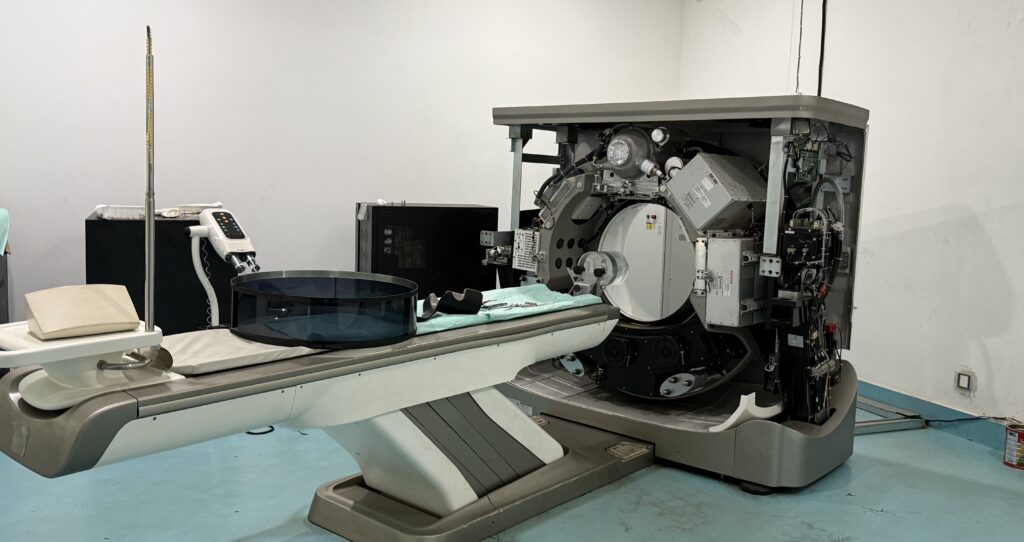
Telecommunications company MTN South Sudan said on Monday it would support the repair of a computed tomography (CT) scanner at Juba Teaching Hospital, a move expected to improve access to diagnostic services and reduce healthcare costs for patients.
The CT scanner at Juba Teaching Hospital, South Sudan’s largest public referral facility, has been out of service for about five months, forcing patients to seek scans at private healthcare facilities.
Hospital officials said only a limited number of facilities in the capital, Juba, currently offer CT scan services, often at costs that are unaffordable for many residents.
“It’s a government hospital, so they need a lot of support,” MTN South Sudan Chief Executive Officer Mapula Bodibe said during a visit to the facility. “Also, so that they are not charging patients too much money for accessing services.”
Dr. Gift Natana, Director General of Juba Teaching Hospital, said the breakdown had affected the hospital’s ability to provide critical diagnostic services.
“As a major hospital, with the limited resources provided by the government, there are still gaps in many areas,” Natana said. “The support from MTN will help the hospital cover some of these gaps and make services more affordable for patients.”
In addition to repairing the scanner, MTN said it would install a solar power backup system for the hospital’s neonatal intensive care unit and introduce a mobile health information service for expectant and new mothers.
Under the programme, women will receive voice messages and text alerts containing information on antenatal care, medications and other health services.
“A lot of mothers, when they are not able to come to the hospital, will be able to receive voice recordings with information about their check-ups, medication and the care they need,” Bodibe said.
Natana said the solar power system would help ensure uninterrupted operation of neonatal equipment and improve vaccine storage.
“The backup solar system for the neonatal ICU will help reduce child mortality, especially among premature babies,” he said. “It will also help preserve vaccines by providing reliable power, reducing spoilage and waste.”
According to the World Health Organization, South Sudan has one of the world’s highest maternal mortality rates and faces significant challenges in accessing quality healthcare services.

 and then