



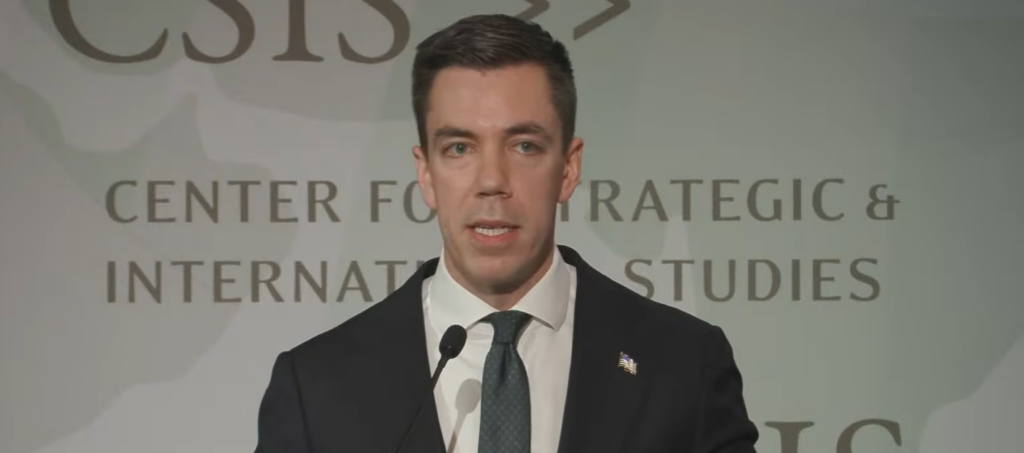
A senior U.S. State Department official has urged South Sudanese leaders to take urgent steps to restore peace, improve governance and strengthen cooperation on security and immigration issues, according to a Monday statement from the U.S. Embassy in Juba.
Africa Bureau Senior Official Nick Checker visited Juba on May 7–8, where he held meetings with senior government officials and outlined Washington’s priorities in the country, including promoting peace, reducing aid dependency, ending what he described as predatory practices against foreign assistance implementers, and improving border security cooperation.
During the meetings, Checker called for renewed dialogue among all parties to the 2018 peace agreement, which ended a five-year civil war. He stressed the need for urgent action to stabilise the country.
He also questioned claims of ongoing inter-party dialogue while First Vice President Riek Machar remains under arrest and on trial, describing such assertions as “farcical,” according to the embassy statement. He said that although the 2018 peace deal was flawed, it remains the basis of legitimacy for the transitional government.
The U.S. Embassy said Washington has provided more than $9.5 billion in assistance to South Sudan since independence in 2011, while South Sudan’s leaders have reportedly earned more than $25 billion in oil revenues over the same period.
Checker said authorities had for years relied on recurring crises and reform pledges to secure international support while obstructing humanitarian delivery, according to the statement.
He urged leaders to prioritise public revenue for salaries and investment in health, education and other essential services, as well as contributions to humanitarian response.
He further said pre-independence commitments by the Sudan People’s Liberation Movement (SPLM) to end marginalisation of the south had not been fulfilled domestically, adding that leaders had instead perpetuated similar patterns through mismanagement of public funds, the embassy statement said.
Juba is under growing pressure from the international community, particularly the United States, to restart inclusive political dialogue ahead of elections scheduled for December this year. Donors and partners have repeatedly called for progress on implementation of the 2018 peace agreement amid concerns over political tensions and delays in reforms.
South Sudan is governed under the 2018 peace deal, which has repeatedly faced delays in implementation.
The transitional government, led by President Salva Kiir, is seeking to amend key provisions of the agreement to pave the way for elections expected in December 2026. The cabinet has approved the proposals and submitted them to parliament for ratification.
The move has drawn criticism from the Reconstituted Joint Monitoring and Evaluation Commission, international partners and the main opposition faction led by detained First Vice President Riek Machar, who say the government bypassed required procedures by advancing the amendments without their endorsement.

 and then