



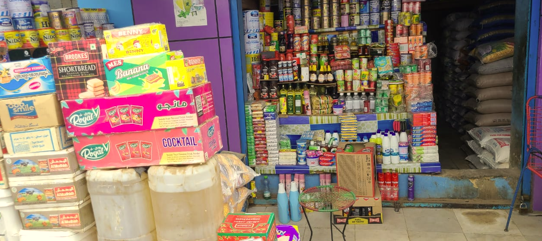
In the crowded neighborhoods of Juba, where market prices change daily, and transport fares continue to rise, many women are carrying the burden of keeping their families alive in the midst of South Sudan’s worsening economic crisis.
Lamon Beatrice, a resident of Jebel Yesua, says survival has become a daily struggle as inflation continues to shrink household budgets. Speaking to Radio Tamazuj, she said the rising cost of living has made it difficult for families to cope, especially when men’s salaries or earnings remain fixed while prices continue to soar.
“These days, things are really difficult,” she said. “A man may give you something, he may think the price of yesterday is the same as today.”
According to Lamon, inflation has become persistent, forcing women to find ways to supplement household income through small businesses and informal trade.
“Inflation in this country happens every day,” she stated. “So when you empower your wife at home, you empower your daughter, mother, aunt, and sister.”
She said many women engaged in small-scale business help stabilize families by adding small earnings whenever the money provided at home runs out.
“If she goes to the market and finds the price has fluctuated, she can get small money from the little business she is doing and top up on the money you have given her, then life will go smoothly,” Lamon said. “It will help a lot.”
Despite the economic pressure households face, she says some men still discourage women from engaging in business activities, often focusing on negative stereotypes surrounding women entrepreneurs.
“Most times, the men in our society see the negative side of women who are doing business,” she said. “They do not actually see the positive side of it.”
She urged men to support women’s economic participation and recognize the contribution women make toward sustaining families during difficult times.
“When your wife is doing business, what are the positives that she is bringing home?” she asked. “Do not only look at the bad things.”
Rising prices deepen hunger and hardship
Lamon’s comments reflect a wider reality many households face in South Sudan’s capital, Juba, where food insecurity, delayed salaries, and high transport costs have left thousands struggling to survive.
Agnes Achiro, another resident of Jebel Yesua, says survival has become very hard for most families. According to Achiro, even women engaged in small-scale businesses are struggling because of constant price rise and fall.
“As women, we are really facing a lot of challenges. It is very hard to even buy food items to sell in this area,” she laments. “For those doing retail business in the area, you will even lose your capital because you find the prices in the market expensive, and when you want to retail in the suburb, people will not buy.”
Achiro appealed to the government to address rising commodity prices across the country.
“You find cassava flour and cooking oil, plus other food items, are all expensive,” she stated. “We are sending our voices to the government of South Sudan.”
For her part, Dorothy Drabuga, Executive Director of the Women Foundation for Humanity (WFH), said the economic hardship is especially severe for women supporting large families.
“Concerning the economic situation right now, it is not easy for us as women, especially when you have a big family,” she said. “Nowadays, some people sleep hungry, while others eat once a day, and other people just eat porridge.”
Drabuga blamed the worsening situation on a combination of unpaid government salaries, reduced NGO funding, and rising market prices.
“The economic situation is very bad,” she said. “Those people who are working with the government, no salaries, people working with NGOs, no funding. So we are really hustling, life is hard.”
Transport fares inside Juba have also become increasingly unaffordable for ordinary residents. Drabuga said traveling from Customs to Konyokonyo now costs around 4,000 South Sudanese Pounds, while trips to areas such as Jebel Yesua and Jebel Dinka can cost up to SSP 5,000.
“This is really challenging because, honestly, people do not have money completely,” she said. “Things are hard.”
Calls for peace and government action
Drabuga believes lasting solutions depend on restoring peace and improving security across the country. She said continued violence and insecurity have forced many people to abandon farming and move into towns, increasing dependence on imported food and urban markets.
“Peace is paramount,” she said. “If there is peace, people will indulge in agriculture.”
She urged the government to prioritize disarmament and community security, arguing that fear of attacks by armed groups continues to discourage cultivation in rural areas.
“There are people who do small cultivation, but once the crops are ready, unknown gunmen will come,” Drabuga said. “They can even kill you for what you have planted.”
As South Sudan continues to grapple with inflation, insecurity, and economic uncertainty, women like Lamon and Drabuga say empowering women economically, restoring peace, and supporting agriculture may be among the few paths left toward easing the hardship faced by ordinary families.
The government’s efforts to reduce prices
Meanwhile, Paulino Lokudu, Central Equatoria State deputy governor, acknowledged the worsening economic hardship faced by citizens, saying the government is engaging relevant ministries to explore ways of reducing prices of essential commodities.
Speaking on Saturday, Lokudu said he recently held discussions with Trade and Industry Minister Margaret Labanya over the rising cost of basic goods, including fuel, flour, cooking oil, and salt.
“Last weekend, I spoke with the minister of Trade so that we can see how to reduce the prices of goods, especially fuel, flour, cooking oil, salt, and other essential goods,” he said. “These are the essential issues, or essential food commodities that every citizen should have access to.”
South Sudan has in recent months experienced rising inflation and increasing food prices, with many families struggling to afford necessities amid the ongoing economic crisis.
“It is very difficult, things are very difficult in the markets, prices are very high in a way that the common citizens we liberated and we’re proud, but they sleep hungry,” he said.
The deputy governor called on leaders and citizens to prioritize peace and unity, arguing that stability remains essential to addressing the country’s economic and humanitarian challenges.
“We must accept our mistakes and accept peace as a priority,” he said. “Peace is paramount.”
Fuel prices in Juba reportedly climbed to about SSP 13,000 per litre in March 2026, compared to roughly SSP 6,000–10,000 earlier this year.
Meanwhile, wheat flour (25kg bag) now costs between SSP 60,000 and SSP 75,000, compared to SSP 42,500 in 2025, while he (50kg) costs PSS120,000 to-150,000.
Cooking oil (20 liters) currently sells for between SSP 70,000 and SSP 90,000, up from SSP 51,000 in 2024/2025.

 and then