



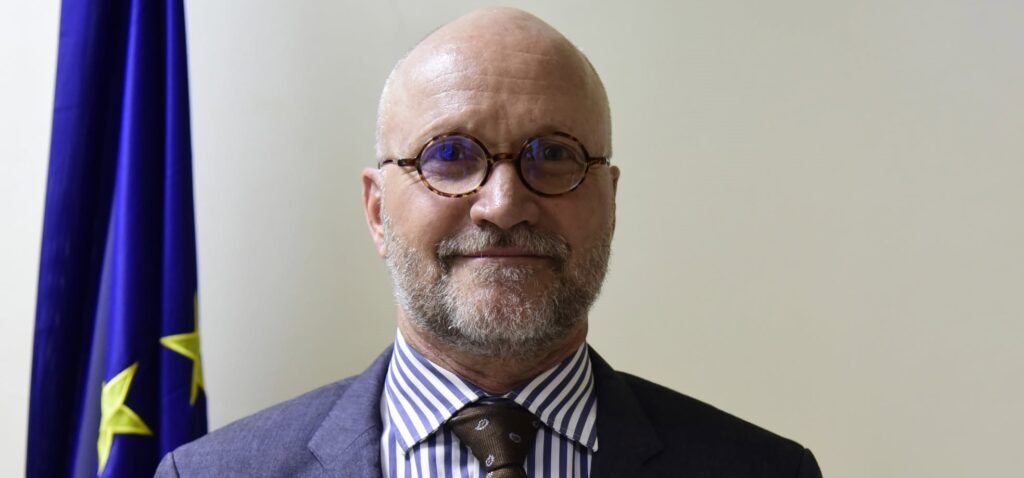
The European Union has called for stronger community participation and improved governance of land and natural resources as South Sudan seeks to strengthen wildlife conservation and sustainable development.
EU Ambassador to South Sudan Pelle Enarsson made the remarks at the fourth Friends of Conservation meeting in Juba, hosted jointly by the EU and British missions.
Enarsson said wildlife, land and natural-resource governance was closely linked to peace, stability and community protection in the country, which has struggled to recover from years of conflict.
“Conservation must be anchored in the rule of law, aligned with national development priorities, as well as pursued through community engagement and people-centred, rights-based and conflict-sensitive approaches,” he said.
South Sudan is home to significant biodiversity and wildlife resources that are important for livelihoods, food security, climate resilience and national identity, Enarsson said.
He described the Wildlife Conservation and Protected Areas Act, 2026, as an important step towards establishing a legal framework for conservation and the sustainable use of natural resources.
The law recognises community-based conservancies, creating an opportunity to give local communities a greater role in managing and benefiting from natural resources, he said.
But Ambassador Enarsson said implementation would require clearer land-tenure arrangements, closer coordination between the Wildlife Act, the Land Act and the emerging National Land Policy, as well as stronger institutional cooperation.
He also called for meaningful engagement with communities, traditional authorities, Indigenous Peoples, women and young people.
“Durable conservation cannot succeed through protected areas alone,” Enarsson said, arguing that governance and land tenure were central to protecting ecosystems and wildlife beyond formally designated protected areas.
The EU supports conservation initiatives in several parts of South Sudan, including the transboundary Great Nile Migration Landscape in partnership with African Parks.
It also supports Latoto National Park and Kidepo Game Reserve in partnership with the Enjojo Foundation, VSF Germany and Saferworld, as well as the Southern National Park and two game reserves in Western Equatoria in partnership with Fauna & Flora International.
The programmes form part of NaturAfrica, an EU initiative aimed at linking biodiversity conservation with sustainable development and improved governance in Africa.
Enarsson said the meeting should help conservation partners and government institutions identify practical priorities and responsibilities and strengthen coordination on implementation of the new wildlife law.

 and then