



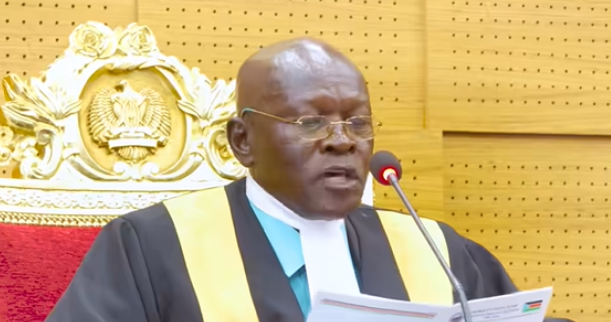
Members of South Sudan’s parliament have each received a $5,000 medical allowance, lawmakers said, in a move supporters described as an emergency intervention amid poor access to healthcare and a worsening economic crisis.
South Sudan’s bicameral parliament consists of the Transitional National Legislative Assembly (TNLA), the lower house with 550 members, and the Council of States, the upper house with 100 members.
Some lawmakers received the payments on Tuesday, while others are expected to receive them in early June after the Eid holidays, when several banks were temporarily closed, legislators said.
George Angier, a lawmaker from the ruling Sudan People’s Liberation Movement (SPLM), confirmed receiving the allowance, saying it was necessary following the deaths of several lawmakers due to illness.
“We received it. It is not a large amount, but it is better than nothing,” Angier told Radio Tamazuj. “We have lost many MPs due to illness. We need to improve the health system. For now, this support is important.”
Supporters of the measure say the payments are a temporary measure while broader healthcare reforms remain stalled.
South Sudan’s healthcare system is severely underdeveloped, forcing many officials and citizens to seek treatment abroad.
The decision, however, has drawn criticism from some members of the public, who say ordinary citizens facing the same healthcare challenges receive no comparable support at a time of high inflation and economic hardship.
Madelina Abuk, an MP from the South Sudan Opposition Alliance (SSOA), said the amount was insufficient to cover treatment costs.
“$5,000 is very little. It cannot even cover medical travel and treatment,” she said.
Abuk also highlighted the impact of currency depreciation, saying MPs’ monthly salary of 750,000 South Sudanese pounds (SSP) is worth about $110 at parallel market rates, forcing many legislators to seek additional income.
“In parliament, you have to do your own business to survive. The salary alone is not enough,” she said.
Separately, TNLA spokesperson Benjamin Oliver Mori said he was unaware of the allowance and would provide clarification later.
Dorothy Drabuga Ambrose, chairperson of the civil society South Sudan Land Alliance, supported the allowances but criticised the government’s broader spending priorities, saying civil servants and security forces had also gone months without salaries.
“When security forces are unpaid for long periods, it becomes a threat to national security,” she said.
The payments come weeks after a new parliamentary leadership took office following the removal of former speaker Jemma Nunu Kumba in April, and amid a government push to amend key provisions of the 2018 peace agreement ahead of long-delayed elections.

 and then