



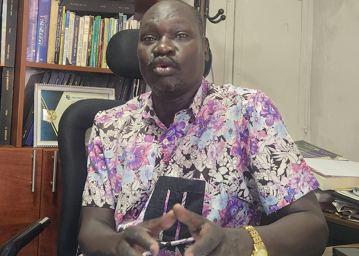
Two experts at the University of Juba have cast doubt on South Sudan’s ability to hold general elections on 22 December, citing administrative shortcomings, legal uncertainties, insecurity, and the incomplete implementation of the country’s 2018 peace agreement.
Prof. Abraham Kuol Nyuon, a political science professor, said the elections were unlikely to take place as scheduled, predicting a possible two- to three-month extension because of what he described as inadequate preparations by the National Elections Commission (NEC).
Dr. Geri Raymondo, a law lecturer at the University of Juba and legal expert, said the challenges went beyond logistical preparations, arguing that unresolved constitutional questions, insecurity, and incomplete security sector reforms raised concerns about the country’s readiness to hold elections.
Prof. Nyuon said the launch of civic education by the NEC had initially raised public expectations that the elections would take place. However, he questioned the effectiveness of the preparations, particularly outside the capital, Juba.
He said posters promoting civic education could be seen in parts of the capital, but questioned how effectively voters were being reached in the states.
“The chances are very high that December 22 is not feasible,” he said, adding that elections required extensive preparations and could not be treated as a one-day event.
He also raised concerns about logistical arrangements and voter registration, saying the commission appeared not to be sufficiently prepared despite the approaching deadline.
For his part, Dr. Raymondo equally questioned whether the necessary electoral processes had been completed, arguing that conducting elections required more than organising voting on a particular date.
“Election is a process. It’s not voting,” he said, emphasising the need to comply with the Constitution and the National Elections Act.
However, the two experts gave differing accounts of the status of voter registration. Raymondo said registration had taken place but questioned whether the wider electoral preparations, including voter education, were being adequately implemented on the ground. Nyuon said voter registration was still outstanding. The National Elections Commission’s position on the status of the process was not available in the interviews.
Legal questions over election law
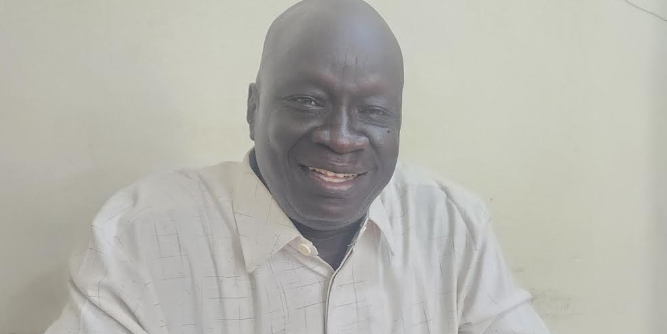
Raymondo raised concerns about the 2026 amendments to the Election Act 2012, saying the changes had not been made publicly available despite the approaching election date.
He questioned whether the electoral process could proceed with confidence while the public lacked access to the amended legislation.
The legal expert also challenged the process through which constitutional amendments linked to the peace agreement were adopted, arguing that the required participation and approval of signatories had not been secured.
Raymondo referred to Article 8.4 of the Revitalised Agreement on the Resolution of the Conflict in South Sudan, which he said required approval by two-thirds of the relevant members of the national government and the agreement’s monitoring body.
He argued that some signatories had not participated in the process, raising questions about compliance with the agreement and the constitutional framework.
The claims could not be independently verified from the interviews, and the status of the amendments and the process through which they were adopted requires clarification from the relevant authorities.
Raymondo warned that elections conducted in violation of the Constitution and the National Elections Act could be challenged.
“If any elections [are] being conducted contrary to, in violation of the Constitution and the National Elections Act, the impact is that the election is null and void by nature,” he said.
He added that a disputed electoral process could damage South Sudan’s international standing and undermine public confidence.
Nyuon also discussed the amended election law, saying disagreements surrounding the amendments could contribute to continued uncertainty. He linked the changes to the use of constituencies established for the 2010 elections, arguing that the same constituencies were still being used.
His account of the amendments’ legal status differs in emphasis from Raymondo’s concerns and requires clarification from the authorities responsible for the legislation.
Unfinished peace agreement and security concerns
Beyond the legal framework, Raymondo argued that the incomplete implementation of the 2018 peace agreement remained a major obstacle to credible elections.
He pointed to the unification of armed forces as a key outstanding priority, saying the country needed a unified national army to improve security.
He also cited the permanent constitution-making process, the return of internally displaced people and refugees, and the need for a population census and constituency-related arrangements as issues that should be addressed.
Raymondo questioned whether elections could be conducted credibly while insecurity persisted and important provisions of the peace agreement remained unimplemented.
He argued that the country should prioritise peace and national unity rather than focus solely on the election date.
“For us, the people of South Sudan, we need peace. Election is not our first requirement,” he said.
He called on political leaders to engage in dialogue and agree on a way forward if the elections could not be held as scheduled.
Nyuon, meanwhile, focused on the preparedness of electoral institutions and political parties, saying the government needed to ensure that the commission had adequate funding and sufficient time to complete its work.
He warned that further delays could erode public confidence in the government’s commitment to holding elections.
Political participation under scrutiny
The experts also raised concerns about the participation of political parties in the electoral process.
Raymondo argued that preparations should involve all political parties rather than being dominated by one side. He said the NEC should communicate electoral procedures to all parties and ensure that political stakeholders had an opportunity to participate.
He also raised concerns about reports that some aspiring candidates had faced restrictions on travelling outside Juba, arguing that restrictions on movement within the country could infringe constitutional freedoms.
Nyuon said most political parties had not adequately prepared their candidates through internal primaries, while the ruling Sudan People’s Liberation Movement (SPLM) appeared to be more active.
He warned that limited preparation by other parties could result in a contest dominated by the SPLM.
“Election is not done by force,” Nyuon said, arguing that political parties needed to prepare if they intended to participate.
The experts’ comments raise questions about whether the electoral process can accommodate meaningful political competition within the remaining time. However, the extent of preparations by individual parties and any alleged restrictions on candidates would require further verification.
Experts propose different ways forward
The experts differed in their emphasis on how the country should respond if the December elections cannot proceed.
Nyuon predicted that a delay of two to three months was possible, arguing that the NEC should advise the president on a realistic timetable and the steps required to complete preparations.
He urged the government to fund the institutions responsible for organising the elections so that any extension would not become prolonged.
“My advice to the government is that since citizens’ hope is only in elections, and they want to elect a new government, it is good that the government should be able to fund the institutions that deal with election issues,” he said.
Raymondo called for dialogue among the signatories to the peace agreement, saying they should agree on an arrangement to govern the country if elections could not be held on time.
He suggested that the parties consider forming a temporary technical government for a specified period while addressing outstanding peace and security issues.
Raymondo said ordinary citizens were more concerned about peace, insecurity, hunger and other pressing needs than political competition.
“Election will come. Whether you like it or not, one day elections are going to be conducted. But before the election, we need peace,” he said.
South Sudan’s general elections are scheduled for December 22, 2026. The assessments by the two experts point to questions over the legal framework, institutional preparedness and political conditions needed to conduct the polls.
Neither expert’s prediction constitutes an official decision to postpone the elections. The National Elections Commission and the government would need to clarify the outstanding preparations, the status of the amended election law and whether the December timetable remains achievable.

 and then