



When peace agreements reward political and military elites without building independent institutions to investigate wrongdoing, the state risks becoming a refuge for the powerful rather than a source of justice for its citizens.
South Africa and South Sudan followed different paths to political liberation. Yet their experiences raise an important question for countries emerging from conflict: what happens when those who negotiate peace, command armies, and inherit political power are not adequately held accountable for abuses committed before and after the transition?
South Africa’s transition from apartheid was built on negotiations between political forces that had fought for decades. The African National Congress (ANC) and the apartheid government reached a negotiated settlement rather than a decisive military victory by either side. The compromises helped prevent further bloodshed and opened the way for majority rule and constitutional democracy.
But the country’s subsequent experience also demonstrates that political liberation does not automatically produce accountable government. Patronage, corruption and the protection of powerful networks can gradually weaken institutions established to serve the public.
The allegations being examined by South Africa’s Madlanga Commission of Inquiry have brought this danger into sharp focus. The inquiry is investigating allegations of criminality, political interference and corruption within the criminal justice system, including possible relationships between criminal networks and people entrusted with enforcing the law.
South Sudan should pay close attention; The lesson is not that liberation movements inevitably become corrupt, or that former combatants should be excluded from government. It is that political legitimacy earned through a liberation struggle cannot substitute for accountability in a democratic state.
The price of peace without accountability: The 2005 Comprehensive Peace Agreement (CPA) between the Sudanese government and the Sudan People’s Liberation Movement/Army (SPLM/A) ended the Second Sudanese Civil War and established the transitional arrangements that eventually led to South Sudan’s independence in 2011.
The agreement provided for power-sharing, wealth-sharing and security arrangements. It also recognised the importance of reconciliation and healing. However, it did not establish a comprehensive mechanism to investigate and prosecute serious crimes committed during the preceding decades of conflict.
Human Rights Watch highlighted this accountability gap in its December 2014 report, “Ending the Era of Injustice: Advancing Prosecutions for Serious Crimes Committed in South Sudan’s New War”. The organisation argued that credible prosecutions were necessary to break the cycle of impunity and prevent further atrocities.
That omission mattered; The new leadership inherited a society scarred by violence, displacement, internal divisions and longstanding grievances. It also inherited a political system in which armed organisations and their commanders exercised considerable influence over public authority.
Instead of making accountability a central part of the transition, successive political arrangements frequently prioritised accommodation among competing elites. Commanders and political figures could be incorporated into government and security structures without first addressing allegations of serious abuses.
The immediate objective was to keep competing factions inside the political tent. Such arrangements may reduce the immediate risk of renewed fighting. But when political appointments, military positions and access to public resources become substitutes for accountability, peace agreements risk rewarding the very conduct they are supposed to make unnecessary.
The consequences became impossible to ignore when war erupted in December 2013, followed by renewed fighting in July 2016. Human Rights Watch documented widespread atrocities against civilians and repeatedly warned that the absence of accountability was helping sustain the conditions for further violence.
The question South Sudanese citizens must confront is uncomfortable; did the country build a state governed by laws, or a political settlement in which armed and political elites could negotiate their way out of consequences?
When political protection becomes institutional vulnerability, the Madlanga Commission provides an important example of how a country can investigate allegations that criminal networks have penetrated institutions responsible for enforcing the law.
South Africa’s inquiry is examining allegations involving relationships between criminal interests, police officials, intelligence personnel and other public authorities. Its interim reports have already resulted in referrals for further investigation and recommendations for disciplinary proceedings.
The distinction matters: referrals are not convictions, and allegations against individuals must be tested through proper legal procedures. Nevertheless, the inquiry demonstrates the importance of examining institutional relationships rather than treating corruption as a collection of isolated incidents.
A police officer who leaks confidential information can compromise an investigation. A prosecutor who is improperly influenced can undermine a case before it reaches court. An intelligence officer who protects a criminal associate can turn a national-security institution into a shield for private interests.
A politically connected individual does not need to control an entire institution to weaken it. Influence over one investigation, access to confidential intelligence, interference in a prosecution, or protection from disciplinary action may be enough to frustrate justice.
This is why corruption cannot be understood only as money disappearing from public accounts. It can also involve capturing the institutions that should investigate the disappearance. South Sudan faces this challenge in an environment where political appointments, security structures and access to national resources are closely connected.
The United Nations Commission on Human Rights in South Sudan has repeatedly raised concerns about the concentration of political and economic power, entrenched impunity and the use of state institutions to protect politically connected interests.
Its March 2026 report, covering developments in 2025, describes the capture and militarisation of state institutions and the economy by political and military elites as major obstacles to peace and accountability.
The report makes a particularly important point: institutional capture is not simply an administrative failure. It has direct consequences for political stability, human rights and the ability of government to deliver essential services.
Follow the money: South Sudan’s oil revenues and public procurement. Perhaps the clearest example of the relationship between financial abuse and institutional failure is South Sudan’s management of oil revenues.
Oil is the country’s principal source of public income. Yet ordinary citizens continue to experience poor public services, unpaid salaries, inadequate healthcare, limited educational opportunities, and deteriorating infrastructure.
The United Nations Commission on Human Rights in South Sudan reported in March 2026 that the government generated approximately US$24.5 billion from oil exports between July 2011 and December 2025 and received more than US$3 billion in unrepaid oil-backed foreign loans.
These figures raise an unavoidable question: how can a country generate such substantial oil revenues while struggling to provide basic services to its population?
The Commission’s report identifies sustained diversion of public resources, weak financial controls and the concentration of economic decision-making among politically connected interests as major contributors to the crisis.
One particularly revealing example is the Oil for Roads programme; According to the Commission’s findings, approximately US$2.2 billion was diverted off-budget between 2021 and 2024 through the scheme, while few roads were built and revenue was redirected towards patronage networks. The report identifies former senior economic official Benjamin Bol Mel as deeply implicated in the scheme.
These are serious findings that require transparent investigation and an opportunity for the individuals concerned to respond through appropriate legal procedures.
But the broader institutional question goes beyond any one individual. Who authorised the payments? Which companies received the money? Who were their beneficial owners? Which roads were contracted, how much was paid, and what was actually constructed?
An independent investigation should be able to establish the complete chain of responsibility, from the initial government decision to the final beneficiary of each payment.
Consider a practical example. If a government approves US$100 million for a road project, the public should be able to establish the contractor’s identity, the procurement process, the project specifications, the payment schedule, and the physical progress of construction. An independent audit should compare the money disbursed with the work completed.
If the contractor receives the full payment but delivers only a fraction of the agreed work, investigators should establish whether this resulted from negligence, contractual failure, fraud or deliberate collusion.
This is the difference between merely accusing people of corruption and building a prosecutable case.
The older Dura scandal offers another illustration; In 2013, Sudan Tribune reported on allegations that more than half a billion South Sudanese pounds had been lost through the strategic food reserve programme. Companies, some reportedly newly registered, received contracts to supply food to the states. Investigations described allegations that some contractors failed to deliver the supplies while fraudulent receipts and delivery certificates were used to obtain payments.
The case illustrated how procurement fraud can involve several layers of complicity: government officials who approve contracts, companies that receive payments, administrators who certify deliveries, and individuals who benefit from the transaction.
The Dura case should not simply remain a historical reference. It raises questions about whether South Sudan has developed effective systems to prevent the same procurement weaknesses from recurring.
A country cannot fight corruption by announcing investigations whenever a scandal becomes public. It must build institutions capable of detecting irregularities before public money disappears.
The practical measures are straightforward: publish procurement contracts, disclose beneficial ownership, independently verify project completion, publish quarterly budget execution reports, and ensure that the Auditor General’s findings lead to investigations where criminal conduct is suspected.
The United Nations Commission’s 2026 report also highlighted the absence of a national budget for the 2025–2026 financial year as of January 2026 and the lack of publicly available accounting for government expenditure during that period. It reported that the last published quarterly budget execution report covered October to December 2023.
It also identified a striking imbalance in expenditure during the 2024–2025 financial year: the Ministry of Presidential Affairs overspent its allocation by 5,873 per cent, while the Ministry of Agriculture and Food Security spent only 16 per cent of its allocation.
Such discrepancies demand public explanation and independent scrutiny. The issue is not simply how much money government spends. It is whose priorities receive funding, who authorises expenditure, and whether the public can trace the money.
When the institutions responsible for public finance cannot provide credible answers, corruption becomes more difficult to detect, and accountability becomes increasingly dependent on political goodwill.
Liberation is not a permanent licence to govern; One of the most important lessons concerns the political status of former liberation fighters.
In South Africa, the ANC’s history of resistance to apartheid gave it enormous political legitimacy. That legitimacy, however, could not guarantee the integrity of every official, appointment or institution associated with the movement.
South Sudan faces a related challenge. The sacrifices made during the struggle for independence deserve recognition. Those who fought, suffered displacement or lost family members should not have their contributions dismissed.
But the liberation struggle cannot become a permanent defence against scrutiny. A public official’s responsibility begins with the office they occupy, not the battles they fought decades earlier.
A commander accused of ordering an unlawful killing should face a credible investigation. A minister implicated in the diversion of public money should be required to answer the evidence. An intelligence officer who abuses lawful authority should not be protected because of political connections.
The same standards must apply to government officials, opposition figures, military commanders, civilian administrators and their associates. Selective accountability would merely reproduce the politics of impunity under a different name.
The public must also distinguish between respect for the liberation struggle and unquestioning loyalty to those who inherited political power. The two are not the same. South Sudan belongs to its citizens, not to the political organisations or military formations that negotiated its independence.
Human rights violations: When security institutions become a source of fear. The relationship between institutional capture and human rights violations is particularly visible in the conduct of security agencies.
National security institutions have legitimate responsibilities to protect citizens, investigate threats and preserve constitutional order. However, those responsibilities cannot justify arbitrary arrests, torture, enforced disappearances, or detention without access to legal representation.
A joint report by the United Nations Mission in South Sudan (UNMISS) and the Office of the United Nations High Commissioner for Human Rights (OHCHR), published in December 2024, documented 1,140 civilians arbitrarily arrested and detained between January 2023 and May 2024. Those documented included at least 162 women and 87 children.
The report identified violations involving government security institutions, including the National Security Service, the South Sudan People’s Defence Forces, the National Police Service and the National Prison Service, as well as non-state armed groups.
This is not an abstract human rights debate. It concerns people whose liberty can be taken away without adequate legal safeguards.
The treatment of journalists provides another practical example. In January 2023, six employees of the South Sudan Broadcasting Corporation were arrested by National Security Service officers following the circulation of footage that appeared to show President Salva Kiir urinating during an official public event.
The journalists were detained at the NSS headquarters in Juba. Human rights organisations reported that they were initially denied access to their lawyers and families, while some were held for extended periods without charge.
The incident raised a fundamental question: why should journalists face detention for alleged involvement in the circulation of footage when any suspected professional misconduct could be investigated through transparent administrative or legal procedures?
The UN Commission on Human Rights in South Sudan also documented the case of journalist Woja Emmanuel, who was abducted at gunpoint in March 2022, interrogated about his work, and forced to drink an unidentified toxic substance, according to the Commission’s account. He subsequently fled the country and left journalism.
These cases illustrate how intimidation can extend beyond the immediate victims. When journalists fear arrest or abduction, corruption investigations become more difficult, public scrutiny diminishes, and officials who misuse public authority face fewer questions.
The same principle applies to civil society organisations, whistleblowers and ordinary citizens who report wrongdoing. A government that treats public criticism as a security threat weakens one of the most important mechanisms of democratic accountability: the public’s ability to question those exercising power.
Obstruction of justice: The danger of selective prosecution. The prosecution of former First Vice-President Dr Riek Machar and seven co-accused on charges including murder, conspiracy, terrorism, treason and crimes against humanity has brought the independence of South Sudan’s judicial system into sharper focus.
The charges are serious. They must be examined through a credible judicial process, and no political leader should be immune from prosecution for genuine criminal conduct.
However, the proceedings have also generated concerns about political interference, the treatment of opposition leaders and the relationship between criminal prosecution and the power-sharing commitments of the Revitalised Agreement on the Resolution of the Conflict in South Sudan (R-ARCSS).
The United Nations Commission on Human Rights in South Sudan, in its March 2026 report, characterised Machar’s removal from office and prosecution as politicised and argued that the process undermined the agreement’s power-sharing guarantees.
That is the Commission’s assessment, not a judicial determination of the merits of the criminal charges.
This distinction is important. The issue is not whether Machar or any other political leader should be above the law. The issue is whether the prosecution is supported by credible evidence, whether the accused can adequately challenge that evidence, and whether the judiciary can demonstrate independence from executive and political influence.
There are practical questions that deserve public scrutiny. Have the accused received timely access to legal representation? Has the defence been given adequate access to relevant evidence? Are witnesses able to testify without intimidation? Can the court independently assess evidence against all defendants? Are procedural rules being applied consistently?
These safeguards are not privileges reserved for opposition politicians. They are fundamental protections that should apply to every person facing criminal charges. The same standard must apply to allegations involving government officials, military commanders and politically connected individuals.
If opposition figures face prosecution while comparable allegations involving powerful government actors are never independently investigated, public confidence in the justice system will inevitably suffer.
Conversely, dismissing every prosecution of an opposition figure as political persecution would also undermine accountability. The judiciary must establish the truth through evidence, not political loyalty.
The proceedings also demonstrate why transitional justice institutions are important. A credible Hybrid Court would provide an independent forum for investigating and prosecuting serious crimes within its mandate, reducing dependence on ordinary domestic institutions that may be vulnerable to political pressure.
The central question is whether South Sudan is building a rule-of-law state or using legal institutions to consolidate the authority of one side of a fragile political settlement.
Why the Hybrid Court matters: The 2015 peace agreement and the 2018 Revitalised Agreement provided for transitional justice mechanisms, including the Hybrid Court for South Sudan, the Commission for Truth, Reconciliation and Healing, and the Compensation and Reparation Authority.
The Hybrid Court is intended to investigate and prosecute individuals responsible for serious crimes committed during the conflict period beginning on 15 December 2013 and extending through the end of the transitional period, in accordance with its mandate.
Yet the court remains unestablished. In his 6 August 2026 briefing to the United Nations Security Council, the interim chairperson of the Reconstituted Joint Monitoring and Evaluation Commission (RJMEC) confirmed that the Hybrid Court and the Compensation and Reparation Authority remained pending.
The delay is not merely a legal or administrative problem. It affects the credibility of the entire peace process. When victims see agreements signed, institutions announced, and implementation deadlines repeatedly missed, they have reason to question whether justice is genuinely intended.
Suspects may retain positions of influence, witnesses may become harder to protect, and documentary or physical evidence may be lost. The consequences extend beyond individual cases. A society that cannot establish the truth about serious crimes risks passing unresolved grievances to another generation.
A functioning Hybrid Court would not solve every problem of corruption or organised crime. Its principal mandate concerns serious violations within its jurisdiction. Nevertheless, credible prosecutions would help establish that political office and military rank do not place individuals beyond the reach of the law.
The court should therefore be treated as an essential part of the transition, not an optional project to be pursued when political circumstances become convenient.
South Sudan also needs functioning domestic courts, independent prosecutors, effective financial investigations and mechanisms for addressing corruption committed outside the Hybrid Court’s jurisdiction. Accountability must extend beyond wartime atrocities to the everyday misuse of public authority.
What South Sudan can learn from the Madlanga Commission: The practical value of the Madlanga Commission is not simply that South Africa established an inquiry. It is that the inquiry provides a framework for examining how institutions can be compromised from within. Its work offers several lessons for South Sudan.
First, investigate networks, not just individuals. When a public contract is suspected of being fraudulent, investigators should examine the relationships between the officials who approved it, the companies that received payments, the individuals who own those companies and the people who certified the work.
The same approach should apply to security institutions. An investigation into an unlawful detention should establish who authorised the arrest, who held the detainee, who controlled access to the detention facility, and whether any official attempted to obstruct legal representation or judicial review.
Second, establish independent investigative oversight. South Sudan’s police and security agencies need credible internal accountability mechanisms. Complaints involving senior officers should not be investigated exclusively by subordinates who depend on those officers for their careers.
An independent oversight body should have the authority to receive complaints, preserve evidence, recommend disciplinary action, and refer suspected criminal conduct for prosecution.
Third, protect whistleblowers and witnesses. An employee who reports procurement fraud should not lose their job, face intimidation or be detained because their evidence implicates a politically connected individual.
Witness protection should also be extended to people reporting human rights violations, including survivors of torture, sexual violence and unlawful detention.
Fourth, make financial investigations more transparent. The Auditor General, anti-corruption institutions and financial investigators should have access to procurement records, bank transactions, government contracts and beneficial ownership information. Where evidence indicates unexplained public expenditure, investigations should establish the complete financial trail and identify the beneficiaries.
Fifth, protect the independence of prosecutors and judges. Cases involving powerful individuals must not disappear because of political pressure. Nor should prosecutors pursue cases simply because an accused person belongs to an opposition organisation.
Appointments, dismissals, transfers and disciplinary proceedings within the judiciary and prosecution services should follow transparent legal procedures.
Finally, make institutional accountability measurable. It is insufficient for an agency to announce that an investigation has been opened. The public should be able to establish how many complaints were received, how many investigations were completed, how many cases were referred for prosecution, and what institutional reforms followed.
Legitimate confidentiality must be respected, particularly where witnesses and ongoing investigations are concerned. But confidentiality should not become a permanent excuse for institutional silence.
The responsibility of parliament, civil society and the media. South Sudan’s parliament has an important role in ensuring that executive institutions account for public expenditure and the exercise of state power.
Parliamentary committees should regularly scrutinise government contracts, oil revenue management, public borrowing, security expenditure and the implementation of audit recommendations.
For example, a parliamentary inquiry into road construction should not stop at asking the responsible minister how much money was allocated. It should examine the contracts, payments, physical progress and independent engineering assessments.
Civil society organisations should also have the freedom to investigate public institutions without being treated as political enemies. Their work is particularly important in a country where many citizens lack the resources or connections to challenge decisions made by powerful officials.
Journalists, meanwhile, must go beyond reporting official statements and political accusations. Investigative reporting should establish who authorised a payment, who benefited from a contract, which laws applied, whether the relevant services were delivered, and what happened when irregularities were reported.
A journalist investigating a public procurement scandal, for example, should seek the original contract, company registration documents, payment records, project specifications, audit findings and responses from the officials and businesses concerned. This approach produces stronger journalism and reduces the risk of turning allegations into conclusions without sufficient evidence.
Police officers, prosecutors, judges and intelligence professionals should also participate in this national debate. Their professional experience is essential to identifying weaknesses in the system and proposing workable reforms. Their independence must be protected so that raising legitimate concerns does not become a career-ending act.
The debate South Sudan cannot postpone; South Africa’s experience should encourage South Sudanese academics to investigate the relationship between negotiated settlements, patronage and institutional independence.
Political scientists can examine how power-sharing arrangements affect accountability. Legal scholars can assess the obstacles to establishing the Hybrid Court and the safeguards needed to prevent domestic prosecutions from becoming instruments of political exclusion.
Economists can trace how corruption, public borrowing and opaque contracting affect service delivery. Journalists can document the practical consequences for citizens who lack political connections.
The debate must avoid two dangerous extremes. One is to assume that every former combatant or political appointee is corrupt. The other is to dismiss accusations against powerful figures as politically motivated without examining the evidence. Both approaches weaken accountability. The first abandons fairness; the second risks making impunity permanent.
South Sudan needs institutions capable of investigating anyone, regardless of political affiliation, military history, ethnicity or rank. It needs protection for whistleblowers and witnesses, transparent public finances, credible prosecutions and a justice system that does not depend on the goodwill of those being investigated.
The Madlanga Commission has not yet delivered its final report. As of 31 October 2026, its final reporting deadline is 25 January 2027. Its findings and the action taken in response will help determine what South Africa learns from the inquiry. South Sudan does not need to wait for an equivalent institutional crisis before considering the safeguards that could prevent one.
The deeper lesson is that a negotiated peace is a beginning, not a verdict on the conduct of those who negotiate it. A liberation movement can win political power without establishing a culture of public accountability. A government can survive for years while the institutions beneath it lose their independence. And a peace agreement can keep political elites at the negotiating table while leaving victims without justice.
South Sudan’s unfinished task is to make the law stronger than the liberation credentials, political alliances and armed influence of the people who govern it.
“Independence gave South Sudan its sovereignty. Peace agreements gave its political leaders a framework for sharing power. Neither achievement, however, guarantees justice, responsible government or freedom from corruption. Those must be built through institutions that can question, investigate, and hold even the most powerful individuals accountable.”
Until that happens, the country risks confusing the survival of its political settlement with the success of its state. Upcoming elections in South Sudan are a subject for another writing altogether.
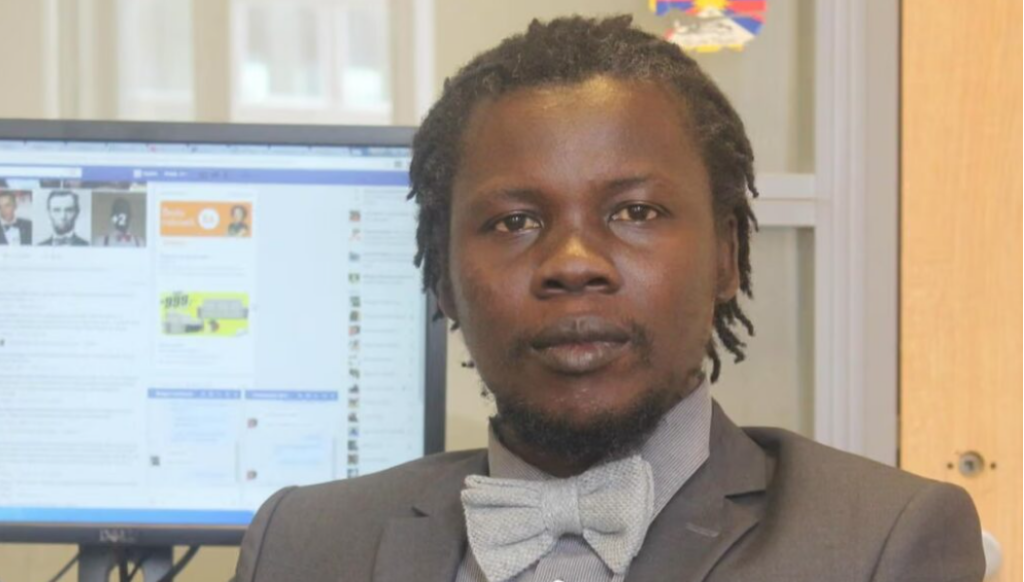
Opoka p’Arop Otto is a citizen of the Kingdom of the Netherlands and is based in Amsterdam. He formerly practiced journalism in South Sudan.
The views expressed in ‘opinion’ articles published by Radio Tamazuj are solely those of the writer. The veracity of any claims made is the responsibility of the author, not Radio Tamazuj.

 and then