



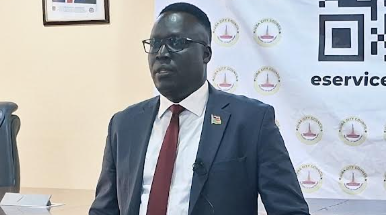
Juba City Council (JCC) has launched a new digital financial payment system and public website as part of efforts to address longstanding concerns over transparency in revenue collection and the management of public funds.
Christopher Sarafino Wani Swaka, JCC caretaker mayor, said investigations had uncovered financial malpractices involving some revenue collectors and administrative officers, prompting reforms aimed at improving accountability within the institution.
He told journalists on Friday that JCC has completed the transition from manual revenue collection to the digital system.
“I must also report here today that in the last 10 days Juba City Council has officially migrated all its revenue operations from the manual systems of using Form 15 and all the manual forms to a digitized system of money operations,” he said.
According to the mayor, the investigation uncovered that 50 percent of the Council’s resources were lost to malpractice, leading to the arrest of 32 rate collectors who are currently facing disciplinary action, with some facing dismissal.
“So we are 100 percent digitalized, 100 percent transparent, we are 100 percent accountable,” Mayor Swaka stated.
He said disciplinary actions had been taken against JCC employees involved in graft, adding that the findings provided the council with grounds to introduce fundamental changes to its financial management systems.
The mayor said the reforms followed complaints from residents and business owners who had questioned the transparency of JCC’s revenue collection operations, particularly the taxes and fees imposed on them.
He said the executive council had submitted proposals to the legislative council to introduce digital revenue collection, leading to the passage of a digitalisation law after four months of deliberations.
According to Swaka, the new system is intended to improve the accountability of revenue collection and strengthen public confidence in the city council.
As part of the reforms, the council has also launched an official website, www.jccgov.ss, where residents can access information about its operations, including the annual budget, tax schedules and municipal bylaws.
Swaka said the website is intended to address complaints that the council’s tax schedules were not easily accessible to the public, leaving many traders and residents uncertain about the fees they were expected to pay.
“We have been accused that our rate schedules are always a secret document; people do not know what the city council is supplying against the people because the rates that are given to traders or to the business people are not proper rates and people do not know what we want from them,” he said. “That means there is a problem between the city and the people and that there is a gap in interaction. One of the attempts is to improve communication, and today I want to report that Juba City has a modern website.”
He added that making the information publicly available would help residents understand the laws and regulations governing the city.
Mayor Swaka also announced the establishment of a public relations department, which he said would improve communication between the council and the public through different communication platforms. He further revealed that they are establishing a toll-free call centre to allow residents to report concerns and seek information directly from the institution.
Another measure introduced under the reforms is the provision of uniforms and identification numbers to revenue collectors.
According to Swaka, all revenue collectors are now required to wear Juba City Council uniforms bearing unique control numbers linked to their identities.
“If you feel that there is anyone who has done you something wrong, we want to make sure that you can just file a report and we will get to know who that person is,” he said.

 and then