



Letter two of seven letters to South Sudanese
Fellow South Sudanese,
When conflict broke out in 2013, Regina Adyeng Amaylek Amuch lost her home and fled to Khartoum. Eleven years later, war found her again. As fighting spread in Sudan, she crossed back by boat with only the clothes she wore and sheltered under tarpaulin with relatives at the former protection-of-civilians site in Malakal. This year she moved into a new house in the town. Every morning, she bakes cookies to sell at the market, and the profits have paid for her children’s school uniforms. In August she told the United Nations what she needs most: “We need lasting peace, not displacement again.”
Everything Regina has rebuilt depends on those two words, lasting peace. This letter asks why we have not had it, and what must come first if we are to have it.
Here is my answer. Since 2005, South Sudan has settled many times who should hold power. Agreements in 2005, 2015 and 2018 divided offices among those who carried arms. What we have never settled, as a people, are what type of a country and citizenship want and deserve, the rules by which power is held, limited, shared and given up: the terms on which we live together. That is why our peace keeps breaking. Where there are no agreed rules, every contest for power becomes a contest for survival. Losing an election or an office can mean losing protection, land, income and sometimes life. People rarely accept a loss that may cost them everything. They fight, and people like Regina run again.
Our constitutions did not settle those terms. The 2011 Transitional Constitution was reviewed by a committee appointed by the President, who also led the governing party. Five opposition parties walked out of the review, saying a promise of equal representation had been broken. The 2017–2020 National Dialogue began in the middle of war, convened by a government that was itself a party to that war. The main armed opposition refused to take part, and insecurity, fear and scarce resources limited who could speak and how far the process could reach. Many who did speak showed real courage, and their words must be carried forward. But a process convened by one side of a war and boycotted by the other could not settle the terms of a common life.
Now we are told the answer is an election. Elections are scheduled for 22 December under the transitional constitution. The 2018 peace agreement set a different order. As the head of the body monitoring that agreement reminded the African Union in 2023, it provided for elections “under a people-led and people-owned Permanent Constitution”. This year, amendments reversed that order. The vote will now take place under the transitional constitution, with the permanent constitution left until afterwards. We are being asked to choose the referees before we have agreed the rules of the game.
In a settled democracy, an election chooses managers for rules that everyone already accepts. The losing side goes home because it knows those rules will protect it and give it another chance. In South Sudan, we would be asking an election to do what no election can do: to decide who governs and, in the same moment, what governing means, who belongs, how power is restrained and what the loser keeps. A ballot asks only one question: which of these candidates? When everything else is left open, the winner takes the state, and the loser has reason to fear it. That is not a democratic choice. It is a contest for survival held on polling day.
The order must be reversed. First, we must agree on the norms of coexistence and the structures that make it possible. Can a family that settled far from its ancestral home live there as citizens rather than strangers? Can a community protect its land without excluding fellow citizens? How is power shared between Juba and the places where people live? Will the army and police protect every citizen, or only those loyal to whoever rules? What must our commonwealth provide, so that a child waiting for a teacher, or a mother walking for hours to a clinic, can name a public duty and someone answerable for it? Second, we must write those agreements into a constitution that the people have shaped and approved. Third, and only then, we elect managers to run those rules and referees to enforce them.
In South Sudan, then, an election must do more than fill a parliament and choose a president. It must confirm a settlement, giving the people’s mandate to those who will keep the terms they have agreed. Held after that settlement, an election becomes what it should be: a peaceful choice, not war by other means.
Our continent has tested both orders. In Angola in 1992, an election was held before the two armies had been fully demobilised and merged. The loser rejected the result and the country returned to war. Human Rights Watch reported that half a million Angolans died in the renewed fighting or from the hunger and disease that followed. In Kenya, the 2007 election ended in allegations of fraud, and at least 1,300 people were killed in the violence that followed. The agreement that stopped the killing did more than share out offices. Its signatories accepted that “the constitution belongs to the people of Kenya” and committed to a review ending in a referendum. In 2010, 67 per cent of voters approved a new constitution, and the next election was held under it. Kenya’s politics remain fiercely contested, but its people changed the order, and the change mattered.
I know the objection, and it is serious. South Sudan’s transition has been extended again and again, and each extension has kept the same people in office. In a 2025 survey across fifteen locations, half of respondents said they would not support another delay, even though 72 per cent wanted the permanent constitution enacted before elections. People are right to fear that “rules first” could become a slogan for “rulers forever”. In my first letter, I wrote that dialogue must never provide cover for indefinite rule. I hold to that.
Some will say that this is what every extension has promised. It is not. Each extension so far gave more time to those in office, with nothing for the people to do and no date on which it had to end. What I propose is the opposite: time that belongs to the people, with work to finish and a firm date by which to finish it. Every task, every deadline and every responsible person must be written into law and published before the work begins. No one in office may extend their own term. Once the people approve their constitution, the election date must follow by law, not by the permission of those who would face the voters.
The right to help set these rules belongs as fully to someone in a refugee settlement as to someone holding office in Juba. Regina lost her home twice. She must not also lose her say in the rules that decide whether she loses it a third time. That is why I have proposed a Citizens’ Assembly on South Sudan’s Future: first we agree the rules, safely and together; then we write them into the constitution; then we vote. Later letters will examine how it should be designed and what would make its conclusions count.
The order matters more than the date, and on both counts 22 December fails. Apart from the question of sequence, an election is a matter of numbers, and the numbers come from the voters’ register. That register does not yet exist. With fewer than eight weeks to polling day, the South Sudan Civil Society Forum reported on 28 October that voter registration, civic education, candidate nomination and the procurement of election materials were all still outstanding. The body monitoring the peace agreement warned the same day that the vote faces serious risks to its credibility. A register compiled in a few weeks cannot reliably count a population of whom millions are displaced inside the country or living as refugees beyond its borders. Every person left off it loses their voice, and every disputed figure becomes a reason to reject the result. Add insecurity, closed civic space and unified forces that do not yet exist, and December offers neither a settlement nor a credible way out of the transition trap. A flawed vote held early would not move us forward. It would decide our rulers on contested numbers under unagreed rules, which is exactly the pattern this letter warns against.
Regina has rebuilt her life twice. She should not have to do it a third time because we once again chose the referees before agreeing on the rules of the game.
Yours,
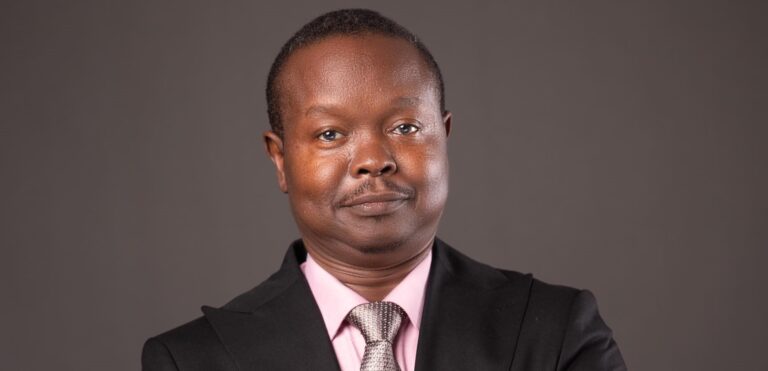
Dr. Remember Miamingi
The author is a South Sudanese human rights lawyer and governance specialist.
- Sources
- UN Development Coordination Office, “A Roadmap Home for South Sudan’s Displaced Families”, 6 August 2026. Regina Adyeng Amaylek Amuch’s account and quotation.
- https://un-dco.org/stories/roadmap-home-south-sudans-displaced-families
- “Draft constitution sees light after boycotts by other parties”, Sudan Tribune, reproduced by ReliefWeb, 3 May 2011. Presidential committee and opposition walkout. See also International Commission of Jurists, South Sudan: An Independent Judiciary in an Independent State?, 2013, pp. 11–13.
- https://reliefweb.int/report/sudan/draft-constitution-sees-light-after-boycotts-other-parties
- Commission on Human Rights in South Sudan, A/HRC/40/CRP.1, 21 February 2019, paras 941–947; and A/HRC/46/CRP.2, 18 February 2021, paras 143–144. Conditions, reach and opposition non-participation in the National Dialogue.
- https://www.ohchr.org/en/HRBodies/HRC/RegularSessions/Session46/Documents/A_HRC_46_CRP_2.pdf
- Eye Radio, “R-JMEC’s Gituai suggests permanent constitution before elections”, 17 November 2023. Quotation of the RJMEC chairperson on the 2018 agreement’s sequence.
- https://www.eyeradio.org/r-jmecs-gituai-suggests-permanent-constitution-before-elections/
- The Brussels Times, “EU criticises peace deal changes as South Sudan faces delayed constitutional ambitions”, 21 August 2026, reporting the EU Delegation’s statement. See also RJMEC, Quarterly Report, 1 July–30 September 2026, paras 78–80.
- https://www.brusselstimes.com/2282344/eu-criticises-peace-deal-changes-as-south-sudan-faces-delayed-constitutional-ambitions
- Human Rights Watch, World Report 1994: Angola. 1992 election, rejection of results and death toll. See also University of Notre Dame Peace Accords Matrix, “Detailed Timeline: Bicesse Accords”, on incomplete demobilisation.
- https://www.hrw.org/reports/1994/WR94/Africa-01.htm
- Kenya National Dialogue and Reconciliation, Longer Term Issues and Solutions: Constitutional Review, 4 March 2008, reproduced in PA-X. Al Jazeera, “Kenyans vote in new constitution”, 5 August 2010, for the 67 per cent result and the 2007–08 death toll.
- https://www.peaceagreements.org/agreements/690
- Anadolu Agency, “South Sudan extends transitional government by 2 years, pushing election to 2026”, September 2024.
- https://www.aa.com.tr/en/africa/south-sudan-extends-transitional-government-by-2-years-pushing-election-to-2026/3329855
- David Deng, Sophia Dawkins, Christopher Oringa and Jan Pospisil, Trends in Civic Space and Elections in South Sudan: Findings from the 2025 Public Perceptions of Peace Survey, FES/Detcro/PeaceRep, 2025, pp. 5 and 15. 4,582 respondents in 15 locations, March–June 2025; not a nationwide probability sample.
- https://peacerep.org/wp-content/uploads/2025/12/Trends-in-civic-space-and-elections-in-South-Sudan.pdf
- Eye Radio – Civil society forum says South Sudan not ready for December polls (29 Oct 2026)
- RJMEC – Release on its latest quarterly report and electoral credibility risks (28 Oct 2026)
- Eye Radio – Elections commission begins voter registration training (3 Sept 2026)

 and then