



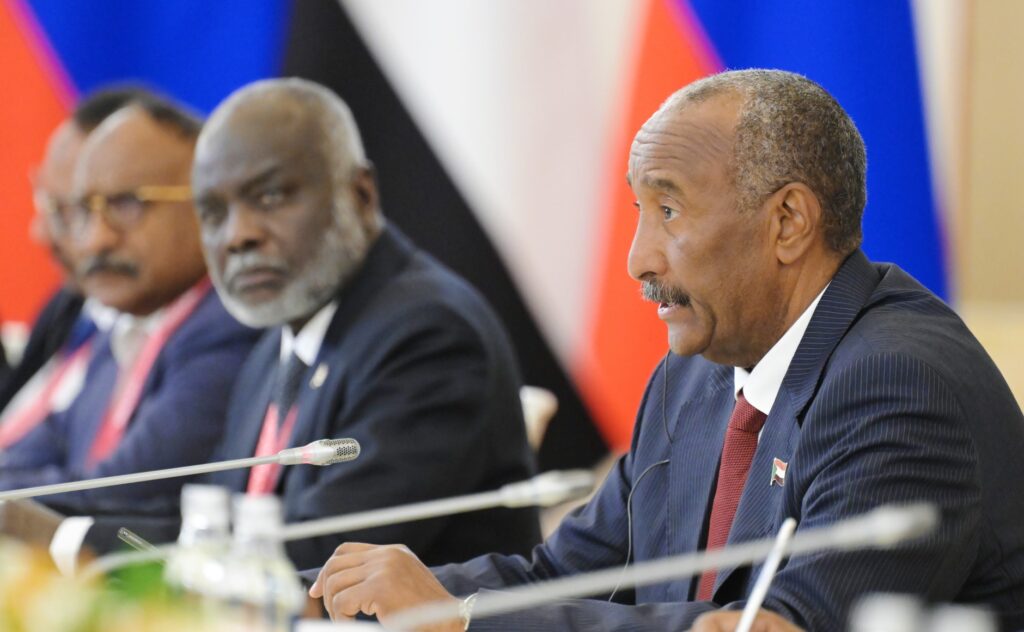
Sudan’s military leader Abdel Fattah al-Burhan risks repeating the mistakes of former president Omar al-Bashir by turning to Russia for political and economic support as he seeks to consolidate his hold on power amid the country’s ongoing war and growing international isolation, Sudanese journalist and political analyst Rasha Awad has warned.
Awad told Radio Tamazuj on Saturday that Burhan’s latest diplomatic engagement with Moscow, including proposals for Russian investment in mining, infrastructure and a free economic zone on the Red Sea coast, echoed al-Bashir’s efforts to cultivate closer ties with Russia during the final years of his rule.
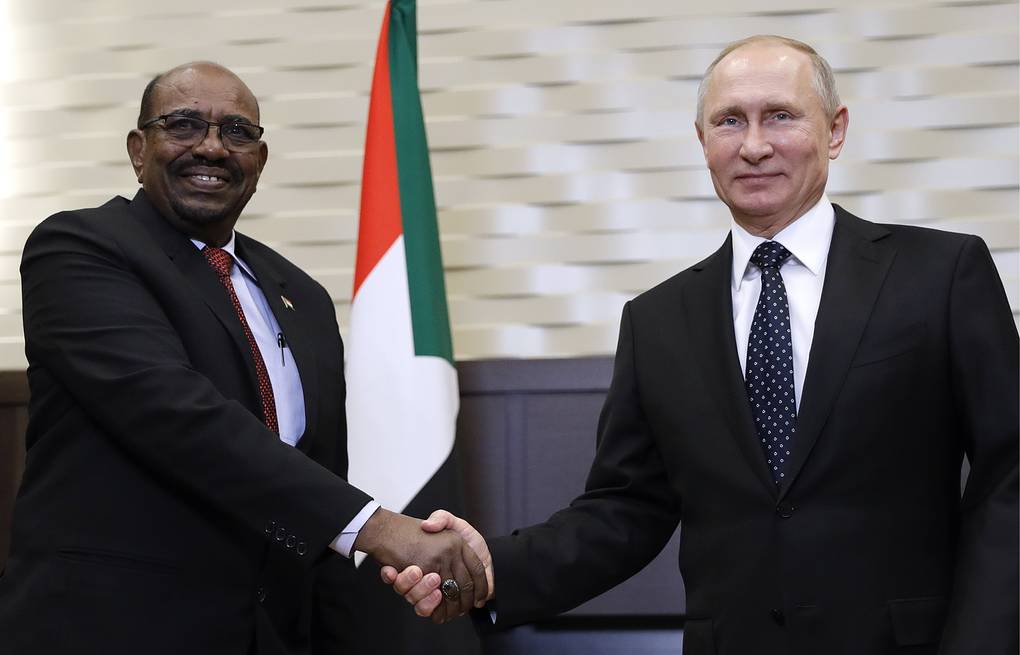
Al-Bashir visited Russia in November 2017 and asked President Vladimir Putin to protect Sudan against what he described as aggressive American actions. He also expressed interest in strengthening military cooperation and proposed a Russian military presence on the Red Sea coast.
However, al-Bashir was overthrown in April 2019 following months of nationwide protests after nearly three decades in power.
“Al-Bashir did it before him, and the result was that he fell,” Awad said, arguing that closer relations with Moscow would not guarantee Burhan’s political survival.
She described the renewed engagement with Russia as a reaction to Burhan’s failure to make progress towards peace and his lack of cooperation with international efforts, particularly those led by the United States, to end the conflict.
“From my point of view, this is a reaction to the fact that al-Burhan, due to his failure in all attempts to achieve peace and his lack of cooperation with the international community led by the United States to establish peace in Sudan, has now begun to hint that he will ally with Russia,” she said.
Awad said Burhan appeared to be using the prospect of closer relations with Moscow as a political manoeuvre to counter Western pressure and strengthen his hold on power. But she warned that the strategy is unlikely to succeed because it overlooks the competing interests of major international and regional powers.
Limits of Russian support
Awad questioned whether Russia would be willing or able to provide the political and military backing Burhan might expect, particularly given the strategic importance of the Red Sea and the interests of other international powers in the region.
“International and regional balances will not allow al-Burhan to bring Russia to the Red Sea,” she said.
She pointed to Russia’s military presence in Syria, arguing that its strategic relationship with the government of Bashar al-Assad did not prevent the collapse of his rule in December 2024.
“Russia, for example, has a military base in Syria, but that did not prevent the fall of Bashar al-Assad,” Awad said.
She added that Moscow had substantial interests in maintaining relations with the United States and Gulf countries, which could limit its willingness to offer unconditional support to Sudan’s military authorities.
Those broader interests, she argued, would take precedence over commitments to a government facing domestic opposition and international isolation.
Awad also questioned the prospects of a lasting strategic partnership between Moscow and the authorities in Port Sudan, citing concerns over the influence of Islamist groups within Sudan’s military establishment.
She said Russia had its own security concerns about the expansion of political Islam, particularly because of its potential implications for Russian interests in Chechnya and other parts of the Caucasus.
“Russia also has a problem with the expansion of political Islam because it is afraid of it being used against it in Chechnya or other competing republics,” she said.
Awad argued that these ideological and geopolitical considerations add to the complications facing any proposed military or strategic partnership between the two countries.
Investment risks
On economic cooperation, Awad expressed scepticism about the prospect of significant long-term Russian investment in Sudan while the country remains engulfed in war and political instability.
She said uncertainty, competing regional interests and the absence of a stable investment environment would discourage countries and companies from committing substantial capital to the country.
“No one sacrifices huge amounts of money in an unstable country,” she said.
Instead, she warned that agreements involving land concessions, strategic locations and natural resources could be negotiated behind closed doors without adequate public scrutiny or consideration of the benefits to Sudan’s economy.
“The only thing available in the circumstances of Sudan is the allocation of land or reserved areas to countries without taking into account the interests of the Sudanese people and the returns that the Sudanese economy will benefit from,” she said.
Awad cautioned that such arrangements could primarily serve the interests of those in power rather than the wider population, particularly if they were intended to strengthen the authorities and prolong the current political arrangement.
“Such deals that are conducted behind the scenes and in secret will only serve to strengthen the foundations of the regime that wants to maintain the coup situation as it is,” she said.
Geopolitical risks
Awad further warned that efforts to deepen military and strategic cooperation with Russia could draw Sudan into wider geopolitical competition between Moscow and Washington, adding to the country’s existing political and security challenges.
She said those pursuing closer relations with Russia are underestimating the complexity of international interests surrounding the Red Sea and the potential consequences of aligning Sudan with one side in broader power rivalries.
She also questioned whether Moscow would fully trust the authorities in Port Sudan, given what she described as the influence of Islamic groups within the military establishment.
Awad said the military leadership appears to be overlooking these complications as it struggles with international isolation, growing public discontent and the devastating economic consequences of the war.
She said Sudanese citizens are increasingly facing difficult living conditions as the conflict continues to undermine the economy and livelihoods.
Peace remains the way out
Awad said Burhan’s priority should be to pursue a negotiated settlement rather than rely on diplomatic manoeuvres and external alliances to preserve his position.
“Burhan should turn to peace if he wants to ensure a safe exit for himself,” she said.
“There is no safe exit for Burhan or Sudan except through a just peace that takes the military institution out of politics and the economy,” she added.
She argued that ending the military’s involvement in politics and economic activities is essential to establishing a sustainable political order in Sudan.
However, Awad expressed doubt that the military leadership would pursue such a course, predicting that it would continue using diplomatic manoeuvres similar to those adopted by al-Bashir.
She warned that repeating the former president’s strategy of turning to Moscow amid international pressure would not resolve Sudan’s underlying political crisis or guarantee the survival of Burhan’s rule.
For Awad, a just and sustainable peace, coupled with the withdrawal of the military from political and economic activities, remains the only viable way out of Sudan’s crisis.

 and then