



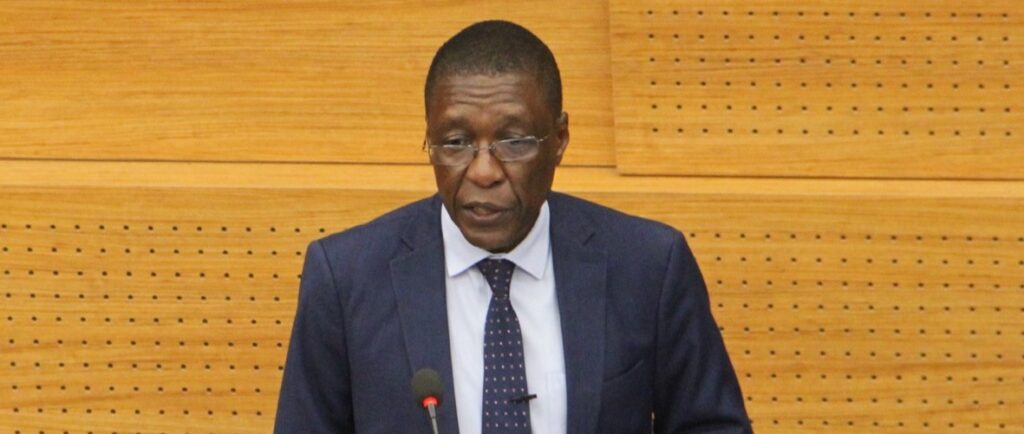
South Sudan’s peace monitors warned on Wednesday that proposed amendments to the country’s 2018 peace agreement risk undermining the accord’s supremacy and integrity, as implementation of the deal deteriorates amid renewed insecurity and political tensions ahead of elections due in December 2026.
The warning came in the first quarterly report of 2026 presented by the Reconstituted Joint Monitoring and Evaluation Commission (RJMEC) to the reconstituted Transitional National Legislative Assembly in Juba.
RJMEC Interim Chairperson Aggrey George Owinow said proposals submitted by the transitional government in January to amend the Revitalised Agreement on the Resolution of the Conflict in South Sudan (R-ARCSS) would fundamentally alter the structure of the peace deal.
The proposed changes seek to delink the permanent constitution-making process and population census from the December 2026 elections timeline and repeal provisions establishing the supremacy of the peace agreement over conflicting laws and constitutional provisions.
“The latter two are broader than just the electoral process and would alter the structure and architecture of the R-ARCSS, undermine the legal basis of the R-ARCSS thereby abrogating its supremacy,” Owinow told lawmakers.
The government has argued that key transitional tasks, including drafting a permanent constitution, cannot be completed before the planned elections and that there would be no further extension of the transitional period.
RJMEC said consultations with signatory parties, regional guarantors and international partners exposed deep divisions over the proposals. While some stakeholders supported amendments aimed at facilitating timely elections, many raised concerns over what they described as unilateral actions and the exclusion of key signatories from consultations.
The commission said the Sudan People’s Liberation Movement-in-Opposition (SPLM/A-IO) told RJMEC it had not been consulted on the amendments and that many of its representatives had been removed from positions within the executive and legislature.
RJMEC said most stakeholders argued that the peace agreement was not solely about elections but also covered broader democratic reforms, governance arrangements and peacebuilding measures that should remain intact before and after the vote.
The report cited a February declaration by the African Union C5 Plus committee reaffirming the centrality of the peace agreement as the only framework for lasting peace and calling for inclusive dialogue among signatories.
It also noted that the African Union Peace and Security Council had underscored that any amendments must follow procedures outlined in the agreement and urged consultations involving the Intergovernmental Authority on Development (IGAD).
Beyond the amendment dispute, RJMEC painted a bleak picture of the wider peace process, saying implementation of the agreement had “considerably faltered” and that some gains achieved over the past seven years had been eroded.
The commission said violations of the permanent ceasefire persisted between government forces and opposition fighters despite repeated calls for de-escalation.
The ceasefire monitoring body CTSAMVM recorded 133 alleged violations during the first quarter, including armed clashes, sexual violence, attacks on civilians and forced displacement, particularly in Jonglei State’s Ayod, Pigi, Nyirol and Akobo counties.
RJMEC said key transitional security mechanisms had remained non-operational since March 2025, stalling progress on the unification of forces and disarmament programmes.
It added that most cantonment sites and training centres were no longer functioning because of renewed fighting and that many unified forces had returned to their former armed groups.
The report said the humanitarian situation had also worsened, particularly in Akobo, where clashes disrupted aid operations and led to looting of markets, NGO compounds and a hospital.
On the economy, RJMEC said oil production remained stable at about 155,000 barrels per day, supporting government finances, although revenues fell as the government used part of its oil entitlement to repay earlier budget advances.
The commission also reported limited progress on transitional justice mechanisms. While nominees for the Commission for Truth, Reconciliation and Healing had been submitted to the Ministry of Justice, no progress was recorded on establishing the Hybrid Court for South Sudan or the Compensation and Reparations Authority.
RJMEC urged lawmakers to guard against unilateral actions that could undermine the peace agreement and to support inclusive political dialogue to prevent renewed large-scale conflict.
“The R-ARCSS remains the most viable peacebuilding framework for lasting peace, stability, unity, and democratisation in this country,” Owinow said.

 and then