



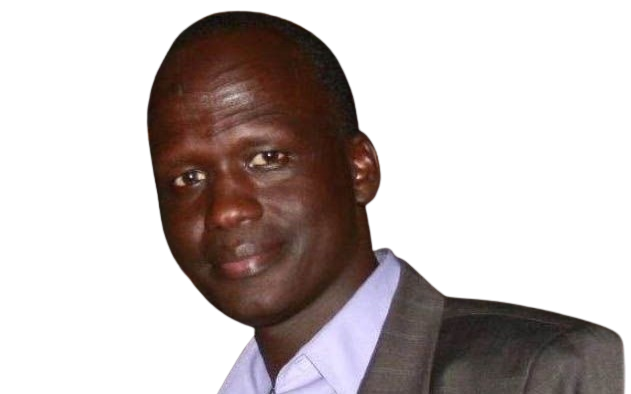
Leadership universally demands honesty, accountability, and an unwavering respect for human life. In South Sudan, however, these principles are too often abandoned. Dr. Akol Paul Kordit, Secretary-General of the ruling Sudan People’s Liberation Movement (SPLM), exemplifies this troubling gap, prioritizing distortion over truth, arrogance over empathy, and political spectacle over genuine statesmanship. His recent statements at the SPLM conference in Juba reveal a dangerous blend of historical revisionism and moral indifference—a pattern that threatens the very foundations of the nation.
Kordit described the December 2013 civil war as a mere “power struggle” within the SPLM—a characterization that is misleading, morally bankrupt, and deeply deceptive. While political disagreements existed between President Salva Kiir and then–Vice President Dr. Riek Machar, the true catalyst was Machar’s reform agenda. In the months preceding the war, Dr. Machar and his supporters repeatedly condemned the party’s loss of direction and called for transparency, internal party elections, financial accountability, and genuine internal democracy within the SPLM.
Reducing this catastrophic rupture to a simplistic “power struggle” without acknowledging its true causes, erases the voices of those who sought meaningful reform and dismisses the suffering of tens of thousands of Nuer civilians who were hunted down in and around Juba by security forces and tribal militias—atrocities documented by investigations conducted by the United Nations Mission in South Sudan, the African Union Commission of Inquiry on South Sudan, and other credible human rights organizations. It also ignores the millions of people who were forced to seek protection in United Nations Protection of Civilians (PoC) sites inside the country, as well as those who fled to neighboring countries in search of safety as refugees. Kordit’s framing is not merely historically false; it is also a moral affront, revealing the SPLM’s persistent authoritarian mindset and its contempt for the South Sudanese people.
If the cause of the civil war was truly nothing more than a political “power struggle,” as Dr. Akol Paul Kordit claims, then one inescapable question remains: what possible role did unarmed Nuer civilians—men, women, and children who were living in and around Juba—play in that alleged political contest? What threat did they pose to Kiir’s government, and what office were they competing for that could justify their systematic targeting, killing, and displacement? If the struggle was purely political, why were ordinary civilians singled out because of who they were rather than what political positions they held? Until the leadership of the SPLM provides an honest answer to that question, the claim that the conflict was merely a “power struggle” collapses under the weight of its own contradiction.
His so-called apology, claiming that the SPLM assumes responsibility for the suffering inflicted during the war, is deeply disingenuous. To apologize while denying the true causes of the conflict is not an act of sincere remorse—it is merely a performance of deception. This spectacle mocks both history and humanity. It sanitizes the record of suffering, absolves the party of accountability, and dishonors the memory of those who fought and died for genuine reform, as well as those who perished during the liberation struggle against Sudan.
Kordit further framed leadership as a transactional enterprise by likening the SPLM to a marketplace: “A political party is like a shop. If you present good products, people will come. If the products are expired, the customers will go elsewhere.” Equating a deadly civil war with a business metaphor is not merely callous—it exposes a profound failure of moral responsibility and ethical judgment. A reasonable observer might conclude that the Secretary-General of the SPLM has, knowingly or unknowingly, revealed the true mentality of the party’s elites.
His indifference extends even to the most fundamental human needs. Regarding the closure of rural hospitals, Kordit hailed it as an “achievement,” citing South Sudanese communities’ supposed “historical resilience” without formal medical care and recounting his own survival from malaria in the 1990s using “bitter tree roots” in Western Equatoria State. One is left to wonder whether Dr. Kordit believes trained health professionals should treat South Sudanese people or simply rely on bitter tree roots.
This is not resilience; it is reckless disregard—a betrayal of the fundamental duty of leadership to preserve life. Rural hospitals save countless lives: they prevent maternal deaths, provide vaccines to children, and treat millions suffering from preventable illnesses in a country where maternal mortality remains among the highest in the world. To celebrate their closure is to celebrate death itself. Meanwhile, political elites, including Kordit himself, routinely seek medical treatment abroad while ordinary citizens are left to suffer in despair. Perhaps Kordit is signaling to the people of South Sudan that his party, the SPLM, has effectively failed for nearly 15 years to provide essential health services—and, in doing so, has become what could rightly be called a party of death.
The logic is irrefutable: a nation cannot heal when its leaders deliberately distort history. When they dismiss reform as the cause of conflict, glorify the closure of essential health services, and minimize human suffering, they betray the very people they are sworn to serve. Words such as “apology” and “resilience” become meaningless when paired with denial, arrogance, and moral indifference.
The South Sudanese fought for independence with the hope of a democratic society, opportunity, and access to essential services. Reform was a real policy agenda within the leadership of the SPLM, championed by many senior party officials, with the notable exception of Salva Kiir and his loyalists, up until December 14, 2013. The catastrophic civil war began when Kiir and his loyalists refused to implement reforms, choosing instead to accuse other leaders, such as Dr. Machar, of orchestrating a coup as a pretext for sidelining perceived political rivals. Dr. Kordit and the SPLM should recognize that a country with a robust healthcare system reflects the moral compass of its leadership. To deny these realities is to betray the trust of every citizen and the very essence of nationhood. One thing is clear: the SPLM appears to have no coherent plan for the nation. The party runs the country like a mafia-style corporation, where forced obedience is demanded rather than earned.
There is no justification for a leader who calls a reform-driven civil war “just a power struggle” or dismisses the deaths and suffering caused by the closure of hospitals as a minor issue. This self-serving deceit, cloaked in diplomatic language, lays bare the SPLM’s true priorities: preserving power while lives are sacrificed, protecting reputation while truth is ignored, and maintaining the appearance of national leadership while the victims of the SPLM’s destructive policies remain dishonored.
South Sudan cannot progress while the SPLM distorts history and ignores the suffering of the very citizens it depends on to remain in power. The party has embraced a distorted narrative—one that offers no credible plan for the country’s future. Under the current SPLM-run regime, it is clear that the people of South Sudan have no choice but to decide their own future. When the people reclaim their power, no excuses or political deceit will shield those who betrayed their trust. There is no doubt that history will, sooner or later, pass judgment on behalf of the ordinary, suffering South Sudanese.
If the December 2013 conflict was merely a “power struggle,” as claimed by Akol Paul Kordit, then why did Salva Kiir and the SPLM leadership resort to violently suppressing the reform agenda championed by senior officials—an agenda calling only for transparency, internal democracy, and accountability? Was it because Kiir feared genuine reform and, in doing so, exposed the dictatorial tendencies repeatedly warned against by the reform faction? And why has the same leadership repeatedly obstructed the full implementation of the September 2018 Revitalized Agreement on the Resolution of the Conflict in South Sudan (R-ARCSS)?
And if the party truly believes in the dignity and welfare of the people of South Sudan, why would its Secretary-General celebrate the shutdown of rural hospitals and encourage reliance on “bitter tree roots” as medicine? Does he genuinely believe that South Sudanese citizens should remain trapped in pre-modern survival conditions while political elites quietly travel abroad to receive advanced medical treatment? When leadership betrays reform, obstructs peace, and treats the lives of its citizens as expendable, can the SPLM truly claim moral or political legitimacy?
The SPLM is no longer the party that the South Sudanese people and the international community once admired. In my view, the party began to lose its moral compass in December 2005. It appeared to regain a sense of purpose with the historic achievement of South Sudan’s independence in July 2011. Yet internal infighting surfaced in June 2012, leading to a political crisis by April 2013. By July 2013, the party had effectively abandoned its founding ideology, and on December 14, 2013, violence replaced politics as its primary method of governance. What remains is a party of destruction, where founding principles have been replaced by death, plunder, and the pursuit of power. Now functioning as a kleptocracy, the SPLM has lost all sense of direction and cannot expect the people to accept its self-serving apologies. A nation cannot be rebuilt on denial. Until the party confronts the truth about the December 2013 violence and its subsequent failures, its apologies are empty gestures, and its promises of reform are mere words. The SPLM’s institutional decay is undeniable, and unless it is confronted and purged, it will poison the foundations of South Sudan, betraying the nation’s promise and imperiling the lives and dignity of its citizens.
Duop Chak Wuol is an analyst, critical writer, and former editor-in-chief of the South Sudan News Agency. He is a graduate of the University of Colorado; his work focuses on geopolitics, security, and social issues in South Sudan and the broader East African region. His writing has appeared in leading regional and international media outlets. He can be reached at duop282@gmail.com.
The views expressed in ‘opinion’ articles published by Radio Tamazuj are solely those of the writer. The veracity of any claims made is the responsibility of the author, not Radio Tamazuj.

 and then