



I am writing in response to the crooked statements being made by the international actors on matters of my country. On March 6, 2026, the South Sudan People’s Defense Forces (SSPDF) did something unusual for armies engaged in active conflict: they provided formal, public advance notice to civilians, UN agencies, and all humanitarian organizations operating in Akobo before firing a single shot in the town. The SSPDF spokesperson Maj. Gen. Lul Ruai Koang, while on record, clearly stated, “The above orders are being issued in advance to avoid unnecessary collateral damage.”
After the operations concluded, the SSPDF promptly rescinded the order and invited all humanitarian actors to return. This behavior is not characteristic of an army waging war against its own people; it reflects a military that intentionally distinguishes between the battlefield and the civilian population, both deliberately and transparently. This good will does not need to be twisted.
Even with this transparent operation strategy, the international actors still could not be toward for once. One international actor, the UN Human Rights Chief, Mr. Volker Türk, without verified field evidence, alleged that the SSPDF had deliberately poisoned and destroyed community water sources. The SSPDF promptly rebutted this claim. Maj. Gen. Lul Ruai Koang in his response characterized the assertion as “vague” and requested specific details. His words were, “They did not mention the locations.” I understand that Mr. Volker failed to provide any locations to substantiate his claims because none existed. The allegation escalated from an unverified rumor to an accusation. It appeared to be an attempt to construct a case of crimes against humanity where none was present.
In her address to the UN Security Council, Ambassador Jennifer Locetta spoke with emotions as if she were truthful. The accusation against the government of South Sudan, she presented to the UN Security Council, was based on what can only be described as a perverted lie, framed as established fact. Notably, she has never visited Akobo and failed to reference any UNMISS report, field investigation, or named source to substantiate her claims.
I cannot blame Jennifer Locetta; she is a new official that wants to impress her bosses in the international arena. Prior to her diplomatic role, her career was focused on running election campaigns in Florida, serving as data director for Mitt Romney in 2012 and as state director for Donald Trump in 2016. She entered the world’s highest peace forum armed not with knowledge but with a preconceived narrative and the lies of electioneering.
Locetta should take this lesson from the son of the soil. Sudanese people, and particularly the South Sudanese, across all regions, tribes, and sides of every conflict in our long history, do not poison individuals or water. They have never used it as a weapon for the punishment of any wrongdoer. It has never been used anywhere in any war. This act is alien to our culture, our honor, and our humanity, as it contradicts our values of compassion and justice that we uphold in all aspects of life. To assert otherwise before the Security Council is not just a diplomatic misstep; it is a slander against an entire civilization. We are an upright civilization. We are a loving people. We fight and eat together; we do not poison one another.
To the people of Akobo: this article does not endorse war or the devastation it inflicts upon you or any community across the country. Your suffering is profound, and your lives are valuable. But it’s vital to truthfully report who started the war and who is profiting from it.
Part of that truth is this: Nathaniel Oyet does not represent the people of South Sudan; he serves a political agenda. He has reignited the conflict to secure a new agreement that brings Dr. Riek Machar back to the negotiating table without accountability, without elections, and without regard for the actual needs of ordinary South Sudanese.
The Nuer sons, especially from Lou Nuer, have sacrificed their lives to defend the personal agendas of Angelina Nyajany and Riek Machar Teny in vain; they have never received recognition for their efforts. While Lou Nuer is a strong community, it is often exploited by Dr. Riek Machar, who on several occasions failed to reward or deliver real development to their land, leading to widespread discontent and frustration among its members. Such behavior has left the community with feelings of marginalization and voicelessness in the political matters of South Sudan. Even during the R-ARCSS, Dr. Riek rewarded himself and his wife generously while relegating Manawa Peter Gatkuoth to a marginal ministerial position, where he unfortunately met his fate. He left Gen. Simon Gatwech Dual in the wilderness after consuming his men through war.
According to these records and many others, Lou Nuer must recognize that they should not always be treated as pawns in negotiations. Like all citizens, they deserve a vote, not another deal made without their input. If necessary, they should directly ask the government for what they need without Dr. Riek as their representative. Dr. Riek Machar’s track record obscures their needs and their voice, making it difficult for the citizens to effectively communicate their concerns and priorities to the government. Lou counts in numbers; they have contributed enormously in many ways to the liberation struggle, and they should be part of a bigger national agenda.
What they should understand and exploit is this fact: the government of South Sudan does not have issues with them or with any other specific community or society. The Lou Nuer have been hiding in the shadows of Dr. Riek Machar and rejecting their own sons to represent them, and Dr. Riek himself does not give them anything of significance. The government of South Sudan is truly opposing those who exploit communities to destabilize the country. The government has no problem with Lou Nuer.
Ambassador Michael J. Adler, who now resides in Juba, stated during a press conference on February 26, 2026, “We cannot accept that peace commitments are being implemented when one of the main parties to the agreement is under house arrest.” This was reiterated many other times with the pronouncement of Dr. Riek Machar’s name as the only savior of South Sudan. The action of this kind is absurd and not helping the country.
Ambassador Michael J. Adler must recognize this important fact: Dr. Riek Machar is currently before a competent South Sudanese court facing charges of murder, treason, and crimes against humanity. He should acknowledge, without irritation, that the legal process is governed by South Sudanese law. All, including foreign diplomats, must respect the judicial branch of the government.
Whether the charges are politically motivated should not be a matter for a foreign envoy’s press conference. Ambassador Adler’s actions contravene international law, specifically the UN Charter, Article 2, Section 7. His declaration does not exonerate Dr. Machar; instead, it suggests that Washington supports armed factions in their resistance, undermines all negotiations, and transforms a legal matter into a political tool. This constitutes interference, not diplomacy.
While Ambassador Michael J. Adler speaks, nothing he says strikes me as extraordinary. He represents the same Trump administration that has diminished the standing of the United States globally, presiding over a nation facing significant domestic turmoil, withdrawing from international institutions, reducing funding for its own foreign service, and paradoxically positioning itself as the moral guardian of African governance. A country that does not uphold its own democratic commitments cannot legitimately claim moral authority over others merely by raising its voice. Therefore, America should be the last to endorse the rebellion in South Sudan.
South Sudan was created with significant American involvement. Its people deserve a form of American engagement that reflects this history; we need engagement that is rooted in truth, respectful of sovereignty, and transparent about who is sustaining this conflict and the reasons behind it.
What Locetta and Adler have presented is a superficial argument regarding a legitimate government, compelling it to endure the ongoing destruction of the country by condoning those who incite the conflict, rather than addressing the root causes of instability and proposing constructive solutions for peace and governance.
The people of South Sudan have suffered for a long time due to the ambitions of individuals thirsting for power. Dr. Riek Machar Teny has been central to this phenomenon, chosen by gods or Ngundeng Bong, as claimed by his supporters. South Sudanese do not need their leaders to be chosen by self-claimed spiritual leaders; they need to do it themselves.
President Salva Kiir should not face overthrow, even if his government has weaknesses. His challengers ought to seek leadership through peaceful means, using ballots and not violence, and the American administration should refrain from being persuaded by these political actors to impose their demands on the country. The prerequisites for elections, as outlined by the opposition, are consistently unmet because they disadvantage the challengers. Conducting a census is impossible when war is ongoing, among other challenges, such as the lack of security and the displacement of populations that make accurate data collection unfeasible. Consequently, these individuals succeed in advancing their agenda by undermining national progress through citing the letter of the agreement, as long as they are rewarded with lucrative government positions. Any dialogue would result in additional rewards for the same individuals, while the citizens would continue to suffer.
To Locetta and Adler, a loud voice is not always the clearest or the most effective. As a superpower, America should not rely solely on volume; it should utilize its influence to assist struggling countries by genuinely considering the situation on the ground, such as providing diplomatic support, economic aid, and cultivating collaborative international relationships.
Dr. Riek has been effective in negotiating agreements; these serve as his strongest strategy for maintaining leadership. He cannot lead without a signed peace agreement. However, he instigates unnecessary conflicts to achieve his goals. He has done this with President Bashir, engaged in deadly war with Dr. John Garang, recalled the Nasir Declaration, and clashed multiple times with President Salva Kiir Mayardit. He has also disagreed with Dr. Lam Akol and others. He is responsible for South Sudan’s current state. Writhing in pain of economic downturn and stagnated or stunted from growth.
Whenever his thirst for power intensifies, he incites violence, even during periods of peace. His insatiable pursuit of power has held back the country since before independence, as he chose to ally our able fighters, mainly from Nuer, with Khartoum and staged a fierce fight against his brothers in the Southern part of the country. Such actions ultimately hindered the South Sudanese struggle for autonomy and self-determination.
Do not interfere in the internal affairs of South Sudan; allow the South Sudanese to manage their issues independently. As friends of South Sudan, provide support where it is genuinely needed.
With your action and loud but baseless claims, I just see two American officials introducing fabrication and interference into a country that deserves neither. This move is an attempt to undermine the sovereignty and dignity of the South Sudanese people. The record must be corrected, and the South Sudanese people must be recognized for who they truly are. We are an upright society.
Till then, yours truly, Mr. Teetotaler!
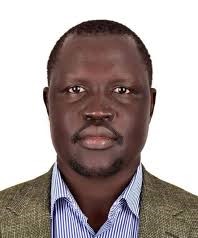
The writer, Dr. Sunday de John, holds an MBA and a Bachelor of Medicine and Bachelor of Surgery (MBChB) from the University of Nairobi, Faculty of Business and Management Sciences and Faculty of Medicine, respectively. He is the current Chairman of the South Sudan United Front-Progressive and can be reached via drsundayalong4@gmail.com
The views expressed in ‘opinion’ articles published by Radio Tamazuj are solely those of the writer. The veracity of any claims made is the responsibility of the author, not Radio Tamazuj.

 and then