



A meeting was recently convened in Juba by a group of Nuer politicians who also present themselves as community leaders. The meeting did not focus on the country’s ongoing political crisis or propose alternative approaches to reduce tensions or address underlying problems. Instead, it appeared to be simple political posturing, with participants publicly signaling loyalty to Salva Kiir’s government rather than engaging in substantive dialogue on national reconciliation or reform. In doing so, they have made themselves mere political pawns, offering no meaningful solutions for the suffering South Sudanese people, especially the Nuer community they claim to represent.
This political performance cannot be separated from the wider context in which it occurs—a context defined by years of conflict, recurring violence, and unresolved atrocities that continue to shape the realities of governance and survival in South Sudan.
Kiir’s government and its supporters frequently deny that tribalism plays any role in national politics, presenting governance under Kiir as broadly inclusive and non-ethnic in character. Yet when concerns are raised about how ethnic identity influences access to power, security, and political decision-making, the response is often not engagement but reversal—where the critic is labeled as a tribalist. This pattern shifts attention away from the substance of the argument and reframes structural concerns as personal prejudice. In doing so, it replaces serious debate with deflection, leaving the underlying question of tribalism in governance unresolved and persistently unaddressed.
Kiir’s regime carried out door-to-door killings of the Nuer in December 2013 in Juba. It also burned Nuer civilians alive using improvised, air-dropped incendiary weapons in Longechuk and Nasir Counties in 2025. The regime has also recently massacred civilians in and around Akobo County and forced hundreds of thousands to flee their homes. In April 2025, the same regime designated several predominantly Nuer counties as “hostile” areas under Kiir’s rule. This is only a fraction of Kiir’s atrocities.
The question then becomes: what did the Nuer civilians who were massacred in and around Juba in December 2013 do to the government if the crisis was purely political, as many career-seeking and cowardly politicians often claim?
Accusing the United States and human rights organizations of spreading misinformation demonstrates how far the so-called government-aligned Nuer leaders have fallen and exposes the depth of their intellectual dishonesty. South Sudan is not a village in Warrap State but a sovereign country. In this context, any South Sudanese political leader from the Equatoria, Upper Nile, or any other region should act with moral courage and not deny documented atrocities attributed to Kiir.
Moreover, is this not the same regime that massacred Nuer women and children in Ayod County’s Pankor village in February 2026 after luring them to a designated area under the pretense of receiving food supplies that were not actually there?
One wonders if the regime-aligned Nuer politicians know that the very regime they have been trying to shield from accountability—the one that refers to the detained Nuer political leaders as “7 dogs”—also calls them “domesticated dogs” and “useful idiots.” These seemingly self-preserving politicians appear to operate with little or no moral awareness.
If government-aligned Nuer leaders claim they would never remain silent in the face of the deliberate targeting of their own people, why is their loudest outrage directed not at the reported killings, displacement, and destruction affecting Nuer civilians but at international organizations and the United States? And if they believe that Kiir’s regime did not commit the alleged crimes, why lash out at the U.S. and humanitarian agencies?
These self-proclaimed Nuer leaders should instead welcome a globally supported, independent investigation free from any influence, control, or interference by the regime itself. The Juba-based Nuer politicians should understand that the atrocities committed under Kiir’s administration have been documented locally, regionally, and internationally. Their defense of Kiir’s regime or its propaganda will never wash the blood of innocent Nuer civilians from Kiir’s hands or erase the suffering endured by the victims and their communities.
Those who trade the suffering of their own people for political survival may secure temporary favor from those in power, but history rarely absolves those who stand silent while civilians endure violence under the very regime they claim to represent. A leadership that fears an independent investigation more than the crimes it might expose has already signaled its moral collapse to the world. The cries of victims in Juba, Nasir, Ayod, Akobo, and beyond cannot be erased by staged meetings, propaganda, or performances of loyalty. In the end, no degree of political obedience will shield anyone from history’s judgment, because nations are ultimately healed through truth and accountability, not denial and complicity.
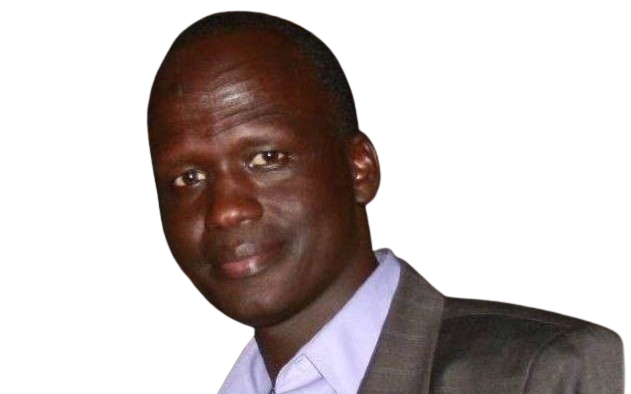
Duop Chak Wuol is an analyst, critical writer, and former editor-in-chief of the South Sudan News Agency. He is a graduate of the University of Colorado; his work focuses on geopolitics, security, and social issues in South Sudan and the broader East African region. His writing has appeared in leading regional and international media outlets. He can be reached at duop282@gmail.com.
The views expressed in ‘opinion’ articles published by Radio Tamazuj are solely those of the writer. The veracity of any claims made is the responsibility of the author, not Radio Tamazuj.

 and then