



Immediately upon gaining independence from Sudan in July 2011, South Sudan inherited approximately 75% of the former unified Sudan’s oil reserves. As a result, the new nation became one of the most oil-dependent economies in the world. This reality was reflected in its first post-independence fiscal budget, which relied almost entirely on crude oil exports, accounting for about 90% of national revenue.
Recent upstream operational data indicate that most reserves are located in the Muglad and Melut basins, producing three main crude blends. The Dar Blend, characterized by its heavy and acidic nature, is found in Blocks 3 and 7 and is operated by Dar Petroleum Operating Company Limited (DPOC). The Nile Blend (medium grade) is found in Blocks 1, 2A, 2B, and 4, operated by Greater Pioneer Operating Company (GPOC), as well as Block 5A, operated by Sudd Petroleum Operating Company Limited (SPOC). Sudan controls the key pipeline infrastructure used to transport crude oil from production sites to the marine terminal at Port Sudan, from where it reaches global markets via the Red Sea.
Upstream production operations have been repeatedly disrupted by three major shutdowns: the 2012 conflict between Sudan and South Sudan, the 2013 civil war in South Sudan, and the ongoing Sudanese civil war since 2023. These disruptions have significantly affected production flows and have translated into severe economic hardship nationwide.
Despite possessing substantial oil reserves, South Sudan continues to face a shortage of refined petroleum products for domestic consumption within its vast and largely untapped energy market. The country lacks a local refinery and relies heavily on imported refined fuel from the Middle East and Asia. These imports are shipped through Mombasa Port in Kenya and transported overland via Uganda using fuel tankers. This long and costly supply chain significantly increases fuel prices for end consumers, leading to soaring prices across the country. Currently, fuel prices stand at approximately 11,500 SSP (around $1.9 USD) per litre. This sharp increase is driven by several factors, including supply shortages, speculative trading, and rising customs and clearance fees.
The Proposed Tanga Refinery, United Republic of Tanzania
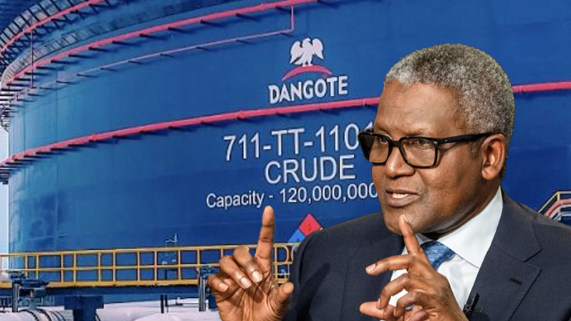
Africa’s richest industrialist, Aliko Dangote, president of the Dangote Group, has announced a proposal to build a refinery in East Africa, specifically in Tanga, a coastal city in the United Republic of Tanzania. In high-level discussions involving Yoweri Museveni and William Ruto, the focus was on reducing Africa’s dependence on imported refined petroleum products.
Dangote has committed to constructing a refinery with a capacity similar to the one he built in Nigeria—approximately 650,000 barrels per day (bpd), equivalent to about 75 million litres daily.
The proposed Tanga refinery represents a significant initiative aimed at reducing reliance on Middle Eastern fuel imports and strengthening regional energy security. Potential contributors of crude oil include South Sudan, Uganda, the Democratic Republic of the Congo, and Kenya. The facility is expected to serve as a regional energy hub, processing crude oil and distributing refined products across East Africa. The estimated construction timeline is between five and six years.
However, South Sudan, as the leading oil producer in the region, should have taken a proactive role in these discussions. Surprisingly, there has been no visible representation from either the Government of South Sudan or key private-sector actors in the oil and gas industry. Participation in such high-level regional initiatives is essential to safeguarding national interests.
From a logistical perspective, transporting crude oil from major fields such as Unity, Paloch, and Thar Jath to Tanga would involve considerable distance and cost. The proposal might be more economically viable if the refinery were located in a more central and accessible area. For instance, Nadapal, a border town in South Sudan, is geographically closer to Kenya, Uganda, Tanzania, and the Democratic Republic of the Congo. Establishing the refinery there could significantly reduce transportation costs for both crude oil and refined products.
Furthermore, South Sudan would incur double costs—first in transporting crude oil to Tanzania, and second in importing refined products back from Tanga. These costs could be avoided if a refinery were constructed domestically. South Sudan holds a comparative advantage in this regard, as its oil production capacity exceeds that of neighboring states. Although the country is landlocked, developing such infrastructure could strengthen regional cooperation, particularly since Kenya and Tanzania provide maritime access for international trade.
PROPOSED SOLUTIONS AND THE WAY FORWARD
- Enhance active participation and engagement with regional and international development partners. Leadership from entities such as the Dangote Group should directly engage with the Government of South Sudan on this matter.
- The Office of the Presidential Envoy on Special Programs should take a leading role in overseeing and coordinating such strategic regional initiatives to safeguard national interests.
- The Ministry of Petroleum (MoP) and Nile Petroleum Corporation (NILEPET) should jointly revitalize and empower the downstream sector, ensuring it has institutional capacity comparable to the upstream (exploration and production) directorates.
- Engage East African partner states in constructive dialogue to reconsider the location of the proposed refinery, including the possibility of relocating it to South Sudan, given its status as the region’s leading oil reserve holder.
The writer, Dr. Giel Thuok Yoach Thidor (MBBS, MPH, MMed), is a former HSE Manager at GPOC and a Medical, Public and Environmental Health Specialist, Energy Industry Expert, Public Administration Expert, and entrepreneur. He can be reached at: thuokyoach@gmail.com.
The views expressed in ‘opinion’ articles published by Radio Tamazuj are solely those of the writer. The veracity of any claims made is the responsibility of the author, not Radio Tamazuj.

 and then