



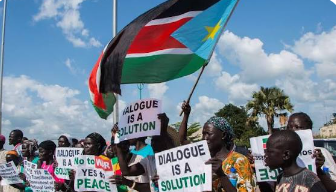
South Sudan became the world’s youngest nation on 9 July 2011, following a historic referendum where 98.8% of the population voted to secede from Sudan. The historic event marked the end of Africa’s longest-running civil war, a conflict that spanned decades and cost over two million lives.
Independence was forged through two brutal civil wars (1955-1972 and 1983-2005) fought between the central government in Khartoum and southern rebels.
The Comprehensive Peace Agreement (CPA) was signed in 2005, granting the south autonomy for a six-year interim period. A peaceful week-long referendum was held in January 2011, paving the way for full independence six months later.
The country quickly joined the United Nations and the African Union as an independent state.
Early optimism vs. structural realities
Independence was met with immense global goodwill and widespread celebrations in the capital, Juba. The new nation possessed vast oil reserves, which initially promised economic self-sufficiency. However, South Sudan inherited a severely underdeveloped territory with virtually no paved roads, minimal healthcare infrastructure, and deeply entrenched ethnic divisions.
The euphoria of liberation faded rapidly. By late 2013, political rivalries between President Salva Kiir and Vice President Riek Machar fractured the ruling party, plunging the country into a devastating civil war. Rather than building democratic institutions, governance defaulted to a system of “buying peace.”
The “buying peace” policy in South Sudan, often analyzed through academic frameworks like Alex de Waal’s Political Marketplace Analysis, refers to a governance strategy where the state uses financial payouts, elite power-sharing deals, and institutional appointments to temporarily purchase the loyalty of rival armed groups and political entrepreneurs. Instead of building durable national institutions, peace is treated as a transactional commodity. The strategy operates on a logic of competitive, militarized clientelism.
For example, from 2005 to 2012, South Sudan heavily relied on expanding oil revenues. The central government under President Kiir essentially bought off potential rebels and militia leaders by absorbing them into the state apparatus or providing direct cash subsidies.
This dynamic created what experts call “payroll peace.” Rebel factions are offered integration into the national army or civil service as an incentive to stop fighting. Rather than disarming, these incentivized commanders to artificially expand their troop counts to maximize their cut of the state payroll.
From 2013 to 9 July 2026, as oil infrastructure degraded and revenues collapsed following the civil war, the policy adapted. Instead of direct cash, the state began “buying peace” by distributing administrative appointments and licenses. These positions essentially grant local warlords a “license to plunder,” giving them authority to extract taxes and raid local populations to fund their own networks.
“Buying peace” can achieve short-term cessations of violence, but it inherently undermines long-term stability.
Unsustainable budgets
The system relies entirely on the state’s financial capacity to meet the “asking price” of political loyalty. When oil shocks or economic crises hit, the cash dries up, the elite pacts dissolve, and the country plunges back into conflict.
Because political relevance and financial payouts are determined by military leverage, the policy teaches political entrepreneurs that launching a rebellion is the most effective way to secure a seat at the bargaining table.
Programs like Disarmament, Demobilization, and Reintegration (DDR) routinely fail under this model. Armed groups maintain their weapons and forces as a hedge, knowing that their value in the marketplace depends entirely on their capacity to threaten violence.
Contemporary impact on the peace process
The legacy of transactional politics continues to stall the implementation of the Revitalized Agreement on the Resolution of the Conflict in South Sudan (R-ARCSS).
Attempts to create a unified national army are continuously delayed because rival leaders refuse to give up command of their forces without guaranteed, permanent financial and political compensation.
Due to incomplete institutional setups, key electoral and constitutional milestones are routinely missed. This has forced multiple extensions of the transitional period, with national elections repeatedly pushed back.
Because financial resources are funneled into elite patronage networks rather than public infrastructure, human security is heavily neglected. Wide sectors of the population remain dependent on humanitarian aid while localized violence, driven by subcontracted ethnic militias, continues to flare up.
South Sudan’s first-ever general election since gaining independence is officially scheduled to take place on 22 December 2026. This historic announcement was made by the National Elections Commission (NEC) in Juba. The declaration fulfills the legal mandate to establish a polling date at least six months in advance.
The writer is a former commissioner of Pochalla South County in the Greater Pibor Administrative Area. He is reachable via worokoti@yahoo.com.
The views expressed in ‘opinion’ articles published by Radio Tamazuj are solely those of the writer. The veracity of any claims made is the responsibility of the author, not Radio Tamazuj.

 and then