



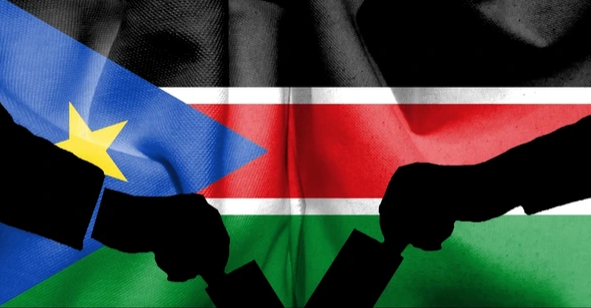
South Sudan stands at one of the gravest moments in its history. The general elections scheduled for December 22, 2026, are more than a routine constitutional exercise; they are a profound national test of whether the country can finally transition from prolonged political interim arrangements toward permanent constitutional governance.
The debate surrounding these elections has become increasingly polarized. One side argues that the country is fundamentally unready, citing widespread insecurity, institutional weaknesses, and immense logistical constraints. The other insists that further postponement would undermine constitutionalism, erode public confidence, and betray the aspirations of citizens who have waited for elected leadership since independence. Both positions contain legitimate concerns, yet neither offers a perfect solution.
The uncomfortable truth is that there is no risk-free path forward. The assumption that South Sudan can somehow emerge from its current political circumstances through a flawless process is an illusion. Every available option carries heavy constitutional, political, security, economic, and humanitarian consequences. The challenge, therefore, is not to search for perfection, but to pursue the strategic option that best protects peace, preserves the constitutional order, and safeguards the democratic rights of the people.
Constitutional governance cannot remain transitional forever
Since gaining independence in 2011, South Sudan has largely been governed through transitional political arrangements, each introduced to respond to extraordinary national crises. Many of these extensions were justified by the immediate need to preserve peace, implement peace agreements, reform fragile institutions, or create the baseline conditions required for credible elections. While these objectives were understandable at the time, prolonged transitional governance inevitably raises deep constitutional and democratic questions.
A transition, by its very definition, must be temporary. Constitutional governance requires that political authority ultimately derive from the sovereign will of the people through periodic, genuine, and credible elections. Although peace remains the highest national priority, repeated extensions of transitional arrangements risk permanently weakening public confidence in democratic institutions and creating perpetual uncertainty about the future constitutional order. This does not mean elections should occur regardless of chaotic circumstances; rather, it means that any decision to proceed, postpone, or modify the electoral process must be justified by objective constitutional necessity rather than political convenience.
Security remains the greatest constitutional challenge
No election can be genuinely free if citizens cannot safely exercise their political rights. Security is therefore not merely an operational or logistical issue; it is a foundational constitutional prerequisite for meaningful political participation. While stability has improved in several parts of the country, localized armed violence, communal conflict, mass displacement, and acute political tensions continue to affect portions of South Sudan. These realities create genuine, undeniable concerns regarding freedom of movement, political campaigning, voter turnout, and the physical safety of election officials, international observers, journalists, and candidates.
However, security should never be measured solely by the absence of armed conflict on election day. It also requires sustained political restraint by all major actors, professionalism and strict impartiality within national security institutions, the protection of fundamental human rights, unrestricted movement of electoral materials, and public confidence that every citizen can cast a ballot free from intimidation or coercion. These concerns have consistently been identified by regional and international observers assessing South Sudan’s electoral preparedness, and they must be addressed systematically.
The voter register is the foundation of electoral legitimacy
If security determines whether elections can be held safely, the voter register determines whether they can be held credibly. South Sudan has not conducted a national population and housing census since independence in 2011. The last comprehensive census, undertaken during the unified Sudan era, estimated the population of what is now South Sudan at just over 8 million people. Since then, population estimates have generally ranged between 12 and 13 million, but these figures remain statistical projections rather than officially verified census data.
This demographic uncertainty presents one of the country’s greatest electoral hurdles. Without updated census information, it is statistically impossible to determine with precision how many South Sudanese have attained the constitutional voting age of 18, how many remain internally displaced, how many reside as refugees outside the country, or how many eligible voters should legitimately appear on the national voters’ register.
The absence of precise demographic data does not make elections impossible—many countries have successfully conducted elections without recent censuses. However, it places a significantly greater burden on the integrity, transparency, and credibility of voter registration. The voter register, therefore, becomes the principal constitutional instrument for determining the electorate. Its preparation must be transparent, independently verifiable, regularly audited where possible, and entirely accessible to public scrutiny in order to build trust among competing political parties and citizens alike.
Electoral inclusion is a constitutional obligation
A credible election is measured not only by the sheer number of ballots cast but also by who is enabled to participate. Electoral inclusion requires deliberate, targeted attention to women, youth, persons with disabilities, internally displaced persons (IDPs), refugees, older persons, minority communities, and citizens living in geographically remote areas.
The absence of reliable demographic information should never become a justification for excluding vulnerable populations. Instead, it requires stronger administrative safeguards, accessible registration centers, widespread voter education in appropriate local languages and formats, reasonable accommodation for persons with disabilities, and targeted outreach to populations that may otherwise remain invisible within national electoral planning. The constitutional principle of equality demands nothing less.
Every available option carries risk
Public debate often oversimplifies the issue, presenting only two stark alternatives: conduct elections immediately or postpone them once again. In reality, neither option is without significant, long-term consequences.
Proceeding with elections under highly imperfect conditions may expose critical weaknesses in security, logistics, administration, and public confidence, potentially sparking localized disputes. Conversely, postponing elections again may deepen constitutional uncertainty, weaken democratic legitimacy, discourage foreign investment, reduce public trust, and reinforce the dangerous perception that transitional governance has become a permanent fixture of South Sudanese politics.
Neither path offers absolute certainty. The real constitutional question is therefore not which option eliminates all risk, because none does. The question is which option best protects the overarching constitutional order while minimizing political instability, preserving peace, safeguarding citizens’ rights, and strengthening long-term democratic legitimacy. That is the exact standard against which national decisions should be measured.
Political leadership will determine the outcome
Ultimately, elections are not secured by legal texts alone; they depend fundamentally upon responsible, mature political leadership. Government institutions must administer the process with absolute impartiality. Opposition parties must agree to compete peacefully. Security services must remain strictly neutral. Civil society should step up to strengthen voter education and independent observation, while the media must report responsibly. Furthermore, religious leaders, traditional authorities, women, and young people all have essential roles to play in preventing violence and promoting peaceful political participation. Democracy succeeds when institutions perform their constitutional duties and political actors accept that peaceful disagreement is not an enemy of peace.
South Sudan’s December 2026 elections represent neither a guaranteed success nor an inevitable failure; they represent a historic constitutional test. The nation faces difficult choices, each accompanied by significant risks. Waiting for perfect security, perfect institutions, perfect political consensus, or perfect demographic data is neither realistic nor historically consistent with how democracies evolve.
No democracy in history has been built under perfect conditions. South Sudan will not be the first country to conduct elections amid significant challenges, nor will it be the last. The objective should therefore not be perfection. It must be constitutional legitimacy, continuous institutional improvement, peaceful political competition, and an unwavering commitment to the sovereignty of the people. History rarely rewards nations that waited indefinitely for ideal conditions; it more often remembers those that confronted imperfect realities with constitutional courage, political wisdom, and an enduring commitment to peace and democracy.
The writer is a South Sudanese governance and public policy expert, researcher, environmental advocate, and author. His work focuses on climate change, environmental governance, sustainable development, humanitarian resilience, peacebuilding, and public policy in fragile and conflict-affected settings across East Africa. Contact: dr.stephen.dhieu@gmail.com
The views expressed in ‘opinion’ articles published by Radio Tamazuj are solely those of the writer. The veracity of any claims made is the responsibility of the author, not Radio Tamazuj.

 and then