



Independence gave us a state. Equal citizenship must now give us a shared homeland.
On 9 July 2011, South Sudanese watched a flag rise over a country purchased by generations of sacrifice. In the referendum, 98.83 per cent had voted for independence. The Transitional Constitution came into force, and South Sudan joined the United Nations.
We had won a country.
Fifteen years later, the harder question confronts us: have we built a nation?
Independence settled our right to determine our destiny as a free people. It did not settle how our many communities, histories and loyalties would become one political community without ceasing to be themselves. It did not tell us how a territory recognised by the world would become a homeland belonging equally to every South Sudanese.
A state can be declared on a given day. It can acquire borders, institutions, a government and international recognition. A nation must be built over time through the choices people make, the institutions they create and the obligations they accept towards people beyond their families and communities.
Citizenship is the bridge between the two. It turns the inhabitants of a territory into equal members and joint owners of a shared political community. South Sudan’s deepest crisis lies in the weakness of that bond. At its core, ours is a crisis of citizenship.
Citizenship does not mean merely possessing a passport, singing the national anthem or displaying the flag. Nor does it require blind obedience to government, defending leaders when they are wrong or placing the country above conscience. It means recognising every South Sudanese as an equal member of the republic and a joint owner of its future. It means understanding that public property is not government property. The road, school, hospital, market, water point, river and public office belong to all of us, and are held in trust for those who will come after us.
Citizenship makes the public personal. It is refusing to throw rubbish into a street because the street is also yours. It is protecting a public water point because another family depends on it, caring for a school desk after your own child has left the school, and planting a tree whose shade you may never sit under. It is seeing a broken road, a neglected clinic, a polluted river or a stolen public fund not as somebody else’s problem, but as damage to something of which you are a part.
Citizenship is also the habit of noticing and responding. It means obeying just laws, meeting lawful obligations, questioning public authority, reporting corruption, rejecting hate and defending the rights of people with whom we disagree. It means judging leaders not by what they deliver to our relatives or communities, but by whether they protect the dignity and advance the welfare of every citizen.
At its deepest, citizenship enlarges the meaning of “mine”. Our sense of ownership extends beyond our homes, families and communities to embrace the country, its people, its institutions and its future. South Sudan ceases to be a distant abstraction and becomes an extension of our moral selves. An injustice against a South Sudanese from another community is no longer merely their misfortune. It diminishes the country that belongs to us all, and therefore diminishes each of us. Freedom becomes responsibility. Belonging becomes stewardship. Patriotism becomes care.
That sense of common ownership remains dangerously weak. Many people would resist anyone who tried to seize their family’s land, cattle or home. Yet vast sums can disappear from the public purse without producing the same collective outrage. We watch our common wealth being dismantled as if it belongs to somebody else.
This failure cannot be explained simply by saying that South Sudanese are “tribal”. When employment, protection and opportunity depend on personal connections, people retreat to the relationships they know. Where the police cannot be trusted, the civil service is politicised, public employment is distributed through patronage and courts do not protect everyone equally, dependence on one’s community becomes a form of insurance.
The problem is not that South Sudanese love their families or communities too much. The problem is that the state has given them too few reasons to extend the same trust beyond those circles. Ethnic mobilisation succeeds because unequal institutions make fear credible and belonging insecure.
Too many leaders have exploited the other side of this deficit. They have treated the state as another field of extraction. A title becomes a licence. Public office becomes private property. The treasury becomes a prize to be divided among political clients, relatives and armed loyalists.
A leader who understands that they are a citizen first sees power differently. Office does not lift them above citizenship. It enlarges their duty to other citizens. Public authority is a temporary trust, not a personal estate. The treasury is the pooled labour and common inheritance of the people. Such a leader appoints on merit, including beyond their own family and community. They obey the laws they enforce, explain how public money is spent, accept scrutiny, answer for failure, leave when their mandate ends and preserve institutions strong enough to restrain their allies, their successors and themselves.
Citizen-leaders do not measure success by the houses, bank accounts, cars, positions or loyalists accumulated while in office. They ask whether a child can learn in a good South Sudanese school, a patient can receive treatment in a South Sudanese hospital, a farmer can reach a market by road, public servants are paid for their work, and citizens can find safety, opportunity and dignity at home. Their pride lies not in escaping the country’s failures whenever they are sick, need to shop or have fun, but in making escape unnecessary for everyone.
Those who command public institutions, public money and armed force bear a heavier responsibility than ordinary citizens. A call for responsible citizenship must never become an excuse to distribute blame equally between the powerful and the powerless. Leaders shape the conditions under which millions live. They can reward merit or loyalty, uphold the law or enable impunity, protect diversity or weaponise it. Citizenship imposes duties on everyone, but the power to repair or destroy its foundations is not shared equally.
Recognising this inequality of power does not diminish the collective task. It clarifies it. The liberation struggle created a powerful solidarity against domination. For decades, many South Sudanese were united principally by what they resisted. Independence removed the common oppressor, but it could not, by itself, provide a shared civic purpose. The referendum, however, demonstrated that such a purpose is possible. South Sudanese did not merely inherit a territory. They chose sovereignty together. That vote remains perhaps the greatest act of common political purpose in our history.
But the choice made in 2011 cannot sustain the nation forever. Ernest Renan described a nation as a “daily plebiscite”. It survives because people continue to choose a common life, and because institutions make that choice credible.
No population can be lectured into patriotism while its government treats it with indifference. It would be obscene to ask hungry citizens, unpaid public servants, displaced families and children without functioning schools simply to become more nationalistic while public resources are diverted for private enrichment. Citizenship is reciprocal. The state must make citizens, and citizens must make the state.
The state makes citizens when a child can attend a decent school regardless of ethnicity or birthplace. It makes citizens when public jobs are awarded on merit rather than through family connections. It makes citizens when police protect a victim without first asking who her relatives are. It makes citizens when roads, hospitals, courts and public investment reach every part of the country fairly.
Citizens make the state when they refuse ethnic protection to corrupt leaders. They make it when they defend public assets as fiercely as family property, reject hate speech, resist political violence, care for shared spaces and judge leaders by the condition of schools, hospitals, farms and roads rather than by the number of positions delivered to one community. This is hard work, but it must nonetheless be done. It must now become deliberate.
First, South Sudanese must sit down and talk. Not in another negotiation among political and military elites over positions, but in a national founding conversation that reaches every state, county and community, as well as displacement camps, refugee settlements and the diaspora. We should approach that table honestly. Some may arrive as strangers, others as rivals, and some even as enemies. The purpose is not to pretend that our divisions have disappeared. It is to ensure that we do not leave as we came. We must rise from the table as a people who have chosen one another, accepted a shared future and committed themselves to one political community.
Accordingly, that conversation must go beyond deciding who governs. It must ask what kind of country we want to inhabit, what kind of citizens we must become and what kind of leadership we will accept. What rights belong equally to every South Sudanese? What duties do we owe one another and our shared country? What should no government ever be permitted to do? How should power and public wealth be distributed? How can every community belong without any community owning the state? The aim is not perfect agreement. It is sufficient national consensus on the principles of our common life and a practical formula for responsible citizens, responsive government and peaceful coexistence.
Second, the consensus reached through that national conversation must become the permanent constitution. The constitution should be the outcome of the conversation, not a substitute for it. Before it is a legal instrument, it is a promise among people who have agreed to live together. It must guarantee equal citizenship, define the limits of public power, establish fair rules for sharing authority and wealth, and protect independent institutions capable of enforcing those rules.
Under the constitutional order created from that consensus, citizens choose those temporarily entrusted to lead and establish institutions to serve as referees. But citizens do not then withdraw into the stands as spectators. They remain the authors, participants and ultimate custodians of the system. They must continue to vote, organise, question, serve, protect public resources, demand accountability and defend the constitutional order.
None of this makes immediate political questions less urgent. The departure of President Salva Kiir, the release of Riek Machar, implementation of the 2018 Revitalised Agreement, federalism, democratic elections, human rights and accountable government all matter profoundly. But a new president can inherit an old political culture. A federal system can decentralise ethnic competition. An election can reproduce patronage in democratic language. A constitution can become another document ignored by those in power.
Reform will change the country only if it also changes how South Sudanese understand public authority, commonwealth and one another.
Salva Kiir will become history. Riek Machar will become history. The Revitalised Agreement will become history. Every leader, party and transitional arrangement will pass. What must endure is a political community capable of surviving them.
Let us therefore meet one another neither as enemies nor as communities being asked to surrender their identities. Let us meet as peoples deciding to build a common home in which no child is a stranger and no leader can claim ownership.
The country was won through extraordinary sacrifice. The nation will be built through schools, courts, honest public service, shared work, responsible citizens, accountable leadership and the daily refusal to steal from or abandon one another.
A maxim traditionally associated with the Italian statesman Massimo d’Azeglio after Italy’s unification declares: “We have made Italy. Now we must make Italians.” We have made South Sudan. Now we must make South Sudanese, not by erasing who we already are, but by enlarging who we are willing to become together.
That is South Sudan’s next liberation.
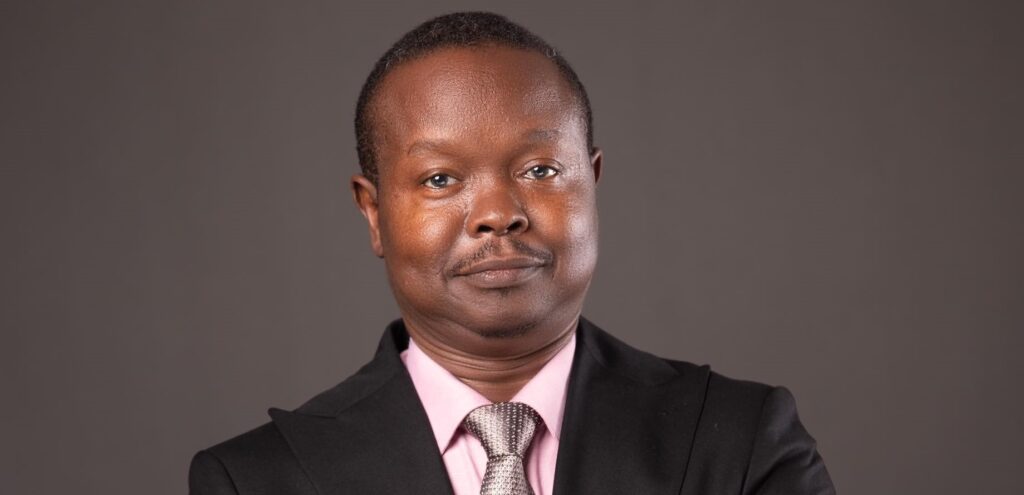
The writer, Dr. Remember Miamingi, is a human rights lawyer, governance specialist, and advisor to the Reclaim Campaign. He has worked extensively across Africa on transitional justice, human rights, and civic engagement.
The views expressed in ‘opinion’ articles published by Radio Tamazuj are solely those of the writer. The veracity of any claims made is the responsibility of the author, not Radio Tamazuj.

 and then