



South Sudan’s problem is no longer simply the absence of a peace agreement. Since the 2015 peace deal and the 2018 Revitalized Agreement, the country has had written commitments, transitional institutions, timelines, and monitoring mechanisms. The deeper problem is the gap between what is agreed on paper and what is implemented in practice.
The 2015 agreement tried to end the civil war through power-sharing, security reform, army unification, constitutional reform, and transitional justice. Many of those commitments were delayed or never completed. The process effectively collapsed after the fighting in Juba in July 2016.
The 2018 Revitalized Agreement corrected some weaknesses and helped reduce large-scale conflict, but many of the underlying problems remained.
One of the biggest is that politics still depends heavily on power-sharing among political and armed elites instead of strong institutions. When government positions become the main reward for political bargaining or military leverage, political actors have less incentive to build parties based on citizens, policies, and public support.
South Sudan has also not completed the creation of a fully unified national army. Force unification, disarmament, demobilization and reintegration, and broader security-sector reform remain unfinished. That means political disputes can still become military disputes.
The peace agreements have also focused heavily on elite competition in Juba while much violence continues at state and county level over land, cattle, boundaries, revenge attacks, and local political power. A country cannot claim durable peace while communities continue to fight.
Justice remains another major gap. The agreements provided for the Hybrid Court, truth and reconciliation mechanisms, and compensation for victims. Yet implementation has been slow. If violence continues to produce political relevance without accountability, the same cycle can continue.
The political crisis is also tied to the economy. Control of government often means access to oil revenues, contracts, appointments, and public resources. Losing political power can therefore mean losing much more than an election.
This leads to the central question: Does holding an election by itself make South Sudan democratic?
My answer is no.
Real democracy is not simply a ballot box, and it is not standing in a line behind a political figure to show support. Citizens must be free to choose. Opposition candidates must be able to travel, organize, and speak to voters without fear. Different political voices must have access to the media. State institutions must act impartially, and the same laws must apply to government and opposition alike.
Real democracy also means that a politician can lose an election and move into opposition without fearing arrest, loss of property, or threats to personal safety. A political party should not need its own armed force to survive.
South Sudan needs to move from peace among leaders to peace through institutions.
That requires professional national armed forces and police, an agreed permanent constitution, an independent judiciary, transparent management of oil revenues, protection for press freedom and political activity, and institutions capable of holding people accountable regardless of their position.
It also means ending the repeated pattern of extending transitional periods whenever key reforms remain incomplete. But the answer is not to rush into elections simply to declare the transition finished.
South Sudan does not need endless postponement, but neither does it need elections held merely for the sake of saying that elections took place.
The real question should not simply be: Will elections be held?
We should also ask: Can everyone participate freely? Are state institutions neutral? Is security guaranteed for all political actors? Are the rules accepted by competitors? Can those who lose continue to participate in politics safely?
If we cannot answer these questions, the ballot box alone will not solve South Sudan’s political crisis.
South Sudan needs more than an election date. It needs a democratic system in which political authority comes from citizens, institutions are stronger than individuals, and political competition does not depend on armed power.
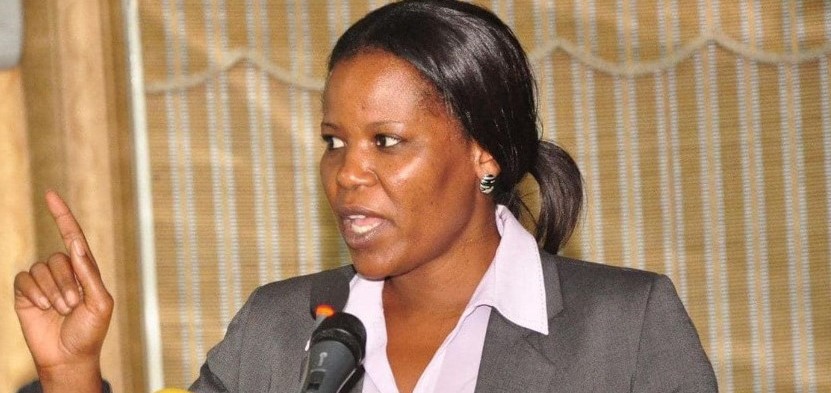
The author, Lilian Riziq is a social justice activist and a leading figure in South Sudan’s women’s movement. Her work focuses on advancing gender equality, fostering peace, and promoting social justice.
The views expressed in ‘opinion’ articles published by Radio Tamazuj are solely those of the writer. The veracity of any claims made is the responsibility of the author, not Radio Tamazuj.

 and then