



African businesses exhibiting at China’s biggest import fair are seeking buyers and investment, but transport costs, export procedures and the difficulty of securing commercial partners remain obstacles despite Beijing’s expansion of tariff-free access for African goods.
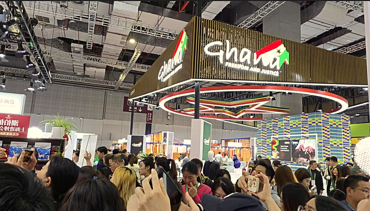
Gemstone traders from Zambia, a Ghanaian chocolate producer and craft sellers from Sudan are among exhibitors at the ninth China International Import Expo (CIIE), hoping to turn the event into lasting business relationships.
China extended zero tariff treatment to 20 additional African countries from May 1, 2026, adding to an existing arrangement for 33 African least developed countries. The measures cover 53 of the 54 African countries that maintain diplomatic relations with Beijing.
The expansion is intended to encourage African exports to China, but the experiences of exhibitors at the Shanghai fair suggest that lower tariffs alone do not guarantee orders or access to customers.
For South Sudan, the arrangements could offer an opportunity to expand exports beyond its dependence on oil.
Chinese Ambassador to South Sudan Ma Qiang said in September that more South Sudanese products were expected to enter the Chinese market under the zero tariff policy.
“More and more South Sudanese products are expected to enter China’s vast market,” Ma said at a reception in Juba marking China’s National Day.

South Sudan was already among the 33 African least developed countries covered by China’s earlier zero tariff arrangement, before the latest expansion to 20 additional countries. Exporters must still meet rules of origin and other Chinese import requirements.
South Sudan has also called for stronger economic cooperation with China in trade, investment, agriculture and agro-processing. Senior Presidential Adviser Kuol Manyang Juuk said such cooperation could support value addition, create jobs and promote industrial development.
But for businesses already trying to reach Chinese consumers, practical challenges remain.
Teresa Stumbeko, chief executive of Zambian company Colourful Culture, is exhibiting malachite and amethyst sourced from her home country. Attending the expo for a third time, she said Chinese customers showed interest in the stones, but transporting larger quantities to China remained difficult.
“Maybe if the government helped us to transport more goods here, it would be better,” she said.
Stumbeko said she currently brings products by air in her luggage and leaves some stock in China between visits, gradually building up supplies.
Finding customers who understand the value of the products is also essential, she said.
“Perhaps if you find the right buyers who actually know the product and the worth of the product, they will definitely spend money on it,” she said.
Another Zambian exhibitor, businesswoman Grace Njapao, is seeking investors for mining ventures and wider cooperation. She said businesses needed to understand the Chinese market and build the right connections.
Njapao outlined export procedures in Zambia, including registering goods with the geological survey, declaring them to the revenue authority and obtaining an export licence from the Ministry of Mines.
She said four memorandums of understanding she had previously secured did not progress because of the Covid-19 pandemic.
In Ghana, Eric Agbozo, chief executive of Sekoko Enterprise, is seeking to introduce an African chocolate brand to Chinese and international consumers.
His products combine cocoa with ingredients including nuts, seeds, dates, banana, coconut and ginger.
“What we are seeking to do is combine all this into a healthier chocolate for Africa and for the world at large,” he said.
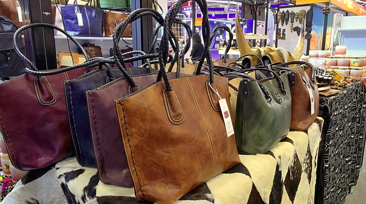
Thomas, an exhibitor from Sudan, is presenting handmade products including wooden carvings, leather goods and crafts made from cow horn. He said some Chinese visitors were interested in the items, but the distance between Africa and Asia made transporting goods difficult.
“Sudan is far away from Asia, so it is really hard to bring goods here,” he said.
A Chinese visitor who gave her name as Zainu said she had tried a product from Namibia and liked it.
“I use it; I feel it’s good. It’s really good,” she said, adding that she would recommend African products to others.
The difficulties of converting exhibition exposure into business are not limited to African companies.
Helen Song, who runs Canadian food business Savour North, said she had not secured new customers or business agreements through previous editions of the expo, despite exhibiting products including sea cucumber, ginseng and oats.
She said Chinese consumers were looking for a combination of quality and affordability.
“People are wishing to find both with a good price and high quality,” she said.
The tariff initiative comes as China faces scrutiny over its growing trade surplus. Its global trade surplus reached a record $1.2 trillion in 2025, highlighting the imbalance between its exports and imports.
The expo, which runs from November 5 to 10, is part of Beijing’s efforts to promote imports and present China as an open market for international businesses.
For African exporters, the challenge is to turn preferential access and exhibition exposure into regular orders, affordable shipping, and reliable commercial partnerships.

 and then