



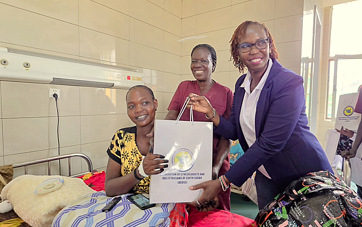
The Association of Gynecologists and Obstetricians of South Sudan (AGOSS) on Saturday distributed hygiene kits to new mothers and called for increased uptake of maternal health services during a Mother’s Day event at Juba Teaching Hospital.
The campaign, combining aid and awareness, comes as South Sudan continues to rank among the worst-performing countries in the region on maternal health, with high maternal mortality, low family planning uptake, and limited access to skilled care.
Health officials used the event to encourage antenatal visits, facility-based deliveries, and postnatal follow-up areas where utilization remains low.
“Comparing South Sudan to other East African countries, we are among the highest in maternal mortality,” said Dr. Idyoro Ojukwu, the association’s president. “Family planning uptake is also very low.”
According to doctors, many women still give birth at home, often without trained attendants, increasing the risk of complications.
“Facility delivery is very low because most people prefer delivering at home-that is what they are used to,” Dr. Idyoro added.
Clinicians also highlighted gaps in postnatal care, warning that many women fail to return for follow-up after childbirth.
“Very few mothers come back. Some only return when they face complications or when they are pregnant again,” said Lucky Gloria Ambrose, a senior clinician in the hospital’s obstetrics and gynecology department. “Women lack information on their own reproductive health. That is why we need to go further miles to give them information.”
Health workers said distance, transport costs, and insecurity continue to limit access to care, particularly outside urban centers, while negative perceptions of hospital treatment discourage some women from seeking services.
“There is a belief that when you go to the hospital, you are mistreated, but we are working to improve healthcare providers’ attitudes,” an official said.
Doctors also warned against “hospital shopping”, where women move between facilities to avoid medically advised caesarean sections, sometimes with fatal consequences.
“In some cases, women are advised to undergo a C-section but leave to seek another opinion, and by the time they return, complications occur. We have lost mothers and babies because of this,” the official said.
Despite the challenges, officials say services at Juba Teaching Hospital have improved, including an increase in specialist staff in recent years.
During the event, mothers received hygiene kits and health education on maternal and newborn care, with organizers saying such initiatives can help build trust in health facilities.
Somaya Jeanifer, a 23-year-old mother who delivered at Juba Teaching Hospital, praised the care and urged others to avoid home births.
“It is dangerous to give birth outside,” said Jeanifer, citing the death of a neighbor during a home delivery.
AGOSS said improving maternal health will require coordinated action across government, health workers, and communities.
“Motherhood should never come at the cost of a woman’s life,” the organization said.

 and then