



Issue brief addressed to Nuer members serving in the government of President Salva Kiir Mayardit
Truth Must Precede Unity
I address Nuer officials serving in the government of President Salva Kiir Mayardit not as adversaries, but as fellow citizens entrusted with public responsibility at a critical moment in South Sudan’s history.
Your inclusion in government was intended, in part, to ensure that the voices of the Nuer community are reflected in national decision-making. That responsibility is now under renewed scrutiny amid continued debate over the country’s wartime record.
There are growing claims in some political circles that Nuer civilians were not deliberately targeted during the December 2013 crisis in Juba and the subsequent violence in Unity, Jonglei, and Upper Nile states. These claims stand in stark contrast to extensive public documentation and survivor testimony.
Documentation of the 2013 Crisis and Aftermath
The events that began in December 2013 have been documented by multiple independent and institutional investigations, including the United Nations Mission in South Sudan (UNMISS), the African Union Commission of Inquiry, and international human rights organisations.
Their findings described:
• Large-scale killings in parts of Juba
• The existence of mass graves
• Targeted violence against civilians on the basis of ethnicity and language
• Extrajudicial killings and abuses in multiple states, including Unity State
These findings have been widely published and remain part of the historical record of the conflict.
The Role of International Partners
The United States and other international partners have supported South Sudan’s state-building process since independence, including through humanitarian assistance, peacekeeping support, and development aid.
Against this backdrop, tensions have at times emerged when international actors raise concerns over civilian protection and human rights. South Sudan’s long-term stability, however, depends on addressing such concerns constructively rather than dismissing them.
Why Acknowledgment Matters
Denial of documented events does not resolve historical grievances. Instead, it risks prolonging mistrust and delaying reconciliation.
Sustainable peace requires a shared understanding of past violence. Without acknowledgment, efforts at national unity risk remaining incomplete and fragile.
Unity built on contested narratives is unstable; unity grounded in verified facts is more likely to endure.
Responsibility of Public Officials
Those serving in government carry a particular responsibility to foster an environment conducive to truth and reconciliation. This includes:
• Recognising established findings of independent investigations
• Avoiding public denial of documented civilian harm
• Supporting accountability mechanisms
• Promoting equal protection for all citizens, regardless of ethnicity
• Advancing safeguards against future atrocities
Public leadership is measured not only by policy delivery, but also by the willingness to confront difficult historical realities.
Justice, Recognition and Healing
The pursuit of accountability is not synonymous with calls for revenge. Rather, it reflects a demand for recognition and dignity for victims and survivors.
Families who lost relatives during the conflict continue to seek acknowledgment of their loss. Many remain displaced, while others continue to live with the long-term consequences of violence.
A credible reconciliation process must include space for survivors to speak openly and for their experiences to be formally recognised.
Conclusion: A Choice Before Leadership
South Sudan’s long-term cohesion will depend on whether its leaders are able to confront contested aspects of the country’s past in a credible and inclusive manner.
The record of the 2013 crisis and its aftermath is widely documented. Survivors remain present, and the consequences of that period continue to shape national politics and community relations.
Those serving in government now face a choice: to reinforce denial and division, or to contribute to a process grounded in acknowledgment, accountability and reconciliation.
The durability of peace will depend, in part, on that choice.
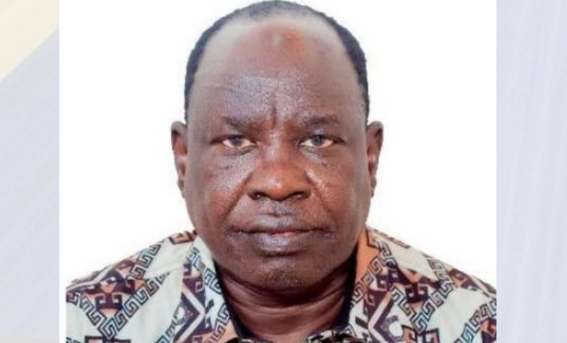
The writer, Bol Gatkouth Chuol Kol, is former Member of Parliament, South Sudan
Governance, Security and Peacebuilding Consultant
The views expressed in ‘opinion’ articles published by Radio Tamazuj are solely those of the writer. The veracity of any claims made is the responsibility of the author, not Radio Tamazuj.

 and then