



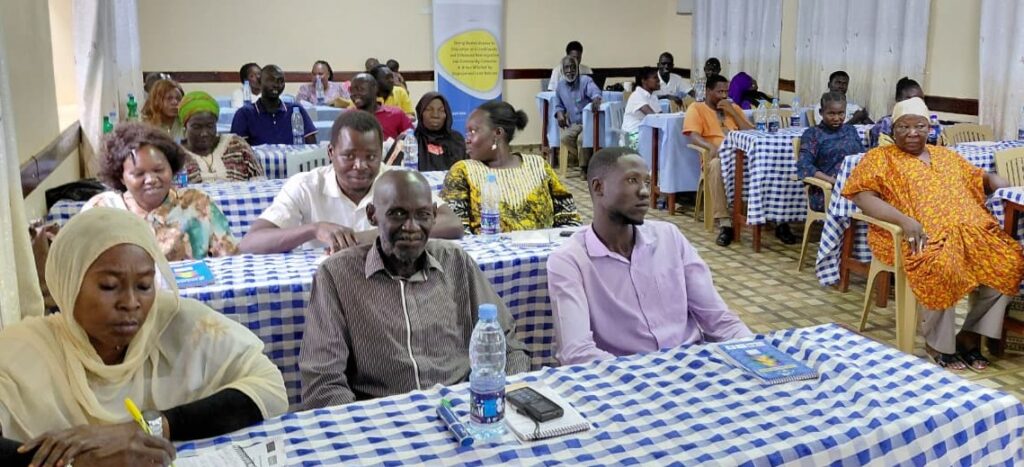
A civil society organization has concluded a two-day peace dialogue in Wau County, bringing together government officials, community leaders, and civil society actors to address rising tensions, amid concern that progress could be reversed if funding ends.
The discussions, organized by the Development Alliance Legacy for Mama Angue and Awan Child Care Solidarity (DALMAS) and supported by the International Organization for Migration, convened 36 participants from Wau County and Wau Municipality, including traditional leaders, youth, and women. They focused on key drivers of conflict, such as cattle-related disputes, hate speech, and preparations for upcoming elections.
“This two-day dialogue brought together government officials, traditional leaders, women, youth, and civil society actors,” said James Umuor Maciek, DALMAS director. “We are now moving from theory to practice.”
Recurring clashes between host communities and pastoralists moving cattle through contested areas remain a major source of insecurity.
“One of the biggest challenges in Wau County is conflict related to cattle keepers,” Maciek said. “There are tensions between host communities and pastoralists. This has created repeated conflict and insecurity.”
He added that the disputes are driven by multiple factors beyond cattle movement, including historical grievances, political dynamics, and economic pressures. Some conflicts involve influential actors linked to business and security networks.
Despite these challenges, participants said the dialogue is helping shift attitudes.
“People are beginning to see that violence is not the solution — dialogue is,” Maciek said.
Still, he warned that gains remain fragile. “If the project ends now, many gaps will remain, and the progress we are seeing could be lost,” he said.
Limited reach was another concern, particularly in remote areas where conflict is most intense.
“One of the biggest challenges we face is that the same group of people attend these dialogues repeatedly, while those most affected remain unreached,” Maciek said. He proposed smaller, localized engagements to build trust and ensure broader participation.
Government officials welcomed the initiative. Al-Fateh Abkar Ambini, representing the Commission for Peace and Reconciliation, said such dialogues help rebuild trust between communities and institutions.
“These engagements are helping to reduce tensions, counter misinformation, and strengthen social cohesion,” Ambini said, noting recent workshops focused on establishing peace committees, including women and youth in decision-making, and preparing communities for credible elections.
At the community level, traditional leaders said dialogue is bridging generational divides and addressing emerging risks such as misinformation.
“We held a two-day dialogue bringing together youth and elders to strengthen unity and promote peaceful coexistence within our communities,” said Emilio Ulau, a paramount chief from Baggeri Boma. “The discussions allowed both groups to openly share their views, understand each other’s concerns, and work toward common solutions.”
Ulau stressed the importance of engaging young people, who face growing economic challenges. He also warned that misinformation is a growing trigger for conflict, proposing community-based committees to respond quickly to false information.
“Strengthening communication, building trust, and promoting accurate information are essential steps toward achieving lasting peace,” he said.
Religious leaders are also supporting the effort. Rev. Angelina Ayen Chagai, a church leader who participated in the dialogue, said lessons would be shared within congregations to promote reconciliation.
The dialogue is part of a broader peacebuilding program funded by the European Union and implemented by the International Organization for Migration. It is entering its final phase and is scheduled to conclude in June after a six-month extension.
Project officials said 10 organizations have been trained to lead community-based peace initiatives, while youth groups in Wau County and parts of Warrap State have received support to start small businesses aimed at reducing unemployment, a driver of conflict. Partners include UNICEF and the World Food Programme (WFP), with the goal of handing over peacebuilding efforts to local actors.
“Communities need time, space, and support to clearly express their concerns and agree on practical solutions,” Maciek said. “Despite the challenges, this initiative has shown that when people come together, there is hope for peaceful coexistence.”

 and then