



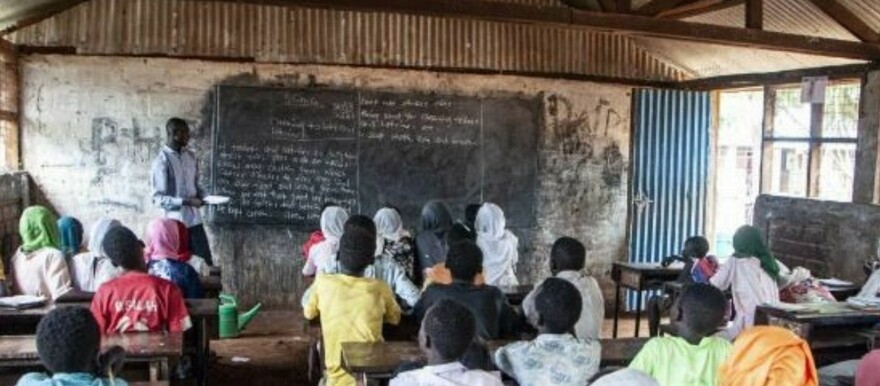
Education officials and teachers in Western Equatoria State say China-supported training programmes are changing classroom practice and strengthening education management across the state.
South Sudan’s education sector faces shortages of trained teachers, weak administration systems, overcrowded classrooms and limited professional development opportunities. Since independence in 2011, the government and partners have relied on international cooperation to rebuild the sector.
Under the China–South Sudan cooperation framework, education has been prioritised through teacher training and institutional capacity-building aimed at improving learning outcomes.
Beneficiaries of the programme told Radio Tamazuj that training in China has improved teaching skills and introduced new approaches to classroom management and school leadership.
Tambua Isaih Mungua, a beneficiary of the China Aid Phase II teacher training programme, said the experience improved his teaching methods. He said 47 teachers were trained between May and August 2024, following an earlier group of 73 trained from April to July, bringing the total to 120 teachers who completed training in China.
The programme focused on learner-centred teaching, classroom engagement and lesson delivery. Participants also visited schools in China to observe teaching methods.
“After returning, I noticed positive changes among learners, especially in participation, discipline and engagement,” Mungua said. He called for expansion of the programme and refresher training for more teachers.
Emmanuel Kubako Samson, Director for Examinations at the State Ministry of General Education and Instruction, said he attended a six-week leadership and management course in Shanghai in November 2024 covering education policy and administration systems.
He said coordination between the state ministry and counties had improved after the training, but noted that funding constraints limit participation by more officials. He recommended that training be held several times a year.
Charles Ikpiro, Director of Admissions at the ministry, said a one-month training in Shanghai improved administrative efficiency. He said he returned in February 2024 and called for longer programmes to strengthen impact.
Former State Minister of General Education Grace Apollo Musa, who attended education exchange visits in May 2024 and June 2025, said exposure to schools and universities in China changed her approach to education planning.
She said the cost of such programmes remains high and urged the government to prioritise teachers’ welfare.
“Investing in teachers is essential. Without proper support and timely salaries, it will be difficult to achieve meaningful education reform,” Musa said.
Teachers and students in Western Equatoria said they are already seeing improvements.
Morris Khamelo, a teacher at Yabongo Secondary School in Yambio, said colleagues who returned from training had improved classroom delivery.
“Before the training, there was limited knowledge in some areas. After returning from China, there has been a clear change in teaching practice and professionalism,” he said.
Daniel Baraka, a Senior Four student at Abangite Secondary School, said teaching quality had improved, citing his teacher Tambua Isaih Mungua.
“Before going to China, he was not teaching the way he is teaching now. After returning, he became more skilled and more supportive of students,” Baraka said.

 and then