



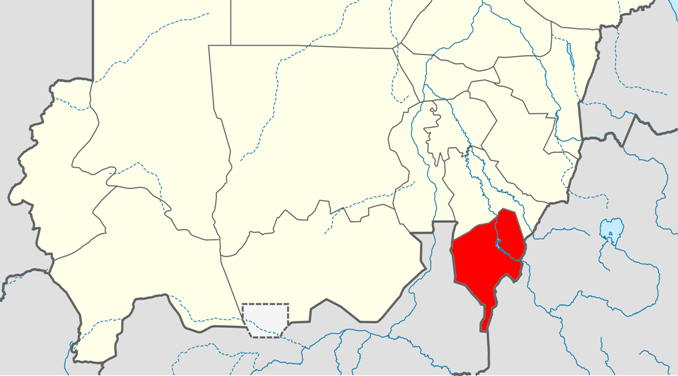
The expansion of Sudan’s war into Blue Nile state is giving the region greater strategic importance, with its natural resources, border location and transport routes likely to shape the next phase of the conflict, according to retired military officer and security analyst Lieutenant Colonel Al-Tayyib Malkabi.
Located in southeastern Sudan, Blue Nile borders Ethiopia to the east, South Sudan to the west and southwest, and Sennar State to the north.
In an interview with Radio Tamazuj, Malkabi said the shift of fighting towards Blue Nile reflects the broader geographical expansion and prolonged nature of the war between the Sudanese Armed Forces and the paramilitary Rapid Support Forces (RSF) and its ally, the SPLA-N.
He said the fighting in Blue Nile is not necessarily directly linked to battles around El Obeid or the siege there, but that the state has become increasingly important because of its natural resources and its strategic transport and border routes.
Contest for access routes
Malkabi said Blue Nile is strategically important because of its natural resources, including gold and other minerals, as well as its border crossings and transport routes.
He said resource-rich areas along open borders are likely to become increasingly important as the war continues, providing the warring sides with access to supplies and logistical routes needed to sustain military operations.
The state borders Ethiopia and South Sudan, giving it added importance in a conflict that has increasingly drawn in regional interests.
Drones expand the battlefield
Malkabi said the growing use of drones has changed the nature of military operations in Sudan, allowing the warring parties to strike targets beyond conventional front lines.
He said drones offered military advantages because of their relatively low operating costs and the reduced risk to personnel compared with conventional air operations.
Malkabi said drone attacks are no longer confined to frontline areas or the vicinity of Ed Damazin, the capital of Blue Nile state, but have expanded to locations farther from active battlefronts.
He cited recent reports of drone attacks in areas including Merowe, Khartoum and Wadi Sayidna military base.
The growing use of drones has added another layer of complexity to Sudan’s conflict, with attacks increasingly reaching areas far from the main ground fighting.
Malkabi said greater safeguards and technical controls are needed to limit the risks associated with the use of drones, particularly as the technology becomes more widespread.
Regional dimension
Malkabi said the strategic importance of Blue Nile is also linked to its proximity to Ethiopia and the wider regional dynamics surrounding Sudan’s conflict.
He referred to competing allegations involving regional actors, including Ethiopian and Tigrayan forces, as well as the positions of neighbouring countries such as Eritrea and Egypt.
He said continued accusations among regional actors risk deepening political polarization and contributing to a cycle in which competing sides receive external support.
Malkabi said resolving Sudan’s conflict would require more than measures targeting individual battlefronts. He called for a broader political and security framework that addresses the country’s internal conflict as well as its regional relationships.
Such an approach, he said, should seek to protect Sudan’s national interests while maintaining its stability and national security.

 and then