



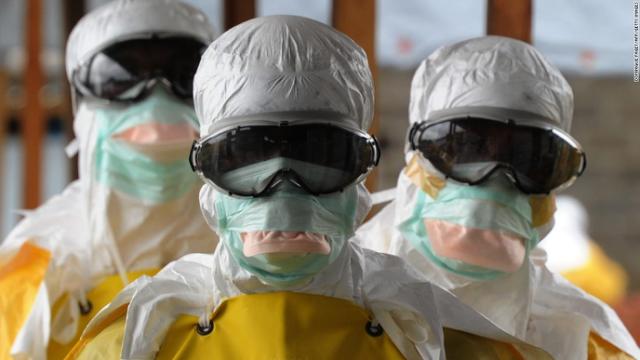
The United States said on Wednesday it is coordinating with the U.S. Centers for Disease Control and Prevention (CDC) and the governments of the Democratic Republic of Congo and Uganda to respond to an Ebola outbreak in the region.
The State Department said its priority was protecting Americans and preventing the virus from reaching the United States.
It said it had issued guidance on a voluntary process to assist U.S. citizens who may have been exposed to Ebola or who wish to leave the Democratic Republic of Congo, South Sudan or Uganda. Travellers will remain subject to health screening and travel measures imposed by U.S. and foreign authorities, it said.
U.S. citizens were urged to enrol in the Smart Traveler Enrollment Program for updates relevant to their locations.
The department said U.S. foreign assistance for the outbreak response had now exceeded $162 million, adding that it had established six Ebola response clinics and was supporting dozens of health facilities for screening, referral and treatment.
It said the aid was separate from broader U.S. health programmes targeting diseases including HIV/AIDS, tuberculosis and malaria.
The United States also said it was channeling $350 million through United Nations Office for the Coordination of Humanitarian Affairs (OCHA) pooled funds to the Democratic Republic of Congo, South Sudan and Uganda, as part of wider humanitarian financing announced in May.
Recent U.S.-supported activities include border screening and surveillance operations conducted by the International Organization for Migration (IOM) at points of entry in Burundi, the Democratic Republic of Congo, Rwanda, South Sudan and Uganda, it said.
In the Democratic Republic of Congo, the State Department said partner organisations including FHI 360 were supporting risk communication campaigns involving community leaders, youth groups and faith networks, including radio messaging in French and Swahili.
It added that laboratory capacity had been strengthened through training, sample transport systems and expansion of testing facilities across additional health zones.
The department said six specialised facilities had been established to isolate and treat suspected or confirmed Ebola cases, including five transit centres and one treatment unit, while 43 health clinics were being supported for screening and patient referral.
The World Food Programme (WFP), supported by U.S. and other donor funding, is also providing food assistance to suspected and confirmed Ebola cases and frontline health workers in eastern Democratic Republic of Congo, including Goma, Beni and Bukavu, it said.

 and then