



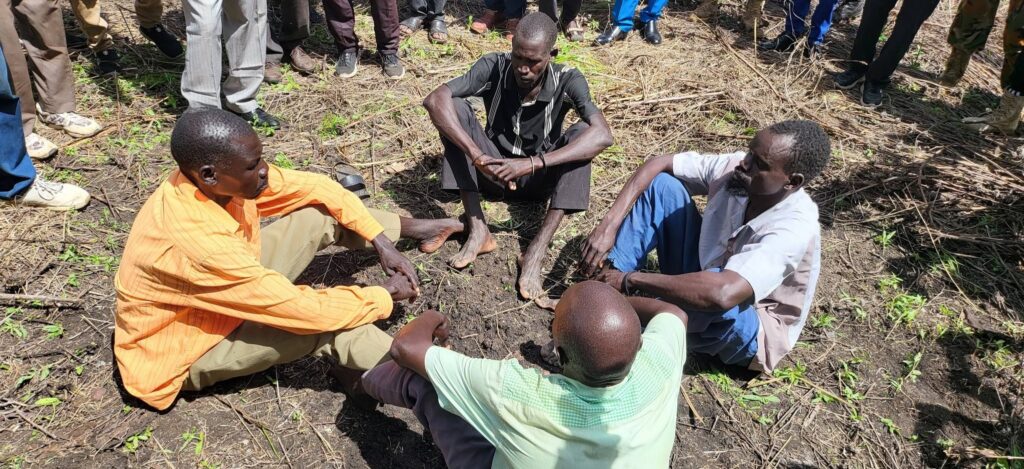
The Mura-Hatiha and Tirangore communities in Eastern Equatoria State have performed a traditional ritual pledging to sustain peace after years of tensions between neighbouring villages.
The ceremony, held in Hiyalla payam of Torit County on Saturday, brought together residents in what elders described as a culturally grounded commitment to reconciliation, forgiveness and peaceful coexistence.
Participants carried out traditional oaths and shared meat from sacrificial black bulls, a customary act symbolizing unity and an end to hostilities.
The event followed a recent peace engagement initiated by Governor Louis Lobong Lojore, who facilitated dialogue between representatives of the two communities as part of a reconciliation process.
Elders said such rituals often carry greater social weight than written agreements in rural settings, and urged continued government and partner support to consolidate trust.
Speaking at the ceremony, Governor Lobong called on both communities to uphold the agreement and resolve disputes through established legal and traditional mechanisms.
“I am truly grateful that you have chosen to live together in harmony. Your commitment to peace is a gift to all, preserving the lives of many innocent people. If there are still wounds that need to be addressed, I invite those affected to come forward and seek justice through the proper channels,” he said.
He added that boundary disputes should be addressed separately through traditional processes involving elders and landowners under state supervision, and urged residents to resume normal farming and grazing activities.
“Any future breaches of the peace agreement would require prompt government intervention to safeguard lives,” he warned.
Deputy Governor Karlo Andrew Akwo urged full implementation of the agreement, calling on communities to reject violence and support state-led reconciliation efforts.
“We gather here today not as divided factions, but as a united community of Eastern Equatoria,” he said. “Peace is a collective journey; it starts within us. We must resist conflict, stop shielding wrongdoers, and work closely with government to address shared challenges.”
He added that development efforts should focus on community-driven initiatives such as schools, health facilities and road networks.
Romano Otongo, speaking for Mura-Hatiha, said the ritual marked a turning point.
“We came here for peace; seeking revenge only complicates and spoils it. Let us put aside the past and open a new chapter filled with harmony,” he said, calling for open dialogue on the border issue.
Charles Inang of Tirangore Village said the communities had chosen reconciliation.
“We stand united for peace; nobody can deny the need for it. Rituals must be performed to clarify the borders between us. From this day forward, we can freely mourn and celebrate with each other,” he said.
Wodcan Lazarous Savior, an activist with SPIDO, welcomed the initiative and urged sustained dialogue and lawful dispute resolution.
He cautioned against retaliation and urged residents to report grievances to authorities, warning that delays in justice could fuel renewed tensions.

 and then