



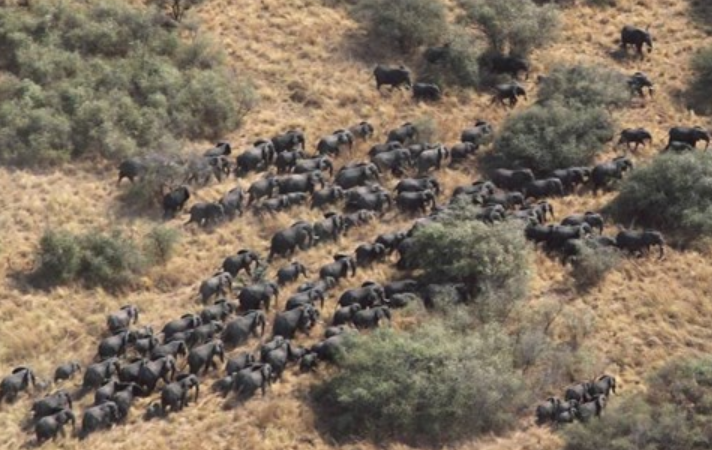
South Sudan’s wildlife authorities have warned that poaching and habitat destruction remain major threats to the country’s wildlife resources and called for stronger enforcement and community participation to protect the country’s natural heritage.
Officials from the government, African Parks and the European Union (EU) said protecting wildlife requires cooperation among state institutions, conservation groups and local communities as the country seeks to preserve biodiversity and promote sustainable use of its natural resources.
“The principles of conservation that have been developed across this continent in the last 40 years can be summarized as three: environmental protection, economic sustainability and community involvement,” Philip Winter, board chairperson of African Parks South Sudan, said in Juba during an event marking World Nature Conservation Day.
He said decades of conflict had taken a heavy toll on South Sudan’s wildlife, particularly species living near human settlements, but noted that wildlife populations can recover when habitats are protected and surviving animals are conserved.
According to Winter, the Great Nile Migration Landscape, which includes Boma and Badingilo National Parks and surrounding ecosystems, supports one of the world’s largest wildlife migrations. He added that African Parks is managing about 110,000 square kilometres of the landscape under a delegated management agreement with the Ministry of Wildlife Conservation and Tourism.
For his part, Lothar Jaschke, Charge d’Affaires of the European Union (EU) Delegation to South Sudan, reaffirmed the bloc’s support for environmental conservation and climate resilience, saying protecting nature is essential for communities and future generations.
“Protecting nature is not a luxury; it is necessary for our survival, our resilience and our prosperity,” he said.
Meanwhile, Wildlife Conservation and Tourism Minister Denay Jock Chagor identified hunting for bushmeat as one of the biggest challenges facing conservation efforts in South Sudan and urged citizens to support measures aimed at protecting wildlife.
He said the country’s wildlife should be viewed as an economic resource that can contribute to development and improve livelihoods.
“We want to turn this wonderful gift that God has given us into wealth, into economic prosperity,” Chagor said.
Joseph Ngere Pachiko, Speaker of the Transitional National Legislative Assembly (TNLA), said parliament will continue strengthening the legal framework for wildlife protection, including reviewing legislation to introduce tougher penalties for poaching and expanding public awareness on environmental protection.
He stated that South Sudan’s wildlife, forests, wetlands and rivers are strategic national assets capable of supporting eco-tourism, creating jobs and improving livelihoods if managed sustainably.
The Great Nile Migration Landscape is home to millions of white-eared kob, tiang antelope, and Mongalla gazelle, making it one of Africa’s most significant wildlife ecosystems.

 and then