



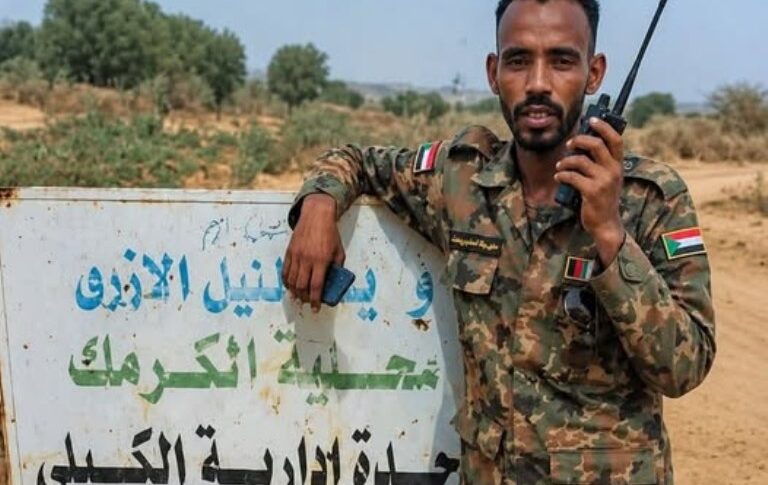
The Sudanese army said on Saturday it had recaptured an area near the Ethiopian border following clashes with the paramilitary Rapid Support Forces (RSF) and allied groups.
The army said troops advanced into Al-Kayli, near the city of Al-Kurmuk in Sudan’s southeastern Blue Nile region, after what it described as heavy losses inflicted on RSF fighters and the Sudan People’s Liberation Movement-North (SPLM-North).
“The Fourth Infantry Division and supporting forces succeeded in liberating the Al-Kayli area located on the outskirts of Al-Kurmuk city on the southern front after battles against the RSF militia and Joseph Tuka’s forces affiliated with SPLM-North,” the army said in a statement.
The RSF-aligned Sudan Founding Alliance said separately that an army drone strike hit a truck in South Kordofan, killing 15 civilians and injuring others. It said the vehicle was carrying 37 people on a main road to Abu Zabad in West Kordofan. The army did not immediately comment on the allegation.
The fighting in southern Sudan comes amid rising tensions between Khartoum and Addis Ababa, which Sudan has accused of involvement in cross-border drone attacks, including on Khartoum airport. Ethiopia has denied the allegations. Sudan has also accused the United Arab Emirates of supplying drones, a charge it has rejected.
The nearby city of Al-Kurmuk was captured by RSF-allied forces on 24 March.
The SPLM-North said on Friday its forces had taken control of the strategically important Khawr al-Hassan area in Blue Nile state. Stephen Amad, deputy chief of staff of the group’s armed wing, said its fighters were advancing towards the regional capital Damazin and other locations.
In North Darfur, the Popular Resistance Forces allied with the Sudanese army said RSF movements suggested preparations for an attack on the border area of Al-Tina between Sudan and Chad.
The war between the army and RSF, which began in April 2023, has killed tens of thousands of people and displaced more than 11 million, according to the United Nations. The UN has described the conflict as driving the world’s largest displacement and hunger crises.

 and then