



South Sudanese students studying in Morocco under a government scholarship programme have urged authorities to address shortcomings in the scheme, saying poor academic performance should not be blamed solely on students without considering the challenges they face.
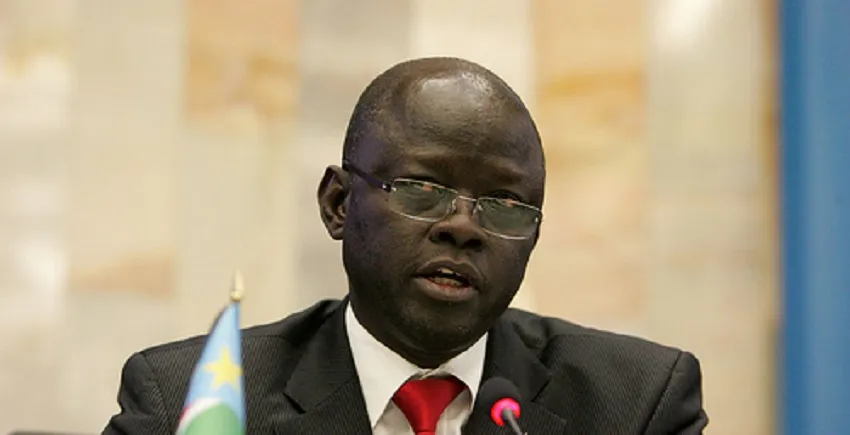
In a statement to Radio Tamazuj, the South Sudanese Students’ Union in Morocco (SSSUM) responded to recent remarks by Higher Education Minister Madut Biar Yel on the performance of South Sudanese students in Morocco and Ethiopia, saying the comments overlooked the difficult conditions under which many scholarship recipients pursue their studies.
“The discussion has focused on the outcomes without giving equal attention to the conditions under which these students are expected to succeed,” SSSUM President Malith Malith said on Sunday.
He urged the government to examine the obstacles facing students before attributing poor academic results to individual failure.
According to the union, although the Moroccan scholarship programme is commonly described as fully funded, many students receive only partial financial support. While tuition fees are covered, more than 70% of students reportedly secure their own accommodation, receiving the equivalent of about $50 per month toward rent, despite average monthly housing costs of between $100 and $150.
The union said monthly living stipends of between $50 and $75 have remained unchanged since the programme began in 2012, despite rising costs for food, transport, books and other basic expenses.
It also cited healthcare costs and language barriers as significant challenges. Students are often required to pay medical bills upfront before seeking reimbursement, while many struggle to adapt to university instruction in French after completing their earlier education in English.
The union said students are generally expected to attain internationally recognised French-language proficiency, typically at the B2 level, before beginning university studies, but argued that existing language preparation programmes are inadequate.
Despite these challenges, SSSUM rejected suggestions that South Sudanese students abroad are underperforming, noting that universities in Morocco graduate dozens of South Sudanese students each year in fields including medicine, engineering, law, economics, geology and technical disciplines.
The union said a greater challenge emerges after graduation, with many returning home to limited employment opportunities and the absence of government policies to integrate their skills into the national workforce.
It called on the Ministry of Higher Education to undertake a comprehensive review of the scholarship programme by improving student welfare, strengthening language preparation, enhancing academic support and creating clear pathways for graduate employment.
“The success of students abroad is not solely the responsibility of the students themselves. It is also a reflection of the policies, support systems, and institutional commitment provided by the government,” the statement said.
The Ministry of Higher Education had not publicly responded to the union’s statement at the time of publication.

 and then