



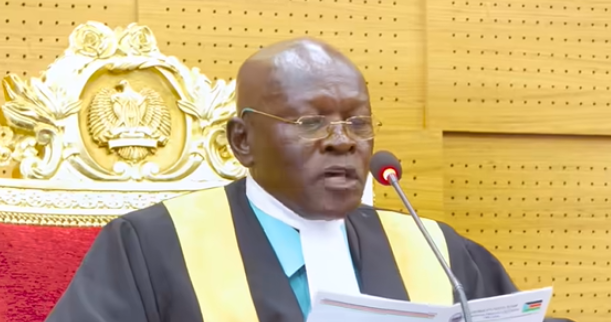
South Sudan’s parliament on Tuesday passed a key stage of a bill to reform the national examinations system, as lawmakers and ministers called for tighter oversight, improved funding and reforms to strengthen the credibility of academic results.
The Transitional National Legislative Assembly approved the National Examination Council (Amendment) Bill 2026 from second to third reading. The bill, first introduced in 2024, proposes establishing the National Examination Council as an independent body separate from the Ministry of General Education and Instruction.
It also seeks to secure adequate financing for the timely preparation, administration and marking of national examinations, amid longstanding concerns over delays and underfunding.
Debate on the bill reflected broader concerns about South Sudan’s education system, including persistent delays in marking exam papers, weak infrastructure and questions over the quality of graduates.
Higher Education, Science and Technology Minister Madut Biar Yel said discrepancies between exam results and student performance abroad pointed to deeper systemic problems.
“We have been sending students with very high grades, 85%, 90% to scholarship. Unfortunately, they perform poorly,” Yel told lawmakers, adding that some partner countries had raised concerns about student preparedness.
He cited experiences from scholarship programmes in countries including Ethiopia and Morocco, and urged reforms beginning at the basic education level.
“When we talk about quality education, quality education starts in general education and instruction,” he said.
Yel also said administrative delays had disrupted academic calendars and caused South Sudan to miss scholarship opportunities, including offers from Morocco.
“It affects also higher education especially scholarships,” he said.
He called for examination processes to be treated as a national security priority to reduce malpractice and leakage.
“Examination is a national security priority,” he said.
General Education and Instruction Minister Kuyuk Abol Kuyuk said the amendment was intended to strengthen the legal and institutional framework governing examinations.
“The document that we want to produce here is meant to strengthen and empower the National Examination Council,” he said.
He acknowledged weaknesses in the system but said reforms were ongoing.
“Our examination is not perfect but we want to get there,” he said, adding that the goal was to align standards with international practices.
Kuyuk also highlighted high logistical costs, particularly in transporting examination materials to remote areas.
“The logistics of examination requires a lot of money,” he said, adding that all students must be given equal access to sit national exams.
He criticised the level of education spending, saying it remained far below legal targets.
“We need to invest in education,” he said. “Education is investment.”
Lawmaker John Gai described the bill as a long-term framework aimed at addressing funding gaps, marking delays and examination malpractice.
Speaker Joseph Ngere Paciko referred the bill to the parliamentary committees on general education and legislation and justice for further review ahead of the third reading.

 and then