



47 lawmakers aligned with the South Sudan Opposition Alliance (SSOA) boycotted Monday’s parliamentary sitting during which the cabinet tabled controversial proposed amendments to the 2018 Revitalised Peace Agreement, an opposition lawmaker said.
SSOA, a coalition of several parties to the peace deal, is currently split into factions aligned with former vice president Josephine Lagu and Vice President Hussein Abdelbagi, who is widely seen as an ally of President Salva Kiir Mayardit.
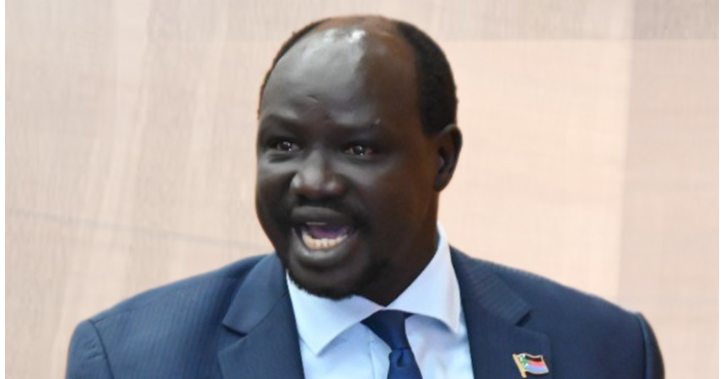
Bol Joseph Agau, a lawmaker and secretary general of the opposition National Democratic Movement (NDM) led by Dr. Lam Akol Ajawin, told Radio Tamazuj that the amendment process was unilateral and unconstitutional.
He said parties under SSOA boycotted the sitting, putting the number of protesting lawmakers at 47, and said the move was intended to deny the ruling SPLM quorum, which he described as essential under the peace agreement’s consensus framework.
Agau listed boycotting SSOA-affiliated parties as including NDM, PDM led by Joseph Lagu, SSLM led by Gen. Bapiny Monytuil, SSUM led by Denay Jock Chagor, SSNMC led by Moro Isaac Genesio, NAS led by Julius Tabuley, FDP led by Changson Chang, and a faction of SSPM led by Dr. Costello Riiny Lual.
He, however, said three lawmakers from SSPM led by Hussein Abdelbagi attended the sitting, adding that they were effectively aligned with the ruling SPLM after Abdelbagi’s political realignment with President Kiir.
“The tabling of the amendment of the agreement is a unilateral decision of the SPLM-In Government (SPLM-IG) and its allied parties,” Agau said.
“So it is null and void to amend an agreement using parliament because parliament does not have the mandate,” he said, adding that only signatories to the peace agreement could approve changes.
The proposed amendments were presented to the Transitional National Legislature by Justice Minister Michael Makuei Lueth and seek to revise provisions of the peace deal to pave the way for long-delayed elections expected later this year.
Agau said some opposition lawmakers entered the chamber before walking out in protest, while SSOA members fully boycotted the sitting in an attempt to deny quorum.
“For SSOA, we boycotted the sitting. Those who entered the hall first and then walked out are those of SPLM-IO, but SSOA boycotted it,” he said.
The amendments were referred to the parliamentary committee on legislation and justice for scrutiny before being returned to the house within two weeks.
Agau argued that the process violated constitutional provisions governing amendments, saying any changes linked to the peace agreement would also trigger constitutional amendment procedures under Article 199 of the transitional constitution. He said the article requires approval by a qualified majority, typically two-thirds of members in each house.
He added that the parliamentary timeline did not comply with constitutional requirements and said both houses of parliament must deliberate separately.
Agau also questioned the government’s justification that the amendments are necessary to enable elections, saying conditions in the country do not allow for a credible vote.
He further said provisions relating to power-sharing were central to the agreement and could not be altered without undermining its foundation, citing Articles 8.2 and 8.3 as guaranteeing the supremacy of the 2018 peace deal under which the transitional government was formed.
“If you amend those two articles, you have overthrown the legal document that founded this government,” he said.
The government has defended the proposed changes as necessary to advance the peace process and facilitate elections repeatedly delayed since the 2018 agreement.
The country’s bicameral legislature has 650 members, including 550 in the lower house, the Transitional National Legislative Assembly, and 100 in the upper house, the Council of States.
Under the terms of the 2018 Revitalized Peace Agreement, the National Legislature includes representatives from the ruling SPLM party, opposition groups including SPLM-IO, SSOA, other parties (OPP), and former detainees (FDs).

 and then