



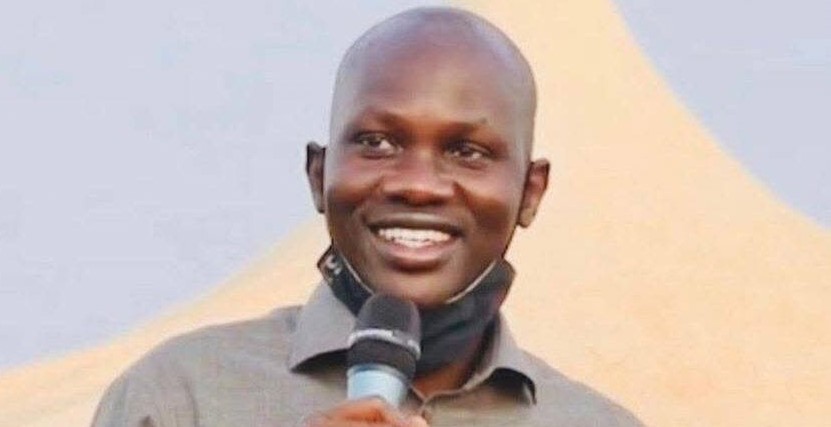
The wife of a South Sudanese national reported missing in Kenya said on Wednesday that her husband was abducted by armed men in Nairobi, raising fears that he could be forcibly returned to South Sudan, where she believes his life may be at risk.
The wife of Athorbey Al-Gaddhaffy-Dit Guet, widely known as Gaddafi, told Radio Tamazuj that she last spoke to her husband on Monday at about 10:19 p.m. and became alarmed when he failed to return home later that night.
“The next I called him was around 3 a.m. because he had not shown up home. His phones were off,” she said. “By midday, I knew something was not okay.”
She said efforts to trace his mobile phone indicated its last known location was near a hospital on Kiambu Road in Nairobi, prompting her to search medical facilities there.
While at the hospital, she said she received a call from a relative informing her that a report had been filed at Nairobi’s Kilimani Police Station alleging that Gaddafi had been abducted at gunpoint.
According to the report, which she said was made by an Uber driver, Gaddafi had left Lucky 8 Casino near Yaya Centre and boarded a ride ordered by casino staff. While travelling, the vehicle was reportedly intercepted by a white double-cabin pickup truck carrying masked men dressed in what the driver described as special forces-style uniforms.
“They got blocked by the car, and he was bundled in,” said the wife, who requested anonymity.
Kenyan police and the Directorate of Criminal Investigations (DCI) could not immediately be reached for comment.
Gaddafi’s wife said Kenyan authorities had been informed and that investigators were examining the case.
“The DCI and the Kilimani police have detailed that they are investigating the issue,” she said.
Gaddafi, whom his wife described as a businessman supplying stationery to government institutions in South Sudan, holds a South Sudanese passport and a Kenyan national identity card.
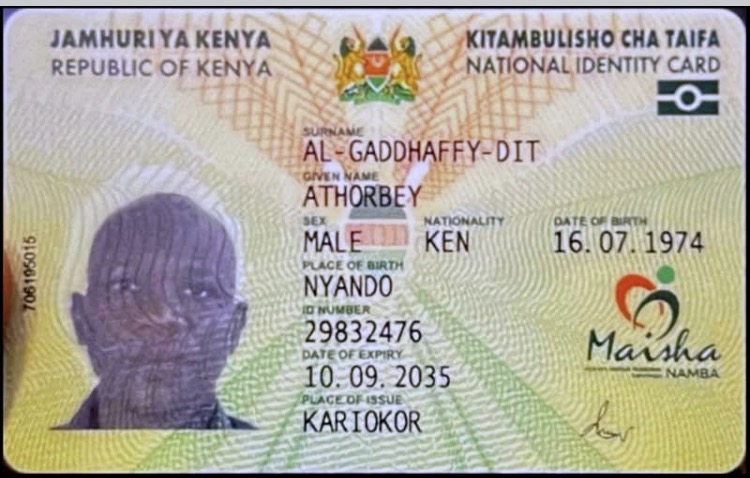
His wife said she was unaware of any formal complaints he had previously filed regarding threats to his safety but noted that he had mentioned disagreements with business associates, including businessman Garang Mayom Kuoc Malek.
Asked who might be connected to the disappearance, she said she could only speculate that it may be linked to business disputes.
“The most important thing for us is that he is okay and nothing bad is going to happen to him. We just want him back home,” she said.
Gaddafi feared for his safety
Kenyan activist and presidential aspirant Boniface Mwangi told Radio Tamazuj that Gaddafi had approached him in April claiming his life was in danger.
“I met him in April. He came to see me in my office saying that his life was in danger and there is evidence of illicit financial flows from his country,” Mwangi said.
Mwangi said Gaddafi alleged that money had been siphoned from South Sudan through a company called CapitalPay and that he had spoken to journalists and police about the matter.
“He said he had spoken to a couple of journalists, had gone to the police, and was afraid of his life,” Mwangi said.
“If he has committed any offence, he should be arraigned in court. You cannot just abduct a Kenyan citizen without due process,” Mwangi said.
He also cited unverified reports suggesting Gaddafi may have been held at Nairobi’s Jomo Kenyatta International Airport (JKIA) or transferred through Wilson Airport as part of an effort to return him to South Sudan.
Concerns over previous deportation cases
Human rights groups and United Nations investigators have documented several cases involving South Sudanese activists, opposition figures and government critics who were deported, abducted or forcibly returned from Kenya over the past decade.
Among the most prominent cases are those involving James Gatdet Dak, Dong Samuel Luak, Aggrey Idri, Marko Lokidor and Morris Mabior Awikjok Bak.
Dong Samuel Luak and Aggrey Idri disappeared after being deported from Kenya in 2017. A U.N. Commission on Human Rights in South Sudan later reported that credible information indicated both men had been executed after being returned to South Sudan.
Rights groups have accused Kenyan and South Sudanese authorities of involvement in some of those cases, allegations both governments have at various times denied.
CapitalPay controversy
Gaddafi’s reported disappearance comes amid growing scrutiny of Crawford Capital and its CapitalPay digital payments platform in South Sudan.
The controversy intensified after South Sudan’s trade minister briefly ordered a review of the company’s digital payment and e-service systems before reversing the decision following intervention by Vice President James Wani Igga.
CapitalPay operates several government-linked digital revenue collection and e-government services, including systems used for trade licensing, visa processing and revenue collection.
The company has faced scrutiny from watchdog groups and U.N. investigators over its government contracts and revenue-sharing arrangements. Crawford Capital and South Sudanese authorities have defended the company, saying it is helping modernise public services and improve revenue collection.
According to U.N. investigators and media reports, Crawford Capital was founded by Garang Mayom Kuoc Malek and Ruey Majok Guandong. U.N. reports cited by media organisations have identified Garang Mayom as the majority shareholder, while Kenyan businessman Jeremy Gisemba has also been reported as a major shareholder.
The company has attracted scrutiny because of reported links to relatives of senior South Sudanese political figures. U.N. investigators and media reports have said CapitalPay is widely believed to be linked to Adut Salva Kiir Mayardit, a daughter of President Salva Kiir Mayardit, although neither Crawford Capital nor the government has publicly acknowledged such ownership.
South Sudanese civil society activist Edmond Yakani condemned the reported abduction and called on Kenyan authorities to ensure the safety and protection of South Sudanese activists living in Kenya.
“My message to the Kenyan government is to ensure the safety and protection of the South Sudanese national abducted in Kenya,” Yakani said.
He said Kenyan authorities and political leaders have a responsibility to protect South Sudanese nationals residing in the country.
South Sudanese authorities had not publicly commented on Gaddafi’s reported disappearance by the time of publication.

 and then