



The Ministry of Humanitarian Affairs and Disaster Management (MHADM), in collaboration with local and international partners, is set to host the National Climate Outlook Forum, where seasonal weather forecasts for South Sudan will be presented.
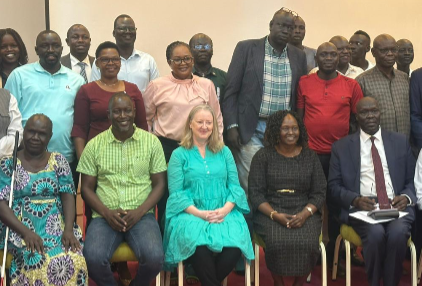
Speaking at the conclusion of a two-day foundational media workshop, Dr. Banak Joshua Dei Wal, Director General for Disaster Management, described the initiative as the beginning of a long-term partnership between the ministry and the media.
“We enjoy excellent collaborative relationships with the government hierarchy and the Red Cross,” he stated. “Even if it is not directly through the One Warm Heart Project, I am confident we will secure funding from other sources to continue this engagement.”
Dr. Dei recalled previous capacity-building efforts, noting that the ministry had partnered with the Intergovernmental Authority on Development (IGAD) to sponsor media study tours to Mombasa, Kenya, which largely benefited state-owned media outlets. He added that the recent workshop highlighted the importance of mutual learning between technical experts and independent journalists.
To maximize the impact of future training sessions, he urged media managers to maintain consistency when nominating journalists to participate in such programs. He also made a strong appeal for gender equity in newsrooms.
He acknowledged that the two-day workshop required facilitators to cover complex topics within a limited timeframe. Moving forward, he stressed the need for both journalists and technical experts to deepen their understanding of Disaster Risk Management (DRM) concepts and early warning systems.
“As an organization and as citizens, it is our duty to uphold our constitution and respect our country, while remaining mindful of the expectation that our country also meets our needs and honors our responsibilities,” Dr. Dei stated.
Meanwhile, John Agok, representing the Union of Journalists of South Sudan (UJOSS), commended the qualifications of the facilitators and praised the highly interactive nature of the workshop.
“I want to note how wonderful it was to see technical experts from the ministry working alongside media professionals,” he said. “We were here not as politicians, but as technocrats collaborating toward shared goals.”
Agok also applauded the inclusivity of the event, giving special recognition to veteran media practitioners and women participants.
A representative of the Red Cross expressed optimism about the pilot training program, describing it as an important step toward bridging longstanding gaps by bringing together journalists from different media houses to improve the dissemination of critical safety information.
“We look forward to continued collaboration to ensure we reach the ‘last mile’ in early warning communication,” the representative said, adding that similar training programs are planned for other states and administrative areas across South Sudan.
Organizers and ministry officials emphasized that public confidence in weather forecasting depends entirely on the accuracy and proper verification of information. Journalists were urged to cross-check meteorological updates with relevant government institutions before publication or broadcast.
“Sometimes a message is passed to the community, and if the predicted event does not occur, people may lose trust in the information source,” an official warned.
Officials advised journalists to verify updates directly with the Ministry of Humanitarian Affairs and Disaster Management, the Ministry of Water Resources—which monitors Nile water levels—and the South Sudan Meteorological Department, which provides regular weather updates.

 and then