



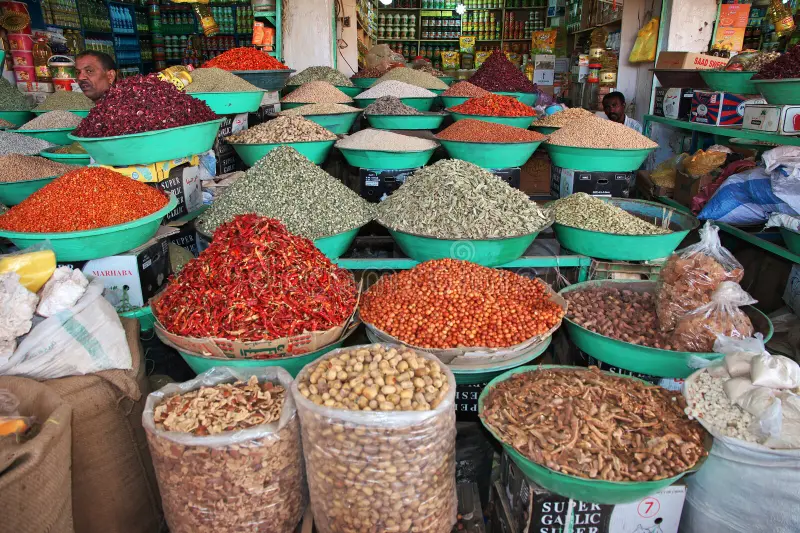
Residents of Nyala, the capital of Sudan’s South Darfur State, have reported steep increases in the prices of essential food commodities, raising concerns over worsening food insecurity and the prospect of famine.
According to local sources, a 50-kilogram sack of millet has risen to 540,000 Sudanese pounds from 270,000 pounds, while the price of a kilogram of meat has increased to 25,000 pounds from 18,000 pounds. A malwa measure (approximately 2.5 kilograms) of onions now costs 10,000 pounds, while a small jerrycan of cooking oil is selling for 55,000 pounds.
Fatima Adam Eissa, a Nyala resident, told Radio Tamazuj that residents were struggling with sharp increases in the prices of basic consumer goods.
“Prices have risen significantly over the past week, particularly for food staples,” she lamented. “A kilogram of meat is now selling for 25,000 pounds, while a malwa measure of onions costs 10,000 pounds, a small jerrycan of cooking oil 55,000 pounds, a malwa of damirqa sorghum 17,000 pounds and a malwa of millet 14,000 pounds. A sack of charcoal is selling for 35,000 pounds.”
The surge in prices has left many large households in Nyala unable to afford sufficient food and other necessities.
Nada Mohamed Ahmed, also from Nyala, said she had gone to the market to shop but was shocked by the sharp increase in prices.
“A sack of sugar, for example, has risen to 300,000 pounds from 200,000 pounds a week ago, with sugar now selling for 10,000 pounds per kilogram,” she said. “A kilogram of sheep meat costs 25,000 pounds, while beef costs 20,000 pounds. Vegetable prices have also increased at Nyala market.”
For his part, Mubarak Talha attributed the rise in commodity prices to poor rainfall and growing scarcity, saying traders were concerned about possible shortages of goods.
Meanwhile, Ahmed Al-Sadiq, a trader at Nyala’s main market, acknowledged the price increases and attributed them primarily to the pound losing value against the US dollar and other foreign currencies.
“Other factors and logistical challenges are also expected to put further pressure on commodity prices,” he stated. “These include the cost of transporting and shipping goods from neighbouring countries into Darfur, fees imposed by countries producing the commodities, and state-level taxes and levies.”
Al-Sadiq added that traders ultimately pass these additional costs on to consumers, causing prices to rise several times over.

 and then